Best Prepaid Card for Facebook Ads in 2026
By James Whitfield, Payments Specialist · Updated July 21, 2026
Every media buyer has a story about a Facebook ad account that died mid-scale because of a payment issue, not a policy strike. A card got declined, Meta flagged it as high-risk, and the whole account slowed to a crawl or got shut off entirely.
That's the real problem this article tackles. Not "which prepaid card looks nicest" - but why Meta's payment system reacts the way it does, and how a smarter prepaid card for Facebook ads setup can cut down on cascading bans instead of triggering them.
How Meta's Payment System Actually Judges Your Card
Meta charges advertisers in threshold billing increments rather than one lump sum at the end of the month. Every time that charge attempt happens, the payment method gets scored.
Accounts with high decline rates get treated as unstable, and Meta's anti-fraud systems can flag or decline the card itself, not just the transaction. Once that happens, every campaign tied to that ad account pauses, sometimes with barely any warning. That's why a single blocked virtual card for Facebook ads can take down a whole account's delivery, even when the underlying ad content was never the issue.
A few patterns tend to draw extra scrutiny:
- Repeated declines from insufficient limit headroom above peak spend
- New payment methods added right after a previous one gets removed
- Shared billing details across many unrelated ad accounts
- Cards issued from BIN ranges Meta associates with high fraud rates
None of this means a prepaid Visa for Facebook ads is inherently risky. It means how it's provisioned, funded, and reused across accounts matters far more than the brand printed on the card.
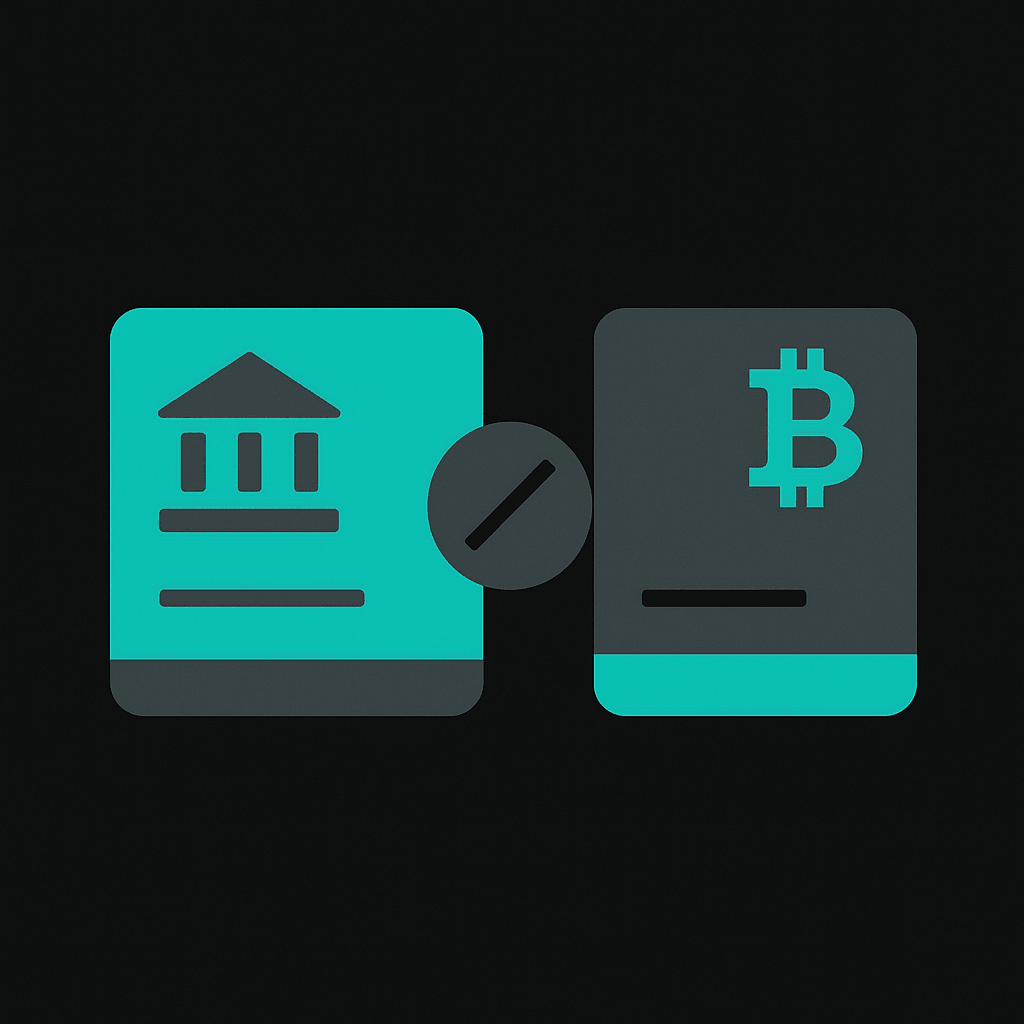
Bank-Linked vs Crypto-Funded Virtual Cards: The Real Tradeoffs
Most funding roundups skip this comparison and just list five random cards. The more useful question for a media buyer is which funding model actually fits their operating structure.
| Factor | Bank-linked virtual card | Crypto-funded card (e.g. USDT/USDC) |
|---|---|---|
| Funding speed | Depends on bank transfer or business card cycle | Ready in minutes once stablecoins are deposited |
| Exposure of personal banking | Often tied to a business or personal bank account | Isolated - loads from a crypto wallet, not a checking account |
| Multi-card issuance for agencies | Usually limited per business account | Some providers allow near-unlimited card issuance per client |
| Fees | Varies by issuer, often bundled with account fees | Flat top-up fee (e.g. 5% at WaldenPay) plus a one-time issue fee |
| Best fit | Established agencies with steady bank access | Freelancers, digital nomads, and marketers paid in crypto |
Neither model wins outright. A bank-linked card can carry more built-in rewards, like Amex Business Gold's 4x points on top spend categories for advertisers doing $5K-$50K a month with no preset spending limit. But that only pays off if you're already running spend through a US business card and don't mind the correlation between your personal credit profile and every ad account you touch.
A crypto card for ad spend flips that tradeoff. You give up traditional card rewards points in most cases, but you gain separation between your personal financial identity and your ad accounts, plus faster provisioning when something breaks.
The card that keeps an ad account alive isn't the one with the best rewards. It's the one that can be replaced in minutes without dragging your personal bank account into Meta's fraud review.

What to Look For in a Prepaid Card for Facebook Ads
Skip the "top 5" lists. Use this checklist instead when evaluating any prepaid card for Facebook ads or prepaid mastercard for ads option.
1. Limit headroom above peak spend
If your card sits right at your average daily budget, one scaling day triggers a decline. Fund with room to breathe, not just enough to cover yesterday's spend.
2. One dedicated card per ad account
Reusing a single card across five ad accounts creates the exact correlation pattern Meta's fraud systems are built to catch. A dedicated virtual card for advertising per account limits the blast radius when one gets flagged.
3. Fast replacement when a card gets blocked
Some virtual card providers issue a fresh card in under 2 minutes after an existing one gets flagged. That speed matters more than almost anything else on this list, since a paused campaign during a scaling window can cost more than the card's fees ever would.
4. Card network acceptance and BIN diversity
Wide acceptance across the card network Meta bills against reduces the odds of a decline being read as fraud. Some providers advertise access to 25+ premium BINs specifically for ad spend use cases.
5. Transparent, flat fees
Cashback offers of 2-3% on ad spend sound appealing, but check whether they're offset by hidden funding fees. A flat, disclosed fee - like a 5% top-up fee - is easier to model into your cost-per-acquisition math than a shifting rewards structure.
6. Team-level spending controls
Agencies managing several buyers benefit from employee-card-style limits and merchant restrictions, so one buyer's mistake doesn't drain the whole funding pool.
Where Crypto-Funded Cards Fit in a Compliant Funding Stack
A stablecoin card for marketers isn't a workaround for platform rules - it's a funding layer that keeps ad spend separate from personal or core business banking while still following Meta's billing requirements and standard AML and regulatory checks.
WaldenPay works this way: stablecoins (USDT on TRC20, or USDC on ERC20 and TRC20) get deposited into a wallet with a unique address, then loaded onto a virtual card, usually ready in about 5 minutes. From there the card works anywhere the network is accepted, including Meta's ad billing, either added to Apple Pay/Google Pay or used directly with the card number online.
That setup solves three specific pain points media buyers run into:
- Personal card exposure - the virtual card number isn't tied to your everyday checking account, so a Meta fraud flag doesn't put personal banking at risk.
- Slow refunding cycles - top up Facebook ads with crypto and reload the card again within minutes rather than waiting on a bank transfer.
- Scaling across accounts - separate cards can be issued for separate ad accounts, which limits the correlation risk described earlier.
None of this makes spend untraceable or anonymous. WaldenPay is privacy-focused, not a way around AML or regulatory obligations, and marketers should treat it as one compliant tool in a funding stack, not a loophole. For a deeper walkthrough of setting up crypto-funded cards specifically for Meta campaigns, see the pillar guide on the best crypto card for Facebook ads in 2026.
A Practical Setup for Funding Multiple Ad Accounts
For agencies running several client accounts, the goal is isolation without losing visibility.
Start by issuing one virtual card per ad account rather than reusing a single card across a portfolio. Keep a small cash buffer above expected peak daily spend on each card, not just the bare minimum needed to cover today's budget. Watch for decline patterns early - a rising decline rate on one card is a signal to rotate before Meta's system does it for you.
Reserve a bank-linked business card, like the Amex Business Gold path mentioned earlier, for accounts where you already have deep spend history and want the rewards. Use a crypto card for ad spend for newer accounts, freelance clients paid in stablecoins, or situations where you'd rather not link a personal bank account to a platform known for aggressive fraud flags.
And when a card does get blocked, don't scramble. Have a replacement process ready - most crypto-funded platforms can issue a new virtual card within minutes, often faster than waiting on a bank to reissue a physical prepaid card.
For a closer look at how this stack applies beyond Meta, the guide on virtual cards for media buying and crypto-funded ad spend covers cross-platform setups, and the piece on funding Google Ads accounts with a crypto card is useful if your budgets span both networks.
FAQ
Will a prepaid card for Facebook ads get my account banned?
Not on its own. Bans and pauses usually come from decline patterns, correlated cards across unrelated accounts, or fraud-flagged BINs - not from the fact that a card is prepaid. Choosing a card with headroom above peak spend and dedicating one card per ad account reduces that risk.
Is a crypto card for ad spend better than a bank-linked business card?
It depends on your setup. A bank-linked card can offer stronger rewards if you already spend $5K-$50K a month on a qualifying business card. A crypto-funded card offers faster reloads and separation from personal banking, which matters more for newer accounts or agencies managing several clients.
How fast can I fund a virtual card with USDT or USDC?
With WaldenPay, deposits go to a unique wallet address and the card is typically ready to spend in about 5 minutes, subject to network confirmation times.
Does using a stablecoin card for marketers avoid Facebook's payment checks?
No. Meta still applies its normal billing and fraud checks regardless of how the card is funded. The advantage is operational - faster reloads and reduced exposure of personal accounts - not an exemption from platform rules or AML requirements.
Can agencies issue multiple cards for different ad accounts?
Yes, and it's recommended. Running one card across many accounts increases correlation risk. Issuing a dedicated virtual card per ad account, whether crypto-funded or bank-linked, limits how far a single flag can spread.
Fund your next ad account without exposing your personal card
Load a virtual card with USDT or USDC, ready in about 5 minutes, and keep your ad spend separate from your everyday banking. Check pricing, see how it works on how it works, or explore full features before you start.
Get your WaldenPay card