Best Crypto Card for Europe No KYC (2026 Guide)
By James Whitfield, Payments Specialist · Updated September 15, 2026
The best crypto card for Europe no KYC in 2026 typically means a virtual card issued after email-only signup, not a truly anonymous payment tool. EU anti-money laundering frameworks—AMLD5 and AMLD6—require platforms providing custody, payment services, or exchange infrastructure to conduct identity checks, so providers use tiered verification systems where low spending limits are allowed without documents but higher amounts trigger full checks.
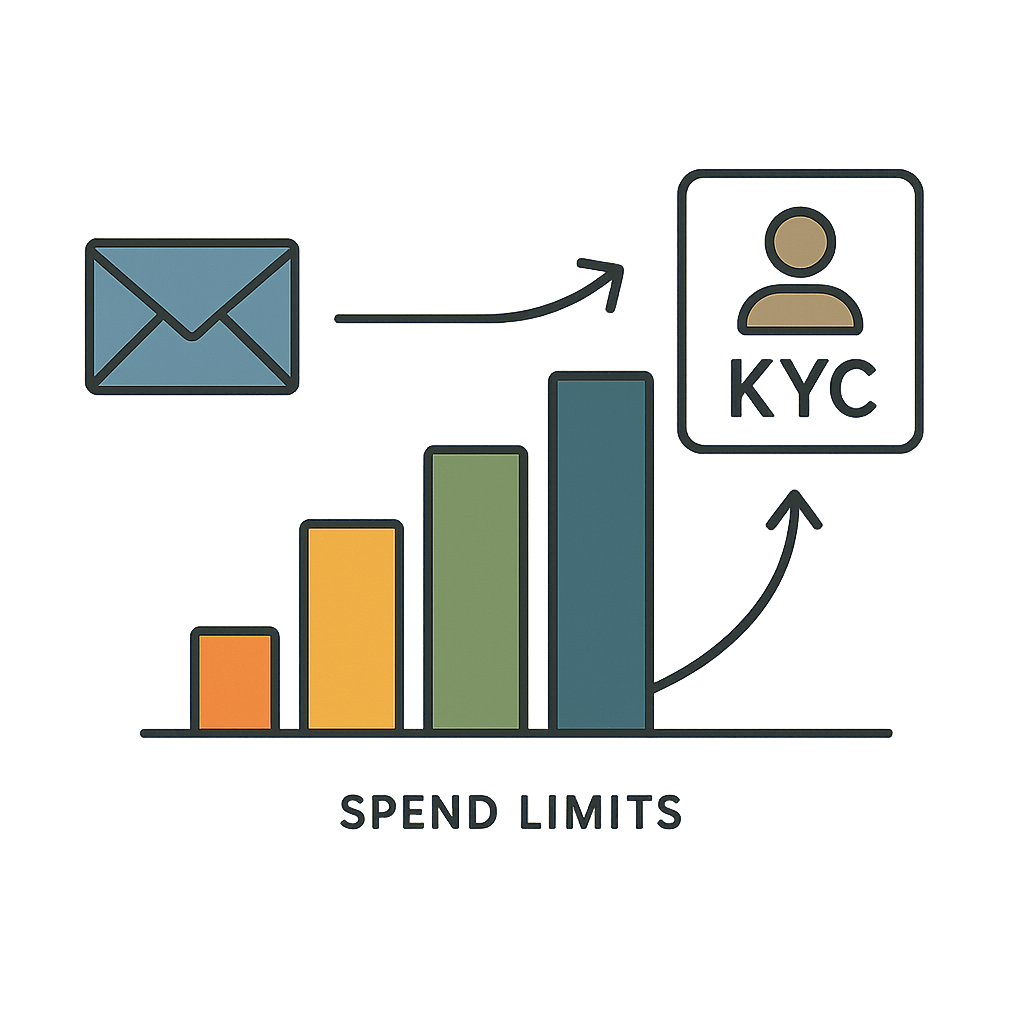
What people call "no KYC" usually falls into three tiers: email-only signup with low caps, soft checks (name and address but no document upload), and full identity verification. The first tier is the realistic entry point for privacy-focused users in 2026.
What Does No KYC Actually Mean for European Crypto Cards?
A no KYC crypto card in 2026 Europe doesn't mean zero verification—it means the provider collects minimal data at signup and sets spending limits to stay within regulatory thresholds. Crypto service providers in the EU are regulated under frameworks that mandate identity checks, so the term "no KYC" has shifted to describe cards with reduced friction rather than true anonymity.
Tighter rules mean truly anonymous options are rare. Most providers run some AML screening and set limits to remain compliant, even if they don't ask for a passport photo on day one.
The practical difference: a crypto card no verification signup might let you load €200 and spend it at any Visa merchant within 30 days, but crossing that threshold triggers a request for documents. That's the trade-off—privacy within boundaries, not invisibility.
The Verification Spectrum: Email-Only to Full KYC
European crypto card issuers typically enforce three tiers.
Tier 1: Email-only signup. You provide an email address, fund the card with crypto, and get a virtual card number in minutes. Spending caps are low—usually €250 to €500 per month—and some providers add transaction limits (€50 or €100 per purchase). This tier covers coffee runs, online subscriptions, and small payments but won't handle rent or a laptop purchase.
Tier 2: Soft verification. The platform asks for your full name, date of birth, and address but doesn't require a photo ID or selfie. Limits rise to €1,000-2,500/month. This tier suits freelancers paying for software licenses or ad accounts without linking a bank account.
Tier 3: Full KYC. Passport or national ID, proof of address, sometimes a liveness check. Limits jump to €10,000+/month or disappear entirely. If you're moving significant amounts or need a physical card shipped to your door, this is the gate you'll hit.
Best Crypto Card for Europe No KYC: The Short List
As of 2026, a handful of providers maintain an email-only entry path. SolCard and Bing Card both offer no-KYC signup, and BingCard is noted for virtual cards ready in minutes. The best no-KYC crypto cards in September 2026 include KAST K Card, Jupiter Global, COCA Visa Card, MetaMask Virtual Card, and Bleap Mastercard, though each has its own spend cap and fee structure.
WaldenPay fits the same tier: email signup, virtual card issued after the first top-up, and acceptance at 150M+ merchants worldwide. The card loads with 135+ cryptocurrencies across 35+ networks—USDT, USDC, BTC, ETH, SOL, TRX, LTC and more—and works with Apple Pay and Google Pay. Top-up fees start at 5% and drop automatically to as low as 3% based on rolling 30-day card spend, with no monthly maintenance.
The one-time card issue fee is $10. Minimum top-up is $50. No identity documents are required for standard use, but the card isn't anonymous—use is subject to AML and regulatory requirements, and the provider reserves the right to request verification if spending patterns trigger a review.
| Feature | Email-Only Tier | Full KYC Tier |
|---|---|---|
| Signup time | Minutes | Hours to days |
| Monthly limit | €250-€500 | €10,000+ |
| Data collected | Email, wallet addresses | Photo ID, address proof, selfie |
| Physical card | Rarely available | Yes |
How Privacy Crypto Cards Stay Compliant
Crypto cards rely on fiat settlement through banking networks, so providers conduct at least basic identity checks to remain compliant with FATF guidelines. Even a crypto virtual card no verification at signup will have back-end AML screening—transaction monitoring, velocity checks, and blacklist scans.
Privacy-focused doesn't mean unregulated. The card issuer and the banking partner both run compliance systems, and a pattern that looks like structuring (splitting large amounts into many small loads to stay under the tier-one cap) will flag a manual review.
What you get is minimal upfront friction, not a permanent exemption. And that's a feature, not a bug—providers that promise complete anonymity either operate outside the law or don't survive their first audit.
Spend Limits and What Triggers Verification
Most email-only cards cap monthly spending between €250 and €500. Some add per-transaction limits—€50 or €100—to reduce fraud exposure. Crossing the monthly cap usually pauses the card until you either wait for the rolling window to reset or submit documents to unlock a higher tier.
Other triggers: a single large transaction (even if it's under the monthly cap), repeated cross-border purchases, or funding from a wallet flagged in a prior investigation. Providers don't publish the exact thresholds, but the pattern is consistent—stay small and predictable, or expect a compliance email.
If you need higher limits without documents, you're out of luck in 2026 Europe. The regulatory environment closed that gap.
Fees: What Email-Only Cards Actually Cost
Privacy comes with a price, usually in the form of higher top-up fees. Email-only cards often charge 5-7% to convert crypto to card balance, compared to 3-4% for full-KYC competitors. WaldenPay starts at 5% and drops to 3% with volume discounts based on rolling 30-day card spend: 5% up to $2,000, 4.75% from $2,000, 4.5% from $5,000, 4.25% from $10,000, 4% from $25,000, 3.5% from $50,000, 3% from $100,000, and individual pricing at $250,000+/month.
The $10 one-time card issue fee is standard. There's no monthly maintenance, and balance checks are free. Compare that to platforms charging €2-5/month plus ATM fees, and the math favors low-volume users who value setup speed over the last percentage point of fee optimization.
A crypto card fee calculator helps you model the real cost before you load anything.
Apple Pay, Google Pay, and Virtual Card Compatibility
Most virtual cards issued at the email-only tier work with Apple Pay and Google Pay. WaldenPay cards add to both wallets without extra steps—tap the virtual card number into the wallet app, verify via SMS or email, and you're ready for contactless payments in-store.
Physical cards are rare at tier one. If you want plastic shipped to your door, expect to submit a photo ID and proof of address. The virtual card handles online purchases and mobile wallet payments, which covers the majority of spending for privacy-conscious users who don't need a card in their wallet.
Is the Best Crypto Card for Europe No KYC Right for You?
It depends on what you're trying to solve. If you want to spend crypto without linking a bank account and you stay under €500/month, an email-only card fits. If you're funding ad accounts, paying SaaS subscriptions, or buying digital goods, the tier-one limits are enough.
But if you need to pay rent, book flights, or handle four-figure purchases, you'll hit the cap fast. At that point, the choice is simple: submit documents or find a different payment method.
The best crypto card for Europe no KYC in 2026 isn't a silver bullet—it's a tool for specific use cases where privacy and speed matter more than high limits.
What Happens If You Exceed the Limit?
Most providers freeze the card and send an email asking for verification. You'll need to upload a photo ID, proof of address, and sometimes a selfie or liveness video. Once approved, the limit lifts and the card reactivates. If you decline, the remaining balance is either refunded to your wallet or held in the account until you complete verification.
Some platforms offer a grace period—a 7-day window to submit documents before the account locks. Others are stricter and freeze immediately. Read the terms before you load significant amounts.
And no, you can't open multiple accounts to multiply the cap. Providers track email addresses, wallet addresses, device fingerprints, and IP ranges. A second account flagged as duplicate will lock both, and any balance in the second account may be forfeited under the platform's anti-fraud policy.
Alternatives to the Best Crypto Card for Europe No KYC
If the spend cap is a dealbreaker, consider a low-KYC card where you submit basic info but skip the photo ID. Soft-verification tiers usually unlock €1,000-2,500/month, which handles most freelance or small-business spending.
Another option: a prepaid crypto card with full KYC and higher limits. Yes, you'll submit documents, but you'll also get better fee rates, higher caps, and sometimes rewards or cashback. The trade-off is worth it if you're spending more than a few hundred euros per month.
For users who want to fund ad accounts or pay for business tools, a verified card avoids the risk of hitting the cap mid-campaign and scrambling for an alternative.
Common Misconceptions About the Best Crypto Card for Europe No KYC
Misconception 1: No-KYC means untraceable. Every transaction on Visa or Mastercard rails is logged, and the issuer knows which wallet funded the card. Privacy means the platform doesn't ask for your passport at signup, not that your spending is invisible.
Misconception 2: You can spend unlimited amounts with email-only signup. Caps are enforced at the network level and the issuer level. A €500/month limit is a hard stop, and trying to work around it by opening multiple accounts will flag your profile.
Misconception 3: No-KYC cards bypass merchant restrictions. If a merchant blocks prepaid cards or virtual cards, the best crypto card for Europe no KYC won't get through. The card type and BIN (bank identification number) are visible to the merchant's payment processor, and many high-risk categories—gambling, crypto exchanges, gift card resellers—decline prepaid cards regardless of how you funded them.
For a fuller picture of what's realistic versus risky, see the guide on anonymous crypto payment cards.
How to Choose the Best Option for Your Use Case
Start with your monthly spend. If it's under €300, an email-only card works. Between €300 and €1,500, look at soft-verification tiers. Above that, full KYC is unavoidable.
Next, check coin support. If you hold USDT on Tron or USDC on Polygon, confirm the platform accepts those networks. WaldenPay supports 135+ cryptocurrencies across 35+ networks, so most users won't hit a compatibility issue, but smaller providers may only accept Ethereum-based tokens.
Finally, compare fees using real numbers. A 5% top-up fee on a €200 load costs €10. A 3% fee on the same amount costs €6. Over a year of monthly top-ups, the difference is €48—not trivial if you're on a tight budget.
A side-by-side comparison of fee structures, coin support, and KYC tiers helps you model the total cost before committing.
FAQ
Can I get the best crypto card for Europe no KYC with absolutely no verification?
No. Even email-only cards run AML screening in the background, and providers reserve the right to request documents if spending patterns trigger a review. "No KYC" in 2026 means minimal upfront friction, not zero oversight.
What spending limits can I expect without uploading documents?
Most email-only cards cap monthly spending between €250 and €500, with per-transaction limits around €50 to €100. Crossing the cap typically pauses the card until you either wait for the rolling window to reset or submit documents to unlock a higher tier.
Will a low-KYC crypto card work with Apple Pay or Google Pay?
Yes. Most virtual cards issued at the email-only tier add to Apple Pay and Google Pay without extra steps. You'll verify via SMS or email, then use the card for contactless payments in-store or online.
Are no-KYC crypto cards legal in Europe in 2026?
Yes, as long as they enforce spend caps and AML monitoring. EU regulations require identity checks for higher-risk activity, so providers use tiered systems where low limits are allowed without documents but higher amounts trigger verification.
What happens if I exceed the no-KYC spending limit?
The card usually freezes, and the provider sends an email asking for photo ID and proof of address. Once you submit documents and pass verification, the limit lifts and the card reactivates. If you decline, the remaining balance is refunded to your wallet or held until you complete verification.
Get a Virtual Card in Minutes
WaldenPay issues a privacy-focused virtual card with email-only signup—no passport, no selfie, no bank account. Fund with 135+ cryptocurrencies across 35+ networks, add to Apple Pay or Google Pay, and spend at 150M+ merchants worldwide. Top-up fees from 5% down to 3% with automatic volume discounts, and the card is ready in about five minutes.
Get started with WaldenPayNext time you're comparing options, check whether the provider publishes its verification triggers and refund policy—that transparency tells you whether the platform will freeze your balance without warning or give you a clear path to higher limits.