WaldenPay Review 2026: Fees, Features & Real Test Results
By James Whitfield, Payments Specialist · Updated September 21, 2026

Most WaldenPay review posts online read like they were copy-pasted from the homepage. Same three bullet points, same "load crypto, spend anywhere" line, no math, no walkthrough of what happens when a payment underpays or support goes quiet for a day. This one actually tests the fee tiers, walks through Send to Friend and Collect Payments end to end, and takes an honest look at the trust signals - good and mixed - before telling you whether it fits your situation.
What WaldenPay Actually Is
WaldenPay is a crypto virtual card platform. Load it with any of 135+ cryptocurrencies across 35+ networks - USDT, USDC, BTC, ETH, SOL, TRX, LTC and more - and everything converts to a USD card balance at loading time. From there it spends like any other Visa or Mastercard, in-store, online, or through Apple Pay and Google Pay. Cards are typically issued in minutes, not days.
There's also a Telegram bot for ordering and recharging cards, checking balances, and getting transaction alerts without opening the dashboard, plus an account wallet with a unique deposit address per network. For a deeper trust-and-safety breakdown separate from this fee-focused piece, see Is WaldenPay Legit? 2026 Trust & Safety Review.

WaldenPay Fees Explained (With Real Math)
This is the part most reviews skip. WaldenPay's top-up fee isn't flat - it's tiered against your rolling 30-day card spend, and the discount kicks in automatically. No application form, no sales call, no waiting for approval. The dashboard shows your current fee, your 30-day spend, and how much more you need to hit the next tier.
| 30-day card spend | Top-up fee |
|---|---|
| $0 - $2,000 | 5% |
| $2,000+ | 4.75% |
| $5,000+ | 4.5% |
| $10,000+ | 4.25% |
| $25,000+ | 4% |
| $50,000+ | 3.5% |
| $100,000+ | 3% |
| $250,000+ | Individual pricing |
Here's the worked example most WaldenPay review content never bothers with. Say a freelancer loads $3,000 a month onto the card. At the base 5% tier, that's $150 in top-up fees. Once their rolling 30-day spend crosses $5,000 (from repeated top-ups and spending), the rate drops to 4.5% - so the next $3,000 load costs $135 instead of $150. It's not a huge jump on a single top-up, but for someone loading $10,000-$25,000/month, the gap between 5% and 4.25% works out to $75-$187.50 saved per cycle, and it compounds as spend climbs. There's also a one-time $10 card issue fee, and no monthly maintenance charge - registration, balance checks, and support are free.
Full details live on WaldenPay's own pricing page, and the mechanics of how loading and conversion work are explained on the how it works page. If you're comparing crypto debit card fees, this tier system is worth putting next to whatever flat-fee competitor you're looking at - flat 3-4% cards can actually cost more than WaldenPay at low spend, and less at very high spend, so the right answer really depends on your monthly volume.
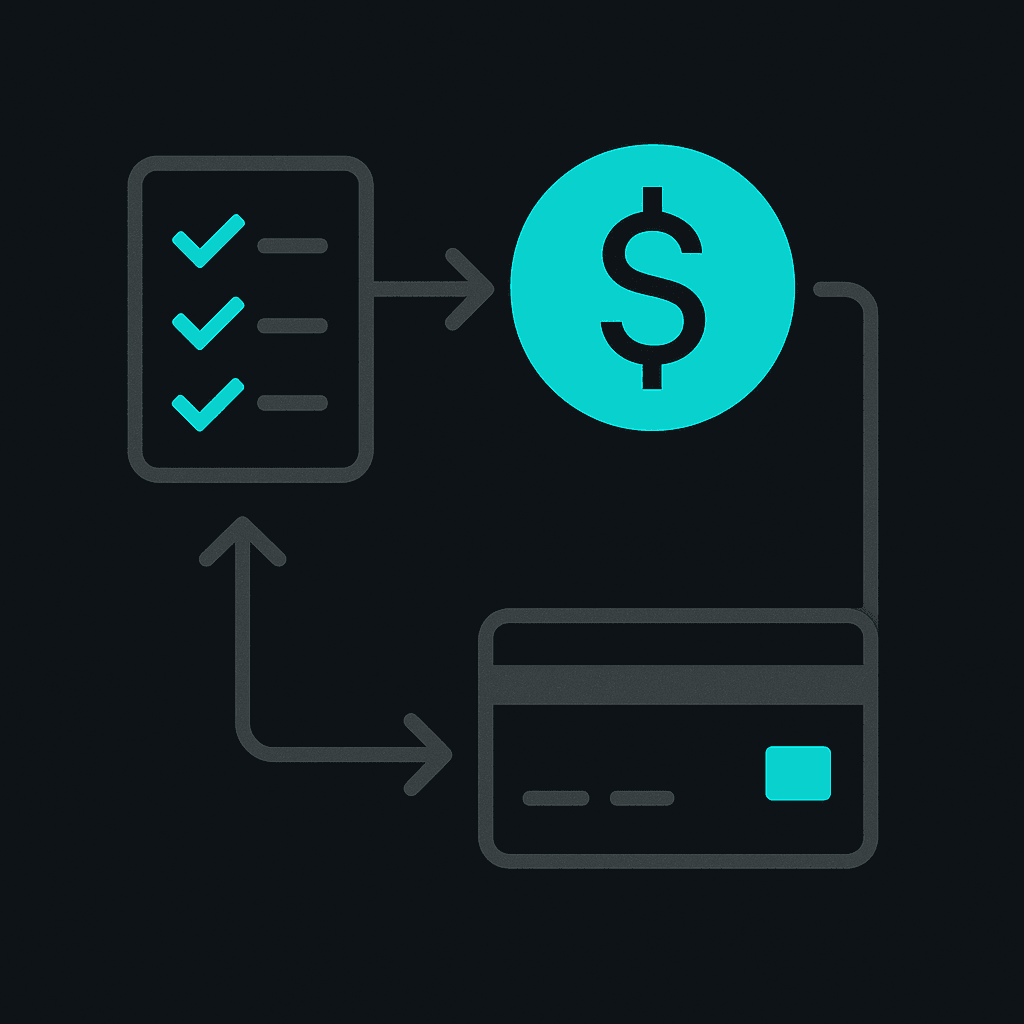
Real Test Results: Ordering, Funding, Spending
Card issuance itself is fast. One independent reviewer on Trustpilot described loading crypto and buying software licenses almost immediately afterward - no multi-day hold on funds. That lines up with WaldenPay's own claim of cards being ready in minutes.
Adding the card to Apple Pay or Google Pay works the same way it would for a bank-issued card - punch in the details, verify, and it's tap-to-pay ready. For online purchases, the card number, expiry, and CVV sit right in the dashboard.
Support responsiveness is the one spot where this WaldenPay review has to flag mixed signals. One Trustpilot reviewer noted a stretch where support was slow to respond, though it reportedly picked back up afterward. That's worth factoring in if you're planning to rely on the card for anything time-sensitive, like a business payment deadline.
A note on trust scanners: Scamadviser has flagged waldenpay.com as a "young" site with a low automated trust score - largely a function of domain age and scanner heuristics rather than a verified fraud finding. Young fintech domains often trigger this. Still, it's a reasonable prompt to do your own due diligence: check dispute handling, refund policy, and BIN details before loading large amounts, the same way you'd vet any new financial service.How Send to Friend Actually Works
WaldenPay's Send to Friend feature is a ledger transfer, not a blockchain transaction. You enter the recipient's email address, WaldenPay shows you their name for confirmation before you send, you confirm with your password, and the balance lands in the recipient's account in seconds. No wallet address, no network fee, no waiting for confirmations.
Limits: $1 minimum per transfer, $10,000 maximum per transfer, and $20,000 per rolling 24-hour period. That ceiling matters if you're splitting a large payment among a group or settling something bigger than a typical peer-to-peer transfer - you'd need to spread it across more than one day.
It's a genuinely useful feature for splitting bills, paying a friend back, or moving funds between two WaldenPay accounts without touching a blockchain at all.
How Collect Payments Works for Freelancers
This is the feature most competitor reviews gloss over entirely, and it's arguably the most practical one for freelancers and small sellers.
- Create a payment request with a fixed USD amount between $1 and $10,000, plus a description (invoice number, order reference, whatever makes sense).
- Share it as a link or a QR code - by email, chat, or printed at a market stall.
- The payer doesn't need a WaldenPay account at all. They can pay in any of the 135+ supported cryptocurrencies across 35+ networks.
- The creator receives the exact USD amount they requested in their wallet. The payer covers a 0.2% conversion fee on top.
- If the payer sends less than the requested amount, WaldenPay tracks the underpayment and generates a fresh address for the remainder instead of losing track of partial payments.
- If a payment never completes, it's automatically refunded to the payer's wallet rather than sitting in limbo.
For a freelancer invoicing an overseas client, that means quoting a clean $1,200 and actually receiving $1,200 - the client absorbs the small conversion fee, and there's no back-and-forth about which token or network to use.
The creator gets the exact USD amount requested; the payer covers the 0.2% conversion fee. That's the detail most homepages mention in passing and most reviews skip entirely.
WaldenPay is privacy-focused - it doesn't require invasive identity paperwork upfront - but it is not anonymous or untraceable, and use is subject to AML and regulatory requirements like any card product. The full trust and safety check - company details, licensing, complaint patterns and our test results - is in Is WaldenPay legit?.
WaldenPay vs. Other Crypto Cards
Comparing crypto debit card fees across providers is messier than it looks, because some quote a flat rate and others - like WaldenPay's virtual card - use volume tiers. Here's a general shape of how they stack up.
| Factor | WaldenPay | Typical flat-fee competitor |
|---|---|---|
| Top-up fee | 5% down to 3%, volume-based | Fixed 3-5%, regardless of spend |
| Card issue fee | $10 one-time | Varies, sometimes higher for instant issue |
| Monthly fee | None | Often $0-$10/month |
| Peer transfers | Send to Friend, free, seconds | Usually requires on-chain transfer |
| Invoicing/QR payments | Collect Payments, 0.2% payer fee | Rarely built in |
| Apple/Google Pay | Supported | Varies by provider |
If you're weighing WaldenPay against a corporate or team-oriented option, the calculus changes - see Crypto Corporate Cards for Teams: 2026 Buyer's Guide for that angle. And if BIN diversity matters for your use case (declines tied to a single BIN being blocked by a merchant), Crypto Card with Multiple BINs: What It Means in 2026 is worth a read before committing.
Who Should Actually Use This Card
Crypto holders who want to spend without manually converting on an exchange first, freelancers getting paid in USDT or BTC who need a clean way to invoice and receive USD-equivalent value, and digital nomads who don't want to juggle a local bank account in every country - these are the strongest fits.
Heavy day-traders chasing the absolute lowest possible fee from day one might find the base 5% tier annoying until spend builds up. And anyone expecting full anonymity should look elsewhere - or at least adjust that expectation, since no legitimate card product offers that today.
FAQ
What are WaldenPay's fees, in plain terms?
A one-time $10 card issue fee, no monthly maintenance, and a top-up fee that starts at 5% and steps down - 4.75%, 4.5%, 4.25%, 4%, 3.5%, down to 3% - as your rolling 30-day card spend increases. Collect Payments has a separate 0.2% conversion fee paid by whoever is sending the payment.
Is WaldenPay anonymous?
No. It's privacy-focused in that it doesn't demand invasive paperwork up front, but it is not anonymous or untraceable, and use is subject to AML and regulatory requirements like any card product.
How does Send to Friend differ from a normal crypto transfer?
It's an internal ledger transfer between WaldenPay accounts, not a blockchain transaction. You just need the recipient's email, there's no network fee, and it settles in seconds instead of waiting for block confirmations. Limits are $1 minimum, $10,000 per transfer, $20,000 per rolling 24 hours.
Can someone pay a Collect Payments request without a WaldenPay account?
Yes. The payer needs no account at all - they just open the link or scan the QR code and pay in any of 135+ supported cryptocurrencies. The creator still receives the exact USD amount requested.
Ready to see the fee tiers for yourself?
Load a small amount, check your dashboard's current tier, and decide from real numbers instead of marketing copy.
Get your WaldenPay card