Zero Knowledge KYC: What Peirce's Push Means for Cardholders
By James Whitfield, Payments Specialist · Updated September 28, 2026

Zero Knowledge KYC: What Peirce's Push Means for Cardholders
Could zero knowledge kyc reduce repeated identity-data collection without removing compliance obligations? SEC Commissioner Hester Peirce advocated that direction at the 2026 SIFMA Digital Assets Conference: privacy-preserving proofs could support compliance while limiting repeated disclosure of sensitive information, but her advocacy doesn't change card eligibility or verification requirements.
For the wider comparison of current signup options, the no-KYC crypto card guide separates available products from privacy claims.
What Peirce's zero knowledge kyc advocacy changes
CryptoSlate reports Peirce's warning about KYC data honeypots: concentrated stores of sensitive identity information that create exposure to hacking, leaks, and exploitation. Her argument challenges repeated collection as the default route to compliance.
Reporting from crypto.news also describes her support for zero-knowledge proofs. The approach includes attribute-based digital credentials rather than requiring every recipient to obtain a complete identity file.
But advocacy isn't an enacted requirement.
The coverage doesn't establish a card-provider rollout, an implementation deadline, or a right to substitute a cryptographic proof for requested documents. The verified timing here is the conference in 2026, not a separately confirmed calendar date for a new rule.
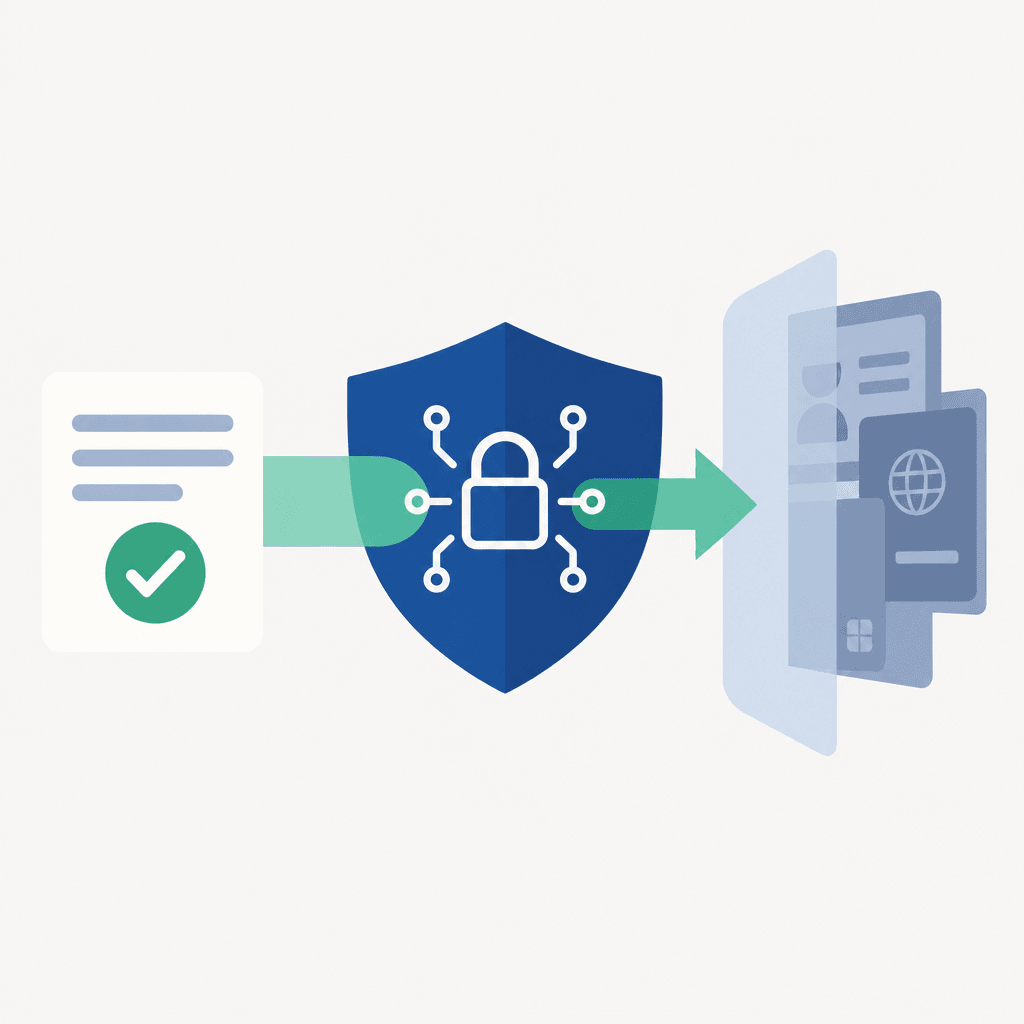
How zero knowledge kyc separates a claim from a document
A zero-knowledge proof can demonstrate that a specific statement is true without revealing the underlying information. In a hypothetical age check, the statement could be that a person meets an age threshold, rather than disclosing a birth date or passport image.
For cardholders, zero knowledge kyc would only reduce disclosure if the recipient accepts the proof instead of requesting the same underlying records.
Several separate checks still matter:
- Initial verification: Someone must establish that the identity information is genuine.
- Issuer trust: The recipient needs a reason to trust whoever issued the credential.
- Credential validity: Verification must account for expiration, revocation, and whether the credential belongs to its presenter.
- Proof scope: A valid proof establishes its defined claim, not every fact needed for onboarding.
The useful test is which sensitive information stops changing hands, not whether a signup screen uses cryptography.

Where repeated collection could actually shrink
Reusable identity proofs could let an accepted credential support multiple checks without each recipient collecting another document copy. That could reduce the number of places holding complete identity records.
It wouldn't automatically erase records held by the original verifier.
Nor does a proof guarantee that activity cannot be linked across services. Credential identifiers, account information, or implementation choices may still create connections. Personal data minimization therefore depends on the whole system, including storage and sharing, rather than the proof alone.
A comparison of crypto card privacy levels helps distinguish reduced signup collection from broader protection throughout an account's use.
What compliance still requires cardholders to consider
Peirce's reported position seeks stronger privacy without abandoning AML compliance. Cryptographic verification doesn't independently settle sanctions screening, transaction monitoring, or every question a regulated provider may need answered.
So zero knowledge kyc shouldn't be treated as permission to refuse a required verification request while expecting uninterrupted service. Acceptance of credentials would depend on the provider's implementation and applicable requirements.
The distinction between a policy headline and an operational change also matters in the crypto signup rules analysis. Cardholders need published provider terms, not an assumption that regulatory discussion has changed them.
Questions to resolve before sharing identity data
A useful checklist follows the information from initial collection through deletion:
- Original verifier: Who checks identity, and which documents or databases support that check?
- Recipient visibility: Which attributes does each recipient receive: a yes-or-no result, identifiers, or complete records?
- Storage and retention: Who keeps documents, for how long, and under what deletion or retention rules?
- Third-party sharing: Which service providers or other recipients receive information, and why?
- Credential lifecycle: How are expiration, revocation, and compromised credentials handled?
- Further verification: Which circumstances could trigger additional checks or document requests?
For example, WaldenPay's crypto virtual card requires only an email and no identity documents for standard signup. That doesn't establish zero-knowledge verification, anonymity, exemption from AML and regulatory requirements, or guaranteed approval or availability. It's a prepaid virtual card, not a way around merchant rules.
FAQ
Does zero knowledge kyc eliminate the original identity check?
No. A proof can limit later disclosure, but the underlying identity claim still needs a trustworthy basis.
Has Peirce required crypto card providers to accept proofs?
The reporting describes advocacy, not an enacted requirement compelling card providers to accept them.
Does a valid proof mean no documents exist elsewhere?
No. The original verifier may retain documents. KYC data retention must be assessed separately from what a recipient sees.
Does email-only signup demonstrate cryptographic verification?
No. Collecting fewer documents and using zero-knowledge proofs are different practices; one doesn't establish the other.
Evaluate the signup policy
Next time a card provider promotes zero knowledge kyc, cardholders should check who verifies identity, what each recipient receives, and when further checks remain possible.
Get started with WaldenPay