Best No KYC Crypto Card in 2026: What Actually Works
By Marcus Lindqvist, Compliance Specialist · Updated September 24, 2026

Some crypto-funded prepaid cards allow standard onboarding without identity documents. That doesn't establish anonymous spending, permanent exemption from compliance checks, or eligibility everywhere. The best no kyc crypto card depends on verification at each stage, residency, published costs, supported funding assets, and prepaid acceptance - not simply the shortest signup form.
Opening an account, receiving a card, loading funds, and getting a purchase authorized are separate checkpoints. Email registration alone doesn't establish that a United States resident is eligible or that an intended merchant accepts prepaid cards.
Privacy matters, but so does having a usable balance when a bill comes due.
Commercial disclosure: This guide is published by WaldenPay. WaldenPay's crypto virtual card is included as a documented product example, not an independently established winner. The available product facts support the following screening entry; they don't constitute a completed comparative audit or supply an actual independent checked date.
| Candidate | Verification category | Eligible regions | Upfront cost | Key limitation | Checked date |
|---|---|---|---|---|---|
| WaldenPay | Email-only signup; no identity documents for standard use | Residency eligibility requires confirmation | $10 issue fee; $25 minimum top-up; top-up fee starts at 5% | Prepaid acceptance and continued access aren't guaranteed | Not published |
The crypto card verification guide brings eligibility, costs, funding, and spending restrictions together. Current terms should control every funding decision; payment convenience doesn't establish credit, banking services, or anonymity.
What a No KYC Crypto Card Actually Means
"No KYC" usually describes an onboarding experience, not a permanent exemption from identity checks. Three editorial categories help: no-document onboarding permits standard access without submitting identity documents; simplified or tiered verification uses narrower checks or changes requirements by account function; and full identity verification involves identity documents and potentially supporting evidence. These aren't universal legal classifications. The KYC Explained article explains the underlying identity-verification process.
A phone number, email address, selfie, and passport are different requirements. Each deserves its own field in a comparison rather than being compressed into a single "KYC: yes/no" label.
Registration, card issuance, funding, and ongoing monitoring are also separate checkpoints. WaldenPay offers email-only signup without identity documents for standard use, while remaining subject to AML and regulatory requirements. That supports a specific onboarding claim, not a promise that checks can never change. No-document access doesn't establish a universal balance cap; limits need their own evidence.
Searches for a "crypto card without KYC," a "no kyc virtual card," or "crypto virtual card no verification" leave the relevant checkpoint unclear. They may also blur product types: prepaid cards spend loaded value, bank debit cards generally draw from bank accounts, and credit cards provide credit under an agreement.
Searching for an "anonymous debit card" compounds that confusion. Omitting document uploads doesn't make a prepaid product anonymous. The guide to choosing a card privacy level helps separate reduced document sharing from broader expectations about transaction visibility.
How Crypto Funding Becomes a Prepaid Card Payment
A merchant accepting a card payment doesn't necessarily accept cryptocurrency. In a crypto-funded prepaid arrangement, cryptocurrency supplies the funding; the purchase runs through card-payment infrastructure. That handoff explains why a successful blockchain deposit can coexist with an unavailable card balance or a declined purchase.
Asset, network, and deposit destination
Funding starts with a supported asset on a supported network. A token available across several networks must arrive through the route specified by the receiving service. Before authorizing a transfer, the sender should match the asset, network, destination address, and any required additional destination information against current deposit instructions.
A blockchain explorer showing a completed transfer doesn't establish that the platform has recognized and credited it.
The funding and payment path
- Funding wallet: An external wallet or sending service initiates the supported cryptocurrency transfer. Its transaction identifier documents the on-chain leg.
- Receiving service: The deposit destination receives the transfer, which the platform must recognize and associate with the correct account. A deposit address alone doesn't identify every custody or processing partner.
- Loading: Cryptocurrency becomes prepaid card balance. For WaldenPay, this happens at loading time, rather than separately for each merchant purchase.
- Balance custody: The service records the value available for supported account functions or card spending. The legal holder, safeguarding arrangements, and withdrawal rights require provider documentation.
- Issuing arrangement: A card is made available through the applicable issuing arrangement. WaldenPay operates through a licensed partner model; customers should confirm the specific issuer and any conversion partner with WaldenPay.
- Card network: Subsequent purchases travel through card-payment infrastructure rather than becoming direct cryptocurrency transfers to merchants.
- Merchant: The merchant requests authorization and, when the transaction proceeds, receives payment through its card-processing arrangement.
Deposit wallet, platform balance, and card balance
These labels describe different functions, although virtual card providers don't implement them identically:
| Component | Function | What it doesn't establish |
|---|---|---|
| Deposit wallet or address | Receives supported cryptocurrency | That the deposit is already spendable by card |
| Platform balance | Records value for supported account functions | That all recorded value has been loaded onto a card |
| Prepaid card balance | Provides loaded value for eligible purchases | That a particular merchant will authorize payment |
WaldenPay provides unique deposit addresses per supported network within its account wallet. Cryptocurrency converts into card balance at loading time, and cards are issued instantly after funding. An account-wallet deposit and a card recharge shouldn't be assumed to be the same action. A later purchase spends loaded card balance; it isn't a fresh transfer from the customer's external wallet to the merchant.
The Solcard vs WaldenPay comparison provides a separate framework for examining costs, legitimacy signals, and spending patterns. A comparison should identify the documented steps rather than infer operational roles from branding.
For a US no kyc crypto card comparison, those distinctions matter more than a generic claim that a card "spends crypto." They also help locate the right support route when funding and spending records disagree.
Authorization comes before settlement
Virtual card details support online checkout. WaldenPay also supports Apple Pay and Google Pay for in-store payments where accepted. Those wallets present a card payment; they don't turn checkout into a blockchain transfer. The mechanics of ECB Pontes settlement illustrate why institutional tokenized asset settlement is separate from consumer card spending.
The merchant submits an authorization request. Available balance, card restrictions, merchant rules, and transaction checks all matter. Authorization can reserve funds before settlement completes the payment. Adjustment timing depends on the transaction and applicable terms. Purchases involving deposits, subscriptions, or holds warrant checking the merchant's current prepaid-card policy rather than assuming acceptance.
The discussion of crypto cards in India adds a location-specific perspective on acceptance and tax considerations. Local obligations need separate assessment; professional advice may be appropriate.
Unlike bank-linked debit or credit, prepaid spending uses loaded value. As of July 2026, the CFPB's prepaid card consumer guidance provides a reference for evaluating fees and terms. A particular product's protections still require confirmation.
Custody and transaction boundaries
Sending cryptocurrency to a provider-controlled destination changes who controls that transferred value. A displayed balance doesn't prove customer private-key control, or that the entire balance remains on-chain or in cryptocurrency. The word "wallet" doesn't establish safeguarding, withdrawal rights, or bank-account status.
Blockchain transfers and card purchases also have different records and resolution processes. A deposit transaction identifier helps investigate funding; a merchant receipt and card transaction record help investigate spending. Keeping both creates a clearer recovery trail when a balance or purchase status doesn't appear.
Who Benefits From Document-Light Onboarding?
Existing crypto holders may want to fund routine purchases without submitting identity documents during standard onboarding. Their practical tests are supported assets and networks, loading costs relative to planned spending, and prepaid acceptance for the intended purchase.
A hypothetical freelancer paid in cryptocurrency may need a separate spending balance rather than another payment-receiving service. Receiving client funds, moving value within a platform, and recharging a card are distinct actions. Their requirements shouldn't be collapsed into one advertised feature. A privacy-conscious online buyer may instead prioritize reducing document sharing while examining account security, retention policies, and recovery procedures. Neither need depends on hiding income or avoiding lawful checks.
Digital nomads face an additional distinction: residence, travel destination, and merchant location can affect different parts of the payment experience. International branding or mobile-wallet support doesn't establish residency eligibility. Access while traveling isn't permission to bypass geographic restrictions.
Business purchasers funding advertising or software expenses need to assess prepaid policies, recurring payments, receipts, and available balance. A search for an "anonymous ads payment card" describes a misconception, not a documented capability. Advertising accounts can have their own identity, billing, and payment-method requirements; a card cannot bypass them. Media-buying mechanics require a separate assessment from card onboarding.
A successfully funded card doesn't establish that an advertising account will accept it.
But document-light onboarding is a poor fit when the essential requirement is credit, bank-account functionality, cash access, or assured acceptance at a particular merchant. If a purchase excludes prepaid products, easier signup doesn't solve that mismatch. A virtual card alone doesn't establish ATM access either. The trade-off is less routine document submission alongside prepaid, custody, and compliance constraints - including the consequences of losing account access.
Privacy Doesn't Mean Anonymous or Untraceable Spending
Omitting an identity-document upload doesn't eliminate account, funding, or payment records. Services need information to maintain balances and process transactions, although their data practices vary. The KripiCard signup and fees review offers a separate place to examine onboarding claims and reported funding friction; reports shouldn't substitute for current policies.
Searches for an "anonymous debit card," "anonymous crypto payment card," or "anonymous crypto payments" express an expectation, not a substantiated capability. Public blockchain activity can remain visible independently of signup policy, and a public wallet address shouldn't be assumed to have no connection to an identifiable person.
- Provider: Account administration can involve contact information, deposit records, balances, and transaction history.
- Identity vendor, when used: A verification service may process submitted identity evidence or check results under the applicable arrangement. Its involvement shouldn't be assumed without documentation.
- Issuer: The issuing arrangement involves card-account and transaction information needed to operate the card.
- Network: Card transactions produce payment-routing and processing records.
- Merchant: Checkout and fulfillment can generate order, payment, billing, and delivery records.
These participants don't necessarily receive the same information. A merchant may not receive the original funding-wallet details through a normal card purchase, but that doesn't erase the deposit record or the provider's ledger. The RedotPay fees, limits, and KYC review adds a practical framework for comparing alternatives as of July 2026.
Privacy from the merchant, privacy from the provider, and public blockchain visibility are separate boundaries. The discussion of realistic crypto card privacy examines those distinctions without treating them as concealment guarantees.
So a useful privacy assessment asks what is collected, why, with whom it is shared, how long it is retained, and what deletion rights or exceptions are documented. Recovery procedures deserve the same scrutiny as signup. Clear disclosures don't guarantee uninterrupted access or advance notice of every review. The Crypto.com fees and tiers review also examines staking requirements and cashback caps as of July 2026.
The phrase "waldenpay anonymous card" misstates the product. WaldenPay is privacy-focused, not anonymous or untraceable, and use remains subject to AML and regulatory requirements. A no kyc crypto card label doesn't remove those obligations.

Email, Phone, Address, ID and SSN: Requirements at Each Stage
An onboarding checklist should separate contact information, identity evidence, residency evidence, and tax-related identifiers. Depending on the service and circumstances, requested information may include legal name, date of birth, phone number, address, or supporting documents. These are possibilities to verify, not universal requirements. The crypto card KYC requirements guide explains document lists and verification procedures.
The table below applies that method to WaldenPay's available product facts. Confirmed means expressly supported; conditional means additional checks may apply; not established means the evidence doesn't settle the field. "Not established" must never be interpreted as "not required."
| Stage | Phone | Residential or billing address | Passport or other ID | Selfie or liveness | Residency evidence | SSN or other tax identifier | Source-of-funds evidence | |
|---|---|---|---|---|---|---|---|---|
| Signup | Confirmed: required | Confirmed: email-only signup | Confirmed: email-only signup | Confirmed: no documents for standard use | Confirmed: email-only signup | Confirmed: email-only signup | Confirmed: email-only signup | Confirmed: email-only signup |
| Card issuance | Existing account | Not established | Not established | Confirmed: no documents for standard use | Not established | Not established | Not established | Not established |
| First funding | Existing account | Not established | Not established | Confirmed: no documents for standard use | Not established | Not established | Not established | Not established |
| First purchase | Merchant requirements may differ | Not established | Not established | Confirmed: no documents for standard use | Not established | Not established | Not established | Not established |
| Increased limits | Not established | Not established | Not established | Not established | Not established | Not established | Not established | Not established |
| Account review | Specific requirements not established | Not established | Not established | Conditional: checks may apply; exact documents not established | Not established | Not established | Not established | Not established |
Email-only signup describes registration, not an unconditional promise about every later stage. Standard-use statements also don't specify review triggers, increased-limit procedures, or what evidence support might request during account recovery.
A "crypto card without passport" claim may mean another identity document is accepted. "Debit card no SSN" doesn't resolve address or selfie requirements. And "crypto card without ID verification" or "virtual debit card no ID verification" may describe only standard onboarding. None of these phrases establishes the others.
United States residents should confirm eligibility and applicable requirements before paying an issue fee or transferring cryptocurrency. WaldenPay's email-only signup isn't an unconditional no-SSN policy or a guarantee of availability to every US applicant. Contact details aren't interchangeable with proof of identity or residence, and low-data signup is only one part of the longer-term account relationship.
Can a Crypto Card Work Without a Bank Account?
A crypto-funded prepaid card can remove the need to load that card from a personal bank account, subject to the provider's requirements. Someone already holding supported cryptocurrency may transfer it through the documented funding process instead. The relevant capability is crypto funding, not an exemption from residency restrictions, account requirements, or compliance checks.
Acquiring cryptocurrency is a separate step.
A person starting with dollars still needs an appropriate way to obtain a supported asset, and that service has its own requirements and costs. Someone already holding USDT must confirm the receiving network rather than assume every token labeled USDT works through every deposit route. A "USDT card without bank account" search should lead to two checks: whether existing funds can reach the service correctly, and whether the resulting prepaid card fits the purchase. The bank-account-free crypto card setup guide covers that sequence without making bank-account independence a claim about verification.
A "virtual card without bank account" isn't automatically a checking-account replacement. The label doesn't establish deposit insurance, account and routing numbers, direct-deposit support, cash access, or credit. Each capability needs separate documentation.
WaldenPay is a virtual prepaid card platform, not a bank. Its crypto-loading capability addresses card funding; it isn't evidence of banking features or bank-like protections. Anyone needing payroll deposits or other banking services should evaluate those independently. Funding from a personal wallet also doesn't eliminate account records or establish anonymity or universal eligibility.
Where WaldenPay Fits: Email Signup and Prepaid Spending
WaldenPay offers email-only signup, with no identity documents required for standard use. BlueHouse Software B.V., Rotterdam, Netherlands, operates the virtual prepaid card platform through a licensed partner model. It's privacy-focused, not anonymous or untraceable, and use remains subject to AML and regulatory requirements. The WaldenPay verification fact check separates documented onboarding from broader claims.
Funding supports 135+ cryptocurrencies across 35+ networks, including USDT, USDC, BTC, ETH, SOL, TRX, and LTC. The account wallet provides unique deposit addresses per supported network. Cryptocurrency converts into card balance at loading time, and cards are issued instantly after funding.
Apple Pay and Google Pay are supported alongside online card-detail payments. Visa/Mastercard rails provide access to a network spanning 150M+ merchants, but individual acceptance and service availability aren't guaranteed. WaldenPay remains a prepaid product; it cannot override a merchant's payment rules.
The Telegram bot supports card ordering, recharging, balance checks, and transaction alerts. The dashboard shows the current top-up fee, rolling 30-day card spend, and progress toward the next discount level. These interfaces support account management; their availability doesn't establish bank-account functionality or customer control of custody keys.
For a no kyc crypto card comparison, costs deserve equal weight: a $10 one-time issue fee, a $25 minimum top-up, no monthly maintenance charge, and top-up fees starting at 5%, falling automatically to as low as 3% through rolling 30-day card-spend volume discounts. Registration, balance checks, and support are free. Current residency eligibility, intended merchant use, and balance-access terms still need confirmation before funding.
- The card funding process explains the operating steps.
- The published pricing details provide the fee breakdown.
- The account security information supports a separate security assessment.
- The card and wallet features distinguish spending from other account functions.
Email Signup, Prepaid Spending
WaldenPay offers email-only signup with no identity documents required for standard use; crypto converts to card balance when loaded. The virtual prepaid card remains subject to AML and regulatory requirements, and merchant acceptance isn't guaranteed.
Best No KYC Crypto Card Candidates: A Dated Evidence Audit
A "no kyc crypto card" shortlist should separate document-free signup from permission to spend: email registration doesn't guarantee that verification won't follow. This July 2026 audit covers light-verification options, full-ID alternatives and discontinued products. Custody determines who controls deposited funds; fees determine the cost of regular use. Residency eligibility needs issuer confirmation unless a regional scope is stated below. Wallet compatibility and card-network coverage never guarantee merchant acceptance.
WaldenPay
WaldenPay suits holders seeking a privacy-focused virtual prepaid card. Standard signup requires only an email, without identity documents, but use remains subject to AML and regulatory requirements. It's custodial, with no physical card. Funding supports 135+ cryptocurrencies across 35+ networks, including USDT, USDC, BTC and ETH; funds become card balance when loaded. Apple Pay and Google Pay are supported.
Issuance costs $10 once, minimum top-up is $50, and monthly maintenance is $0. Top-up fees start at 5%, falling automatically to 3% with rolling 30-day spending volume. Verdict: a document-light option for virtual spending, not anonymous spending or self-custody.
BingCard
As of July 2026, BingCard offers crypto-funded prepaid Visa cards with no-ID signup, but mandatory KYC has been reported and physical cards require full KYC. Virtual and physical formats are listed. Funding supports BTC, USDT, ETH and USDC; Google Pay is supported, while Apple Pay support and custody aren't published.
Loads cost 4%; issuance and monthly pricing need confirmation. Verdict: potentially suitable for limited testing after verification requirements are checked, rather than a dependable document-free spending choice.
KripiCard
As of July 2026, KripiCard offers email-only onboarding for virtual cards, with KYC potentially requested later. Apple Pay and Google Pay are supported. Custody, supported funding assets and physical-card availability aren't published, making those important checks before a deposit.
The published load fee is 4%, with $0 monthly maintenance; issuance pricing needs confirmation. Verdict: relevant to document-free virtual-card searches, but email-only entry shouldn't be mistaken for a permanent exemption from verification.
Solcard
As of July 2026, Solcard is a virtual prepaid Mastercard with email-only signup, aimed at crypto holders including Solana ecosystem users. It supports USDT, USDC, SOL and SOLC funding, plus Apple Pay and Google Pay. Custody and physical-card availability aren't published.
The load fee is 5%; issuance and monthly charges need confirmation. Verdict: a candidate for email-only onboarding, with custody and total ownership costs worth resolving before funding.
Bitsa Card
As of July 2026, Bitsa Card is an EEA-focused custodial prepaid option with tiered verification and a low-volume entry tier. Virtual and physical cards support funding through BTC, ETH, USDT and vouchers. Neither Apple Pay nor Google Pay is supported.
Issuance and monthly charges depend on the plan; loading costs vary by method. Verdict: potentially relevant for modest prepaid spending, but tiered verification doesn't establish unrestricted document-free access, and mobile-wallet users face a clear limitation.
ether.fi Cash
As of July 2026, ether.fi Cash combines self-custody with spending or borrowing against ETH and stablecoins. Verification is tiered. Virtual and physical cards are listed, with Apple Pay and Google Pay support, making it relevant to users already comfortable with DeFi.
Issuance and subscription costs depend on the tier; funding charges vary. Borrowing adds obligations beyond straightforward prepaid spending. Verdict: a DeFi-oriented candidate whose exact verification stage and plan costs need checking, not a confirmed no-ID card.
Holyheld
As of July 2026, Holyheld offers a self-custodial debit model in which users retain their keys until spending. Verification is tiered. Stablecoins and major assets on EVM chains fund virtual or physical cards, with both Apple Pay and Google Pay supported.
Virtual issuance is free, monthly maintenance is $0, and funding costs approximately 1% plus network fees. Verdict: relevant when custody matters most, but tiered verification needs examination before it's treated as a document-free option.
KAST Card
As of July 2026, KAST Card is a custodial, stablecoin-first product supporting multi-chain USDT and USDC. Verification is tiered, with light verification on the standard tier. Virtual and physical cards are listed, alongside Apple Pay and Google Pay.
Issuance, top-up and subscription pricing depend on the tier. That makes the selected plan more useful than a broad "no KYC" label. Verdict: a stablecoin-focused candidate, provided the standard tier's actual verification requirements and costs fit the intended use.
PST.NET Cards
As of July 2026, PST.NET Cards target media buyers and teams through custodial virtual cards with multiple BINs. Verification is tiered; no physical card is listed. Funding includes USDT on TRC20 and ERC20 plus other crypto, with Apple Pay and Google Pay supported.
Issuance uses per-card pricing; loading commissions and monthly costs depend on the plan. Verdict: more closely aligned with business purchasing than general privacy spending, and individual advertising platforms still control acceptance.
Zypto Card
As of July 2026, Zypto Card offers custodial, app-based virtual cards with tiered verification and a light-KYC entry tier. Funding supports BTC, ETH, USDT and other assets. Apple Pay and Google Pay are supported; no physical card is listed.
Issuance and funding fees vary, while monthly maintenance is $0. Light KYC still means verification rather than its absence. Verdict: worth considering for app-based virtual spending once the entry tier's requirements and transaction costs are confirmed.
Gnosis Pay Card
As of July 2026, Gnosis Pay Card offers self-custodial Visa spending from a Safe on Gnosis Chain using EURe or GBPe. Full ID verification is required. Virtual and physical cards are listed; Google Pay is supported, but Apple Pay isn't. Its payment flows are EU-oriented.
Costs include a card-order fee and network fees for funding, with $0 monthly maintenance. Verdict: a custody-focused alternative rather than a no-KYC card, with chain and asset requirements that narrow its audience.
MetaMask Card
As of July 2026, MetaMask Card requires full ID verification while retaining self-custody until payment. It supports USDC, USDT, wETH, mUSD, EURe and GBPe across Linea, Solana, Base and Monad. Virtual and physical formats and both mobile wallets are listed, but US signups and Metal orders were paused by mid-2026.
Virtual issuance and monthly maintenance are free; Metal costs $199 annually. There's no top-up fee, although non-local-currency assets incur a small charge. Verdict: custody-focused, but unsuitable for applicants affected by the signup pause.
BitPay Card
As of July 2026, BitPay Card is a US-only option requiring full ID verification. Its wallet model is self-custodial, but card loads convert crypto into a USD balance. Virtual and physical cards support Apple Pay and Google Pay; funding includes BTC, ETH, USDC and other major assets.
Virtual issuance is free, monthly maintenance is $0, and conversion fees apply when loading. Verdict: relevant to verified US users, with a crucial distinction between wallet custody and the loaded card balance.
Bybit Card
As of July 2026, Bybit Card is a custodial Mastercard tied to a fully verified exchange account. Virtual and physical formats support Apple Pay and Google Pay. Funding includes USDT, USDC, BTC, ETH and exchange balances, but regional availability is restricted.
Virtual issuance is free, monthly maintenance is $0, and the listed conversion charge is approximately 0.9%. Verdict: practical for eligible, verified exchange users rather than applicants seeking document-free onboarding or control of their own keys.
CL Card (Ledger)
As of July 2026, CL Card is a custodial, Baanx-issued Visa integrated with Ledger Live, requiring full ID verification. Virtual and physical cards support both mobile wallets. Funding includes BTC, ETH, SOL, XRP, LTC, USDT, USDC and BXX.
Virtual issuance is free; physical issuance is free with a $100 top-up. Monthly maintenance is $0, but crypto-funded transactions carry 1.75% conversion plus a 2% spending fee. Verdict: Ledger integration doesn't make the card self-custodial, and those charges exceed its listed 1% cashback.
Coinbase Card
As of July 2026, Coinbase Card is a US-focused custodial debit card requiring full ID verification. Virtual and physical cards work with Apple Pay and Google Pay. Funding draws on Coinbase-held assets through automatic conversion.
Issuance and monthly maintenance are free, while conversion includes a spread. Account integration may suit existing verified customers, but it doesn't remove conversion costs or custody exposure. Verdict: an account-linked spending alternative, not a no-KYC candidate.
Crypto.com Visa Card
As of July 2026, Crypto.com Visa Card requires full ID verification and uses custodial balances. Virtual and physical cards support both mobile wallets. Funding includes CRO and 250+ assets through the app, while rewards depend on CRO locking requirements.
Issuance is listed as free within its tier structure; monthly maintenance is $0. Loading charges are approximately 0%-1%, with a spread applying. Verdict: suitable for evaluating tier-specific benefits, but neither document-free nor a simple rewards proposition without lock-up considerations.
KuCard (KuCoin)
As of July 2026, KuCard is an EEA debit card drawing on a custodial KuCoin exchange balance. Full ID verification is required. Virtual and physical formats support Apple Pay and Google Pay.
Virtual issuance is free and monthly maintenance is $0; conversion occurs at spending, with the applicable cost requiring confirmation. Its account connection may suit existing KuCoin customers, but geography remains a gate. Verdict: an EEA exchange-linked alternative, not an email-only card.
Nexo Card
As of July 2026, Nexo Card uses a custodial credit line backed by crypto collateral rather than ordinary prepaid loading. Full ID verification is required. Virtual and physical cards support Apple Pay and Google Pay.
Issuance is free and monthly maintenance is $0 within its loyalty structure; a prepaid top-up fee isn't applicable to this credit model. Borrowing terms still matter. Verdict: relevant to collateral-backed spending, but not a like-for-like replacement for a document-light prepaid card.
Plutus Card
As of July 2026, Plutus Card is a custodial fiat debit card with PLU crypto rewards, rather than direct crypto top-ups. Full ID verification is required. Virtual and physical cards support Apple Pay and Google Pay.
Issuance is free, fiat loading costs $0, and a free subscription tier is available. Crypto rewards don't make the underlying funding crypto-native. Verdict: potentially relevant for rewards seekers, but mismatched to holders specifically seeking to load crypto without document verification.
RedotPay Card
As of July 2026, RedotPay Card is a custodial product requiring full ID verification. Virtual and physical cards support Apple Pay and Google Pay, with funding through USDT, USDC, BTC, ETH and other assets.
Monthly maintenance is $0; the one-time issuance and loading charges need amount-specific confirmation before comparison. A broad asset list alone doesn't settle total cost or regional eligibility. Verdict: a verified crypto-spending alternative, not a document-free candidate.
SpectroCoin Card
As of July 2026, SpectroCoin Card is an EEA custodial Visa requiring full ID verification. Virtual and physical cards support both mobile wallets. Funding comes through its wallet using BTC, ETH, USDT, USDC, XRP and approximately 25 additional assets.
Issuance costs EUR 1 virtual or EUR 5 physical; maintenance is EUR 1 monthly. Wallet-to-card loading is free, although an exchange spread applies. Verdict: an EEA option with explicit recurring costs, rather than a no-KYC alternative.
Uphold Card
As of July 2026, Uphold Card serves the US and UK with full ID verification and custodial balances. Virtual and physical cards support both mobile wallets. Its 200+ assets automatically convert at spending.
Virtual issuance is free; plastic costs $4.99 on the free tier. Essential costs $0 monthly; Elite costs $99.99 annually. Non-stablecoin crypto carries a conversion spread. Verdict: relevant to verified US or UK users, with plan costs and asset selection affecting value.
Wirex Card
As of July 2026, Wirex Card requires full ID verification and holds balances custodially. Virtual and physical cards support Apple Pay and Google Pay. Funding includes BTC, ETH, LTC, XRP and 40 additional assets, with cashback denominated in WXT.
Issuance is free and the standard plan costs $0 monthly. Asset-dependent exchange spreads affect funding costs. Verdict: a verified multi-asset spending option, but free issuance and maintenance shouldn't be read as cost-free crypto spending.
Binance Card (Discontinued)
As of July 2026, Binance Card is discontinued in the EEA and several other regions. Its historical card features don't establish current availability. Former users need an active replacement with confirmed residency eligibility, verification requirements and funding support.
Cryptopay Card (Discontinued)
As of July 2026, Cryptopay consumer cards are closed to new signups following a shift toward B2B corporate cards. Legacy consumer pricing isn't an actionable offer. Individuals need an active consumer-card alternative; businesses need to assess the separate corporate product.
Monolith Card (Discontinued)
As of July 2026, Monolith's self-custodial Ethereum card has wound down. Former users should compare active self-custodial alternatives by supported assets, residency and verification requirements, rather than assuming another wallet-connected card preserves the same spending model.
A practical shortlist starts with residency and the verification required before spending, then compares custody, funding assets, card format and published costs. And document-light onboarding never establishes anonymity or permanent freedom from compliance checks. The strongest fit is the card whose actual requirements match the intended use, not the broadest "no KYC" claim.
Every card side by side
| Card | Verification | Custody | Virtual card | Physical card | Apple Pay / Google Pay | Top-up assets | Issuance fee | Top-up fee | Monthly fee | Notes |
|---|---|---|---|---|---|---|---|---|---|---|
| WaldenPay | Email only | Custodial | Yes | No | Yes / Yes | USDT, USDC (TRC20 & ERC20), BTC, ETH and 135+ more | $10 one-time | 5% down to 3% (automatic volume discounts) | $0 | |
| BingCard | No-ID signup; mandatory KYC reported; physical cards require full KYC | Not published | Yes | Yes | Not published / Yes | BTC, USDT, ETH, USDC | Not published | 4% per load | Not published | BingCard offers crypto-funded prepaid Visa cards suited to low-stakes testing. |
| BitPay Card | Full ID verification | Self-custody | Yes | Yes | Yes / Yes | BTC, ETH, USDC and other majors | Free virtual | Conversion fee at load | $0 | US-only; loads convert crypto to USD balance. |
| Bitsa Card | tiered | Custodial | Yes | Yes | No / No | BTC, ETH, USDT + vouchers | Plan-based | Varies by method | Plan-based | EEA-focused prepaid card with a low-volume anonymous tier. |
| Bybit Card | Full ID verification | Custodial | Yes | Yes | Yes / Yes | USDT, USDC, BTC, ETH + exchange balance | Free virtual | ~0.9% conversion | $0 | Mastercard tied to a Bybit exchange account; not available in all regions. |
| CL Card (Ledger) | Full ID verification | Custodial | Yes | Yes | Yes / Yes | BTC, ETH, SOL, XRP, LTC, USDT, USDC + BXX | Free virtual (physical free with $100 top-up) | 1.75% conversion + 2% card spend fee on crypto-funded transactions | $0 | Baanx-issued Visa integrated with Ledger Live; 1% cashback in BTC/USDC/USDT, but combined crypto-spend fees exceed it. |
| Coinbase Card | Full ID verification | Custodial | Yes | Yes | Yes / Yes | Assets on Coinbase (auto-convert) | Free | Spread on conversion | $0 | US-focused debit card tied to a Coinbase account. |
| Crypto.com Visa Card | Full ID verification | Custodial | Yes | Yes | Yes / Yes | CRO + 250+ assets via Crypto.com app | Free (CRO staking tiers) | ~0-1% (spread applies) | $0 (staking lock-up required for benefits) | Rewards depend on locking CRO; full KYC exchange onboarding. |
| ether.fi Cash | tiered | Self-custody | Yes | Yes | Yes / Yes | ETH, stablecoins (borrow-against or spend) | Tiered | Varies | Tiered plans | DeFi-native card combining spending with staking/borrowing. |
| Gnosis Pay Card | Full ID verification | Self-custody | Yes | Yes | No / Yes | Self-custodial Safe on Gnosis Chain (EURe/GBPe) | Card order fee | Network fees only | $0 | Self-custodial Visa card built on Gnosis Chain; IBAN-style flows in EU. |
| Holyheld | tiered | Self-custody | Yes | Yes | Yes / Yes | Self-custodial: stablecoins + majors on EVM chains | Free virtual | ~1% + network fees | $0 | Self-custodial debit card; you keep the keys until spend. |
| KAST Card | tiered | Custodial | Yes | Yes | Yes / Yes | USDT, USDC (multi-chain) | Tiered plans | Varies by tier | Varies by tier | Stablecoin-first card; light verification on the standard tier. |
| KripiCard | Email only upfront; KYC may be requested later | Not published | Yes | Not published | Yes / Yes | Not published | Not published | 4% per load | $0 | As of July 2026, KripiCard suits users seeking document-free virtual cards. |
| KuCard (KuCoin) | Full ID verification | Custodial | Yes | Yes | Yes / Yes | KuCoin exchange balance | Free virtual | Conversion at spend | $0 | Debit card drawing directly on a KuCoin account (EEA). |
| MetaMask Card | Full ID verification | Self-custody | Yes | Yes | Yes / Yes | Self-custodial: USDC, USDT, wETH, mUSD, EURe, GBPe (Linea, Solana, Base, Monad) | Free virtual ($199/yr Metal tier) | None - spends from your wallet (small fee on non-local-currency assets) | $0 | Self-custodial Mastercard by Consensys/Baanx - funds stay in your wallet until you pay. Metal card orders and US signups paused as of mid-2026. |
| Nexo Card | Full ID verification | Custodial | Yes | Yes | Yes / Yes | Credit line against crypto collateral | Free | N/A (credit model) | $0 (loyalty tiers) | Spends a credit line backed by your crypto instead of selling it. |
| Plutus Card | Full ID verification | Custodial | Yes | Yes | Yes / Yes | Fiat top-up, PLU rewards | Free | $0 (fiat-loaded) | Free tier available | Fiat debit card with crypto (PLU) rewards rather than crypto top-ups. |
| PST.NET Cards | tiered | Custodial | Yes | No | Yes / Yes | USDT (TRC20/ERC20) and other crypto | Per-card pricing | Plan-based commission | Plan-based | Virtual cards aimed at media buyers and teams; multiple BINs. |
| RedotPay Card | Full ID verification | Custodial | Yes | Yes | Yes / Yes | USDT, USDC, BTC, ETH + others | Low one-time fee | Small load fee | $0 | Hong Kong-based card popular in Asia and LATAM. |
| Solcard | Email only | Not published | Yes | Not published | Yes / Yes | USDT, USDC, SOL, SOLC | Not published | 5% per load | Not published | As of July 2026, Solcard is a crypto-funded virtual prepaid Mastercard suited to Solana ecosystem users seeking email-only signup. |
| SpectroCoin Card | Full ID verification | Custodial | Yes | Yes | Yes / Yes | BTC, ETH, USDT, USDC, XRP + ~25 more via SpectroCoin wallet | €1 virtual / €5 physical | Free from SpectroCoin wallet (exchange spread applies) | €1 | Long-running Lithuania-based EEA Visa card with a personal IBAN; €25,000 daily spending limit. |
| Uphold Card | Full ID verification | Custodial | Yes | Yes | Yes / Yes | 200+ assets on Uphold (auto-convert at spend) | Free virtual; $4.99 plastic on the free tier | Conversion spread on non-stablecoin crypto | $0 Essential / $99.99 per year Elite | US & UK only (Visa in the US, Mastercard in the UK); XRP rewards, higher rates on the paid Elite tier. |
| Wirex Card | Full ID verification | Custodial | Yes | Yes | Yes / Yes | BTC, ETH, LTC, XRP + 40 more | Free | Varies by asset (exchange spread) | $0 on standard plan | Long-running UK-based crypto card with cashback in WXT. |
| Zypto Card | tiered | Custodial | Yes | No | Yes / Yes | BTC, ETH, USDT + others | Varies | Varies | $0 | App-based virtual cards with a light-KYC entry tier. |
| Binance Card (discontinued) | Full ID verification | Custodial | Yes | Yes | Yes / Yes | Binance funding wallet | Free | Up to 0.9% | $0 | Discontinued in the EEA and several regions - a major driver of 'Binance Card alternative' searches. |
| Cryptopay Card (discontinued) | Full ID verification | Custodial | Yes | Yes | No / No | BTC, ETH, LTC, XRP via Cryptopay wallet | €5 physical / free virtual (legacy) | 1% load + conversion fee | €1 (€5/mo inactivity fee after a year) | One of the oldest crypto cards (est. 2013), but consumer cards closed to new signups in 2026 - Cryptopay pivoted to B2B corporate cards. |
| Monolith Card (discontinued) | Full ID verification | Self-custody | No | Yes | No / No | ETH, ERC20 tokens (self-custodial) | Free | 1% (ERC20) / 2% via app | $0 | Pioneering self-custodial Ethereum card, now wound down - searchers look for replacements. |
Published Costs: First-Month and Repeat-Use Scenarios
A useful no kyc crypto card comparison separates creating the card, funding it and keeping it open. A $0 monthly charge doesn't make funding free. For identical spending targets, the calculation also needs an opening balance, an applicable funding percentage and a clear statement of whether the fee is added or deducted.
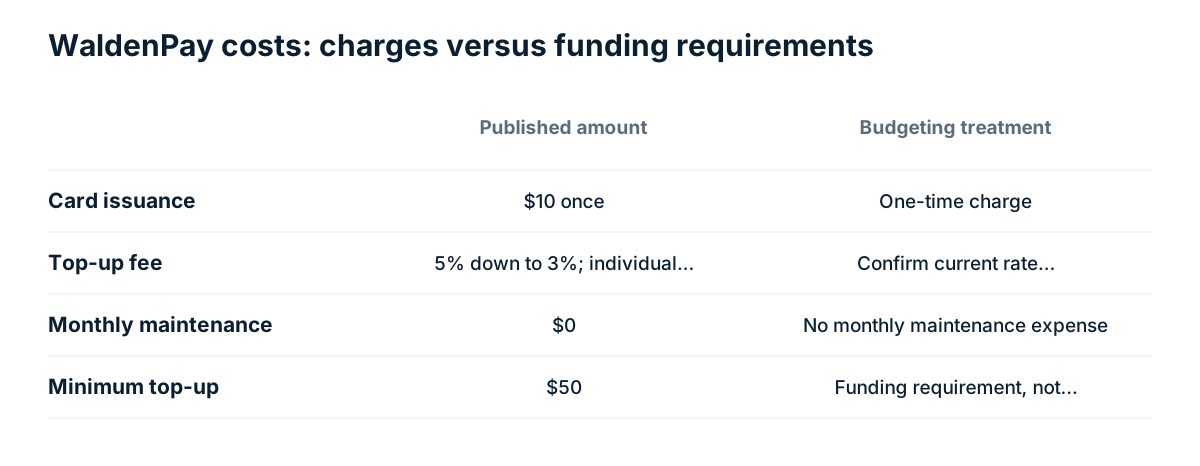
WaldenPay publishes a $10 one-time issue fee, $0 monthly maintenance and a $25 minimum top-up. Registration, balance checks and support are free. The minimum is a funding requirement, not another charge or an all-in startup price.
| Cost or requirement | Published amount | Budgeting treatment |
|---|---|---|
| Card issuance | $10 once | First-use cost; not repeated for every load |
| Top-up fee | 5% down to 3%; individual pricing at higher volume | Apply the current percentage to the confirmed calculation base |
| Monthly maintenance | $0 | No monthly maintenance expense |
| Minimum top-up | $25 | Funding threshold, not an additional fee |
How the automatic funding discounts work
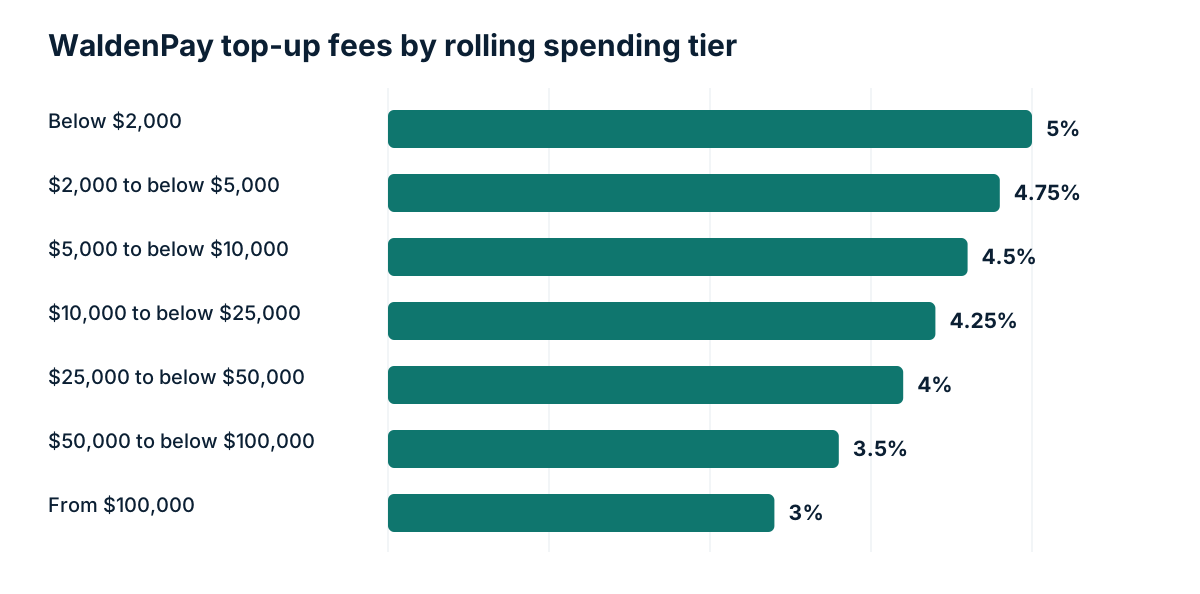
The discount schedule uses rolling 30-day card spend, not deposits or the size of a planned load. Adding $5,000 doesn't by itself establish $5,000 of qualifying spending.
| Rolling 30-day card spend | Top-up fee |
|---|---|
| Below $2,000 | 5% |
| $2,000 to below $5,000 | 4.75% |
| $5,000 to below $10,000 | 4.5% |
| $10,000 to below $25,000 | 4.25% |
| $25,000 to below $50,000 | 4% |
| $50,000 to below $100,000 | 3.5% |
| From $100,000 | 3% |
| $250,000+ per month | Individual pricing |
Discounts apply instantly and automatically, without an application. The dashboard displays the current fee, rolling 30-day spend and progress toward the next level. Older purchases eventually leave the rolling window, so an achieved percentage shouldn't be treated as permanent.
And a lower funding fee isn't a reason to manufacture spending.
Comparable $100, $500 and $1,000 spending targets
These conditional examples assume zero opening card balance, one load, no refunds or holds, and a 5% funding tier throughout. First use includes the $10 issue fee; repeat use assumes an existing card. Each target stays below $2,000, with no other qualifying spending assumed.
Before funding, the cardholder should confirm whether the entered top-up amount is the fee base before deduction or the desired credited balance. Two models therefore show the distinction rather than presenting an unsupported checkout quote. Figures are rounded to cents; the funding screen determines the actual amount required.
| Spendable balance target | Model A: first use | Model A: repeat use | Model B: first use | Model B: repeat use |
|---|---|---|---|---|
| $100 | $115 | $105 | $115.26 | $105.26 |
| $500 | $535 | $525 | $536.32 | $526.32 |
| $1,000 | $1,060 | $1,050 | $1,062.63 | $1,052.63 |
- Model A: If the fee is added to the desired credited balance, repeat-use funding equals target balance multiplied by 1.05.
- Model B: If 5% is deducted from the gross load, repeat-use funding equals target balance divided by 0.95.
- First use: Add the $10 issuance cost to either conditional model. The $25 minimum isn't added again.
A separate fee-only comparison holds the calculation base constant. On a hypothetical $1,000 fee base, 5% is $50, 4.75% is $47.50 and 3% is $30. The starting-to-lowest-tier difference is $20. Those figures don't establish the resulting card balance or total payment without the funding screen's deduction method.
For occasional purchases, issuance may matter more than a distant volume discount. For regular spending, the dashboard's actual percentage is more useful than “as low as 3%.” A comparison should use the tier supported by the intended spending pattern.
As of July 2026, KAST lists tier-dependent costs; the applicable plan's charges need confirmation before an equivalent numerical comparison. The KAST fee breakdown provides the dedicated plan-cost discussion; an unconfirmed charge must remain unknown rather than becoming $0 in a comparison.
Separate account features require separate accounting. Collect Payments charges the payer a 0.2% conversion fee, while the request creator receives the exact requested USD amount in the account wallet. That isn't the card top-up fee. Loading those funds onto a card is a separate funding step.
Country Eligibility: Residency Isn't the Same as Spending Location
Worldwide merchant reach doesn't establish permission to obtain a card. Residency, issuing country, physical delivery and purchase location are separate checks. WaldenPay hasn't published a resident-eligibility list, including US state coverage; applicants should confirm eligibility before signing up.
| Resident location | WaldenPay resident eligibility | Card issuing country | Physical delivery | Merchant-location restrictions |
|---|---|---|---|---|
| United States | Unconfirmed; state conditions unresolved | Not established | Not applicable: virtual card | Not established |
| United Kingdom | Unconfirmed | Not established | Not applicable | Not established |
| Netherlands, EEA | Unconfirmed; operator domicile isn't eligibility | Not established | Not applicable | Not established |
| India | Unconfirmed | Not established | Not applicable | Not established |
| Mexico | Unconfirmed | Not established | Not applicable | Not established |
The Netherlands is identified because operator BlueHouse Software B.V. is based in Rotterdam, not because Dutch applicants are confirmed eligible. Applicants in other EEA countries should also confirm residency eligibility with WaldenPay before signing up. The European crypto card eligibility guide provides the regional decision framework; "Europe" isn't one permission zone.
The US crypto card comparison addresses the US selection context. An applicant still needs a current answer covering residence and any state restrictions.
UK residence shouldn't be inferred from European coverage. The UK crypto card buyer's guide separates that regional decision.
The India virtual card guide explains the relevant virtual-card workflow. Travel acceptance doesn't establish issuance eligibility for an Indian resident.
Likewise, the Mexico crypto spending guide addresses local spending considerations, not guaranteed enrollment. Travelers need confirmation of destination restrictions while retaining truthful residency details; travel must never be used to bypass geographic rules.
Funding Limits, Spending Caps, Wallet Support and ATM Access
A funding minimum answers how little can be loaded; it doesn't establish how much can be held or spent. Evaluating a no kyc crypto card requires separate answers about maximum deposits, purchase ceilings, available balance and merchant authorization.
WaldenPay is a virtual prepaid card on Visa/Mastercard rails with stated reach of 150M+ merchants worldwide. Acceptance and approval aren't guaranteed. As a product class, stored-value cards rely on prepaid funds rather than an implied credit facility. Network reach doesn't override a merchant's prepaid-card policy, billing requirements or transaction checks.
| Limit or constraint | Meaning | Published WaldenPay position |
|---|---|---|
| Minimum funding | Smallest permitted top-up | $25 |
| Maximum funding | Largest single or cumulative load | Not published |
| Balance ceiling | Maximum amount permitted on the card | Not published |
| Per-purchase ceiling | Maximum individual card payment | Not published |
| Daily purchase limit | Aggregate purchases during the defined day | Amount and reset convention not published |
| Rolling purchase limit | Aggregate purchases over a moving period | Not published; the fee-discount window isn't a spending cap |
| Merchant constraints | Prepaid acceptance, recurring billing and holds | Merchant-specific; approval never guaranteed |
Checks before a larger load
- Residency: Country and state eligibility need confirmation. European residence or planned travel warrants a separate crypto card eligibility check.
- Funding and balance: Maximum loads, cumulative funding limits and balance ceilings require separate answers.
- Mobile wallets: WaldenPay supports Apple Pay and Google Pay, but successful provisioning doesn't guarantee purchase authorization. Device requirements still apply.
- Intended use: Online card details and mobile-wallet payments don't provide a physical card. The intended payment channel needs checking.
Recurring purchases, deposits and authorization holds deserve explicit investigation. A merchant may require a payment method suitable for later billing or temporarily reserve funds before settlement. The relevant questions are whether prepaid cards qualify, how much becomes unavailable and how release is handled. An ordinary retail purchase doesn't establish suitability for these transactions. If a hold would consume funds needed elsewhere, another permitted payment method may fit better.
ATM functionality isn't established by WaldenPay's verified facts.
Nor are account-feature limits card limits. Send to Friend permits $1-$10,000 per transfer and $20,000 per rolling 24 hours. Collect Payments accepts requests from $1-$10,000. Neither establishes card purchase capacity.
Finally, applicants should identify the operator, official support route and procedure for restricted accounts or unavailable funds. WaldenPay is operated by BlueHouse Software B.V. through a licensed partner model, but that doesn't establish a particular recovery outcome. Minimal-document onboarding proves neither weak recourse nor strong protection. Unconfirmed limits should remain open questions until current card-specific documentation or support resolves them.
From Eligibility Check to First Purchase: A Safe Setup Sequence
A small test can reveal setup problems before a larger balance is committed. It can't prove that future payments will clear or that an account will never face review. For a no kyc crypto card, the safest sequence starts before funding, with documented eligibility and a clear purpose for the test.
- Check residence and purchase eligibility. The prospective cardholder checks current terms for residency requirements, relevant state restrictions, and permitted purchases. A US reader shouldn't treat worldwide merchant reach as confirmation of US availability. Unclear eligibility or prepaid-card compatibility should be resolved through official support before any deposit.
- Confirm the operator and official access route. WaldenPay is operated by BlueHouse Software B.V., Rotterdam, Netherlands, through a licensed partner model. The applicant verifies the official domain before registering and accesses any Telegram bot through the official service, rather than an unsolicited invitation. Lookalike names aren't proof of authenticity.
- Read verification and recovery terms. Signup requires an email only, with no identity documents for standard use, but use remains subject to AML and regulatory requirements. The applicant distinguishes registration requirements from possible later reviews, records the official support route, and checks available account-recovery instructions before funding.
- Secure access and budget for published costs. A unique password and protected email account reduce avoidable access risks. Additional security controls actually offered should be reviewed and enabled where appropriate. The budget includes the $10 one-time issue fee, $25 minimum card top-up, and applicable top-up fee, which starts at 5% and falls automatically to as low as 3% with qualifying rolling 30-day card spend.
- Inspect the exact asset and network. WaldenPay supports 135+ cryptocurrencies across 35+ networks. The sender checks the asset-and-network combination displayed in the account. A familiar ticker doesn't establish network compatibility, and availability on one network doesn't authorize a transfer through another.
- Verify the destination and required fields. The account wallet provides unique deposit addresses per supported network. The sender compares the copied address with the official account screen and checks whether the displayed instructions require a memo or tag. An unsolicited message shouldn't replace those instructions. Unclear destination details are a reason to stop before submission.
- Fund within documented requirements. A test amount must respect the $25 minimum card top-up while accounting for issuance and top-up costs. Any separate deposit instructions also need checking. The confirmation screen should establish what is paid and credited; an unnecessarily large deposit isn't needed merely to explore the interface.
- Confirm credit, loading, and issuance separately. A sent deposit isn't necessarily a completed card load. The cardholder checks account credit and resulting card balance. Crypto converts to card balance at loading time, and WaldenPay states that issuance is instant after funding. That doesn't establish an end-to-end deadline for pending deposits or additional checks.
- Configure the intended payment method. The card can be added to Apple Pay or Google Pay, or its details used online. WaldenPay's Telegram bot supports ordering, recharging, balance checks, and transaction alerts. Successful provisioning doesn't establish payment approval.
- Attempt an ordinary permitted purchase. A modest planned purchase tests the intended flow without probing restrictions or manufacturing activity. A decline should lead to diagnosis, not repeated attempts to bypass a merchant's rules. A successful payment establishes only that transaction's outcome.
Walkthrough screenshots should come only from a real, authorized session, with its date and test scope recorded. Personal information, card numbers, security codes, login credentials, QR codes, and wallet identifiers should be redacted wherever they expose access or link activity to an individual. Full card details should never appear in support messages.
Custody and Reliability: What 'Legit' Does and Doesn't Establish
A registered company and a working card answer narrower questions than whether funds remain accessible during a dispute, restriction, or service interruption.
Reliability assessment needs evidence about each service role. The website operator may differ from the entity receiving crypto, handling conversion, maintaining balances, or issuing the prepaid card. A licensed partner model doesn't, by itself, identify every party's obligations or establish a recovery outcome.
- Legal identity: The contracting entity, jurisdiction, and contact details should be identifiable in accessible terms, not only in a marketing footer.
- Service roles: Documentation should explain who receives deposits, processes loads, holds balances, and handles card complaints. Undisclosed roles remain unresolved questions.
- Custody: The reader checks who controls deposited assets and whether account credit and card balance have different contractual treatment. A deposit address doesn't establish self-custody.
- Costs and restrictions: Current pricing, prohibited activity, suspension powers, and closure provisions should be available before funding.
- Support: An official contact route matters, but its existence doesn't prove response quality or resolution speed.
- Balance exit: Terms should establish whether unused funds can be withdrawn, refunded, or transferred, under what conditions, and what happens during review.
Searches such as "is Kast legit," "is SolCard legit," "is KripiCard legit," and "is BingCard legit" are evidence questions, not grounds for unsupported verdicts. The Kast due-diligence guide provides a focused companion for evaluating that provider; its findings shouldn't be generalized to unrelated cards.
And a "no kyc crypto card Reddit" search can identify issues worth investigating without confirming their cause or prevalence. A useful report identifies its date, card product, jurisdiction, transaction stage, and eventual resolution, with sensitive records redacted. An unexplained screenshot or affiliate ranking carries less evidentiary weight than applicable terms and a documented support response.
A successful payment confirms that a payment worked. It doesn't establish solvency, unrestricted withdrawals, continuing availability, or protection against loss. This guide is written for WaldenPay, so its commercial relationship should remain visible wherever WaldenPay is recommended, and the same documentation standard should apply to it.

Later Verification Requests and the Fate of Existing Balances
No-document standard signup doesn't rule out a later request for evidence. Before committing funds, the applicant needs to understand both the review process and the documented treatment of money already deposited.
Changed account details, unusual activity, requests for higher limits, or regulatory review are general possibilities for additional checks. They aren't confirmed WaldenPay triggers, or confirmed triggers for another provider, unless applicable policies substantiate them. A no kyc crypto card label doesn't answer what happens during an individual review.
| Policy field | Evidence to check | Unresolved question |
|---|---|---|
| Notice | Official notification channel and stated reason, where disclosed | How can a genuine request be authenticated? |
| Requested evidence | Documents or explanations required and secure submission method | What information is necessary, and why? |
| Restrictions | Whether funding, spending, transfers, or withdrawals are affected | Which functions remain available? |
| Response route | Support, escalation, and any documented response deadline | How can an unclear request be clarified? |
| Existing balances | Withdrawal, refund, closure, and unresolved-review provisions | What happens if verification is declined? |
Withdrawal means moving an available balance through a permitted route. A refund returns funds under the applicable policy; closure ends the account relationship. None automatically guarantees the others, and an unresolved review isn't evidence that funds have been released or forfeited.
The cardholder should contact official support, retain the notice and case reference, and request written clarification before sending sensitive evidence. Refusing verification may affect access, but no guaranteed exit route or deadline can be inferred from email-only registration. Additional deposits should wait until the restriction and balance treatment are understood.
Delayed Deposits, Declines, Frozen Balances and Merchant Refunds
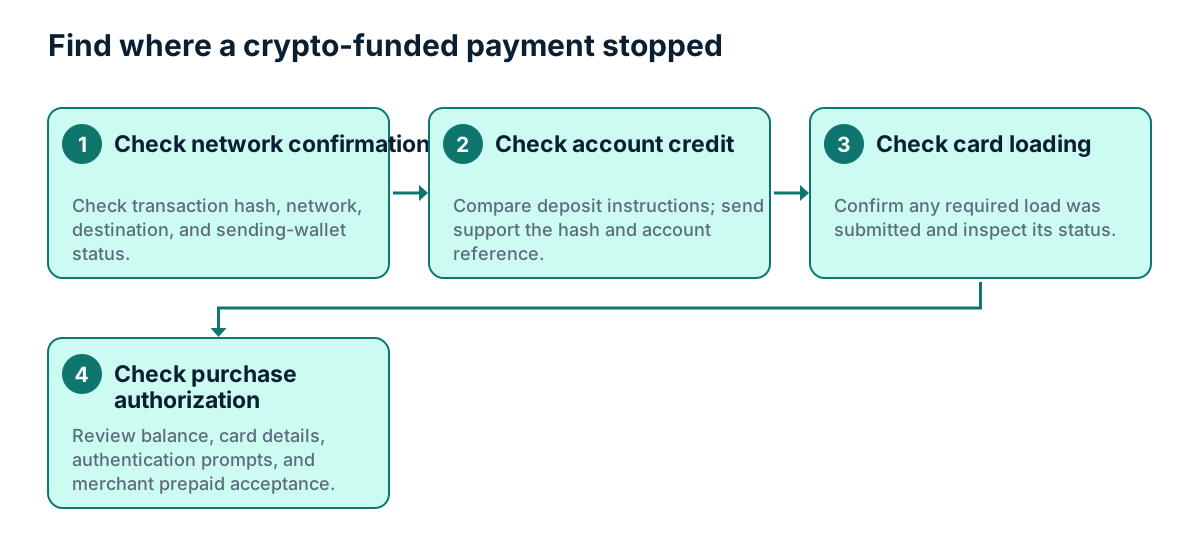
The useful first question is where the payment stopped. A blockchain transfer, account credit, card load, authorization, and refund are different events, with different records and resolution routes.
The following flow separates those stages without assuming that a displayed balance or merchant message tells the whole story. For first-time US buyers, dollar-funded crypto purchases without KYC require separate checks of eligibility, verification, custody, and refund terms.
- Transaction not confirmed on the intended network? The sender checks the transaction hash, selected network, destination, and sending-wallet status. A missing or pending transaction belongs first with the sending wallet or service. Another transfer shouldn't be sent simply because the first hasn't appeared; that can create a second payment without resolving the original.
- Confirmed on-chain, but account not credited? The sender compares the asset, network, address, and any required memo against the deposit instructions. Official provider support needs the transaction hash and relevant account reference. Blockchain confirmation proves a network event, not that the provider accepted the asset or credited the correct account. Incorrect transfers may not be recoverable.
- Account funded, but card balance unchanged? The cardholder checks whether a separate load was required, whether it was submitted, and what status or receipt was recorded. Support should receive the loading reference and account-credit evidence. A wallet balance shouldn't be assumed spendable through the card until the card balance reflects the load.
- Card funded, but authorization declined? The cardholder checks available balance, entered details, any authentication prompt, and applicable purchase restrictions. The merchant may clarify whether prepaid cards are accepted for that transaction; provider support may clarify the recorded decline. Repeated retries aren't a substitute for resolving the cause.
- Payment pending rather than completed? The cardholder distinguishes a pending authorization hold from a posted purchase. Merchant confirmation of cancellation can help support trace the event. Release timing must come from the applicable policy or case response, not an invented universal deadline.
- Account restricted? The cardholder follows the official notice and requests clarification about affected functions and existing balances. Opening replacement accounts or rerouting activity to escape review isn't an appropriate resolution path.
- Merchant says a refund was issued? The cardholder obtains the refund receipt or reference and checks whether the original purchase was posted or merely authorized. Provider support can then investigate the card-side status. A merchant refund isn't automatically a crypto transfer back to the original funding address.
A useful support packet includes the transaction hash, asset and network, timestamps with time zone, amount, redacted receipt, card transaction reference, and previous case number. Passwords, private keys, seed phrases, and full card credentials aren't diagnostic evidence.
For a no kyc crypto card, a dispute or chargeback route should be described only when applicable terms establish eligibility and procedure. Merchant contact, provider complaints, and card disputes are distinct paths. A card dispute doesn't reverse an underlying blockchain transfer, and a Collect Payments request has a separate lifecycle from a merchant card refund. WaldenPay's automatic refunds for incomplete Collect Payments requests shouldn't be generalized to card loads or purchases.
AML Requirements and Consumer Protection Limits
Document-light onboarding changes the initial information request, not the existence of compliance obligations. Requirements depend on the jurisdiction, activity, and role of each service provider; a card operator, crypto service, and issuer shouldn't automatically be treated as having identical duties.
WaldenPay is a virtual prepaid card platform, not a bank. Its use remains subject to AML and regulatory requirements. An email-only signup doesn't establish an exemption from later checks, transaction monitoring, recordkeeping, or legally required disclosure.
Prepaid card balances also shouldn't be equated with bank deposits. Before relying on a protection claim, the prospective cardholder needs documentation identifying the protected entity, balance type, eligible claimant, and relevant conditions.
- Deposit insurance: It shouldn't be assumed merely because the card operates on established payment rails.
- Safeguarding: Any claim requires evidence explaining which funds are covered and how the arrangement applies.
- Refunds and disputes: Contractual procedures and statutory rights are different; neither should be inferred from a card logo.
- External complaints: Ombudsman or regulator access depends on the applicable service and jurisdiction, not simply the operator's mailing address.
Privacy doesn't remove possible tax or recordkeeping obligations. As of July 2026, the IRS's digital asset guidance is a relevant starting point for US readers assessing federal reporting requirements. Personal consequences depend on the transaction and circumstances; a qualified professional should address individual tax or legal questions.
And missing protection documentation shouldn't be converted into either a guarantee of safety or a claim that no rights exist. The appropriate next step is written clarification before funding, with unresolved questions kept visible in the comparison.
Common Mistakes That Make a Privacy-Focused Card a Poor Fit
A no kyc crypto card can be a poor fit even when its onboarding claim is accurate. The pre-funding decision should catch these mismatches:
- Registration mistaken for issuance: An email account doesn't establish eligibility to receive or use the card.
- Ticker mistaken for network support: The exact deposit route needs confirmation, not just the asset name.
- No monthly fee mistaken for free use: Issuance and loading costs still belong in the spending budget.
- Merchant reach mistaken for residency eligibility: Worldwide network acceptance doesn't establish availability to a particular resident.
- Wallet provisioning mistaken for approval: Adding a card to a mobile wallet doesn't guarantee a merchant authorization.
- Excess balance committed without an exit policy: Funding beyond planned purchases increases exposure to unresolved access and recovery terms.
- Rankings mistaken for current evidence: Affiliate placement and Reddit anecdotes don't replace card-specific terms or documented support answers.
The dated evidence audit should resolve product claims, the cost scenarios should establish affordability, and the failure-resolution sequence should identify the support path. Any unanswered issue that determines usability is a reason to pause funding rather than experiment with a larger balance.
What Can Change After a Card Is Recommended?
A recommendation applies to documented conditions, not permanent product characteristics. Verification stages, eligible residency, issuing arrangements, fees, supported networks, and wallet compatibility can change.
The guide's maintenance standard should require a per-card checked date and a material-change log identifying the old claim, replacement claim, supporting evidence, and affected selection criteria. Conflicting terms and product pages should remain flagged until resolved. An unavailable page isn't, by itself, proof that a policy changed.
A publication update also isn't a fresh provider audit. Editing wording or adding an explanation shouldn't refresh a card's verification date unless its evidence was actually rechecked. Before another substantial load, the cardholder should revisit current requirements and notices. No forecast that document-light cards will universally disappear, or remain available indefinitely, can substitute for that check.
Bottom Line: Choose Documented Eligibility, Costs and Exit Terms
The best no kyc crypto card candidate is the one whose documented requirements match the cardholder's residency and intended spending.
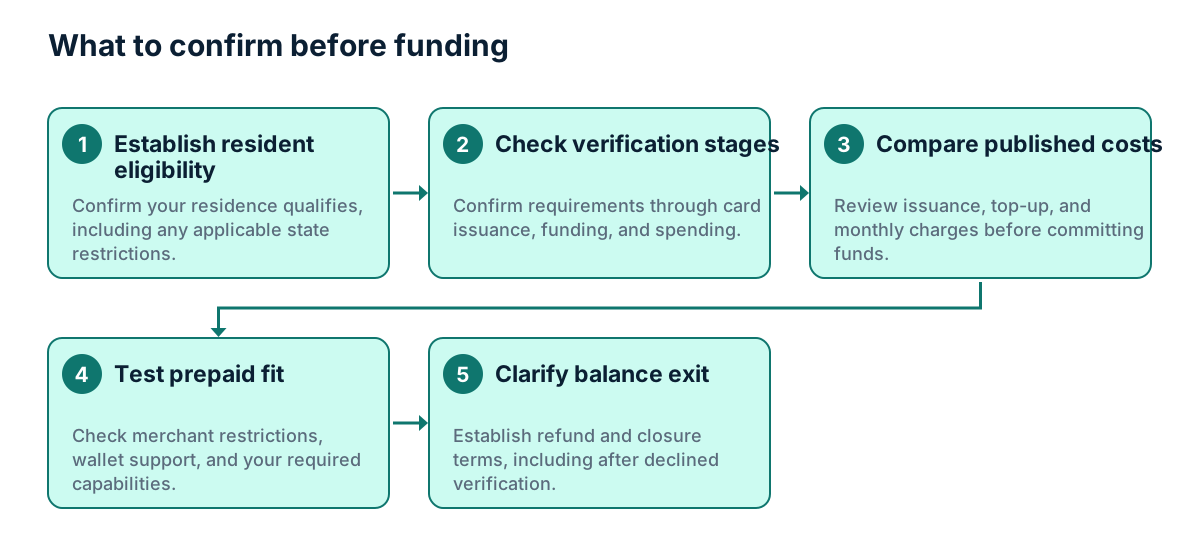
Selection should follow a fixed sequence: establish resident eligibility, confirm requirements through issuance and spending, then compare published costs. Next comes prepaid fit: merchant restrictions, wallet support and required capabilities. Before funding, the cardholder should establish how unused balances, refunds and account closure work, including what happens if later verification is declined. Unclear exit terms are a reason to pause.
WaldenPay merits consideration when email-only signup, no identity documents for standard use and virtual prepaid spending meet those needs. Its $10 issue fee, $25 minimum top-up, top-up fees from 5% down to 3%, and $0 monthly maintenance provide concrete selection criteria. Apple Pay and Google Pay are supported; acceptance isn't guaranteed.
This guide is published by WaldenPay, operated by BlueHouse Software B.V. Its privacy-focused service isn't anonymous and remains subject to AML and regulatory requirements.
Readers needing capabilities outside the documented no-document shortlist should move to the broader card-selection pillar rather than compromise on essential requirements.
Check Current Terms Before Funding
Applicants considering WaldenPay should confirm current eligibility, verification requirements, and exit terms before funding. Published costs include a $10 one-time card issue fee, top-up fees from 5% down to 3% with automatic volume discounts, and no monthly maintenance fee.
Frequently Asked Questions
What is the best no kyc crypto card for UK residents?
The best fit depends on documented UK residency eligibility, onboarding requirements, costs, and balance withdrawal terms. International merchant acceptance doesn't establish eligibility for a UK resident. WaldenPay's email-only signup for standard use doesn't, by itself, confirm UK availability.
Can a crypto card without KYC still request identity documents later?
Document-light onboarding doesn't rule out later verification requests. WaldenPay requires no identity documents for standard use, but its services remain subject to AML and regulatory requirements. Before funding, a prospective cardholder should check what happens to spending access and remaining balances if additional verification becomes necessary.
Is WaldenPay an anonymous crypto payment card?
WaldenPay is privacy-focused, not anonymous or untraceable. Email-only signup for standard use doesn't make funding transfers or card purchases invisible. Crypto converts to card balance when loaded, and spending takes place through a virtual prepaid card on Visa/Mastercard rails.
Can someone use WaldenPay without a bank account?
WaldenPay supports crypto-funded prepaid spending without a bank transfer as the funding step. It accepts 135+ cryptocurrencies across 35+ networks, with funds converted to card balance at loading time. But the card isn't a bank account, and cardholders shouldn't assume it provides bank-account services or protections.
Can a privacy-focused crypto card pay for online ads?
A privacy-focused crypto card may work for ads when the advertising platform permits the card type and approves the payment. WaldenPay is a prepaid virtual card, so it doesn't bypass prepaid-card restrictions, billing checks, or advertiser verification. An 'anonymous ads payment card' search shouldn't be treated as a route around an advertising platform's rules.
What are WaldenPay's minimum funding requirement and ongoing card fees?
WaldenPay has a $25 minimum top-up, a $10 one-time card issue fee, and no monthly maintenance fee. Its top-up fee starts at 5% and automatically falls with rolling 30-day card spend, reaching 3% from $100,000 in spend. The dashboard shows the current fee and progress toward the next discount level.
Can Reddit recommendations establish whether a no-KYC card is reliable?
Reddit reports can identify issues worth investigating, but they don't establish current eligibility, fees, or balance recovery rights. Useful reports identify the card product, country, incident date, and eventual resolution rather than merely saying a card worked. Published terms and a clear support process carry more weight than an isolated successful purchase.
Is KAST, SolCard, or Kripicard legit?
A reliable legitimacy assessment needs current evidence about the operator, service terms, card program, and complaint handling. A functioning website or successful transaction doesn't establish how a provider handles frozen balances or later verification requests. Any review dated as of July 2026 should distinguish documented facts from user reports and be rechecked before funding.
Is WaldenPay the best alternative to BingCard, SolCard, or Kripicard?
The available verified facts don't establish a defensible ranking against those providers. A comparison dated as of July 2026 would need matching evidence for residency eligibility, onboarding, total published costs, spending restrictions, and exit terms. WaldenPay's documented email-only signup for standard use, prepaid structure, and published fee tiers provide concrete comparison points, not proof that it's best for every cardholder.
Can a WaldenPay balance be sent back to an external crypto wallet?
The verified product facts don't establish an external-wallet withdrawal option for card balances. Send to Friend is an internal balance transfer between WaldenPay users, not an on-chain withdrawal. Anyone who may need unused funds returned to a crypto wallet should confirm the applicable withdrawal and closure terms before loading.
Does Send to Friend move cryptocurrency on-chain?
Send to Friend moves balance through WaldenPay's internal ledger rather than a blockchain transaction. It uses the recipient's email address, arrives in seconds, and has no transfer fee, with a $1 minimum, a $10,000 per-transfer maximum, and a $20,000 rolling 24-hour limit. A recipient name preview and password confirmation help the sender check the transfer before submission.
Can a freelancer collect crypto without requiring clients to create an account?
WaldenPay's Collect Payments lets a freelancer share a payment link or QR code without requiring the payer to have a WaldenPay account. Requests specify a fixed USD amount from $1 to $10,000, and the creator receives that exact amount in the wallet while the payer covers a 0.2% conversion fee. Underpayments are tracked with a fresh address for the remainder, and incomplete payments are automatically refunded to the payer's wallet.