Crypto to Fiat Conversion
By Elena Petrova, Blockchain Researcher · Updated September 21, 2026
What Crypto to Fiat Conversion Actually Means
At its core, crypto to fiat conversion is exchanging a digital asset for government-issued currency that banks and merchants recognize. That could mean selling Bitcoin for dollars on an exchange, swapping USDT for euros through a P2P desk, or just spending stablecoins directly through a card without ever touching a traditional bank account.
Most guides treat this like a single-path problem: sell on an exchange, wait for the transfer, done. But by 2026 there are several legitimate off-ramps, and the right one depends on how fast someone needs the money, how much they're moving, and whether it even needs to land in a bank account at all.
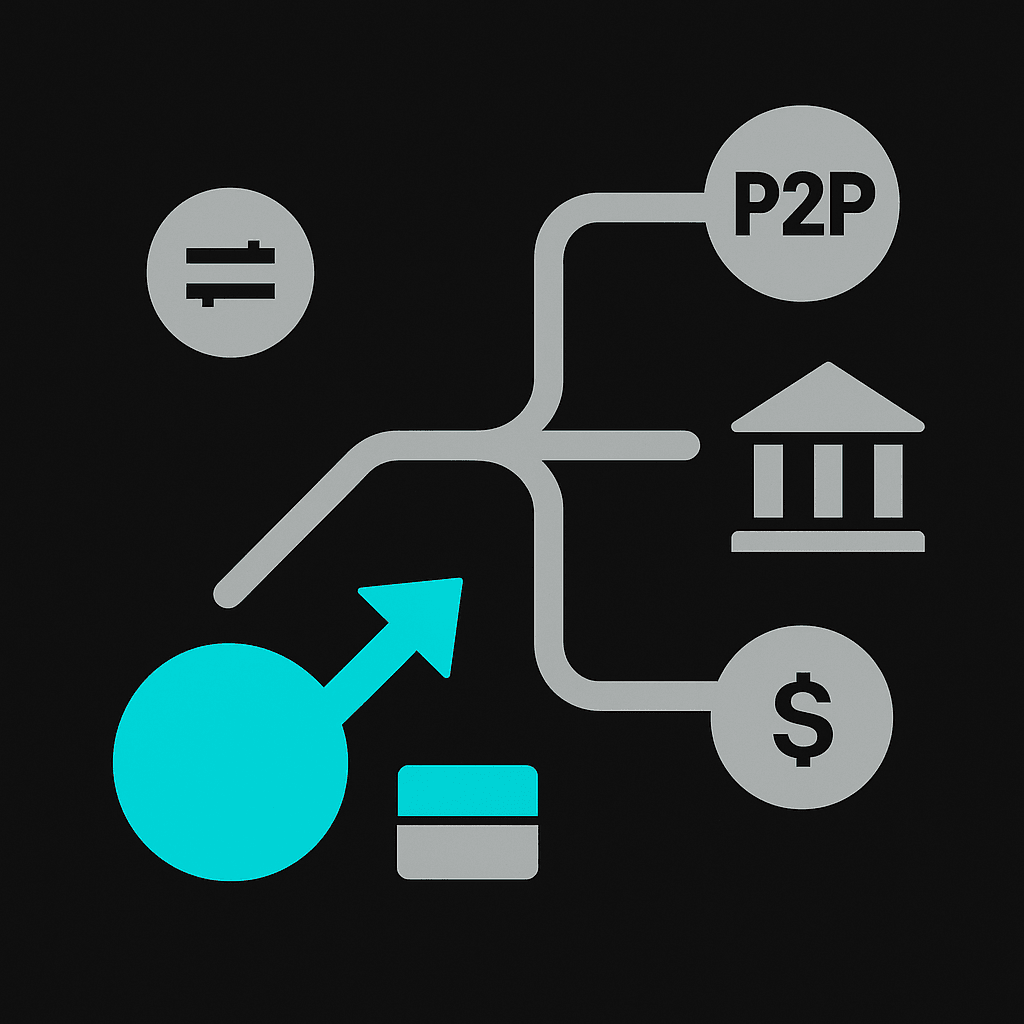
The Main Routes: Exchanges, P2P, and Bank Withdrawals
The classic crypto to fiat exchange path runs through centralized platforms like Coinbase, Kraken, or Binance. Deposit crypto, sell it for fiat within the platform, then request a bank withdrawal. It works, but it's rarely instant.
- Centralized exchange withdrawal: Sell crypto to a fiat balance, then withdraw via ACH, SEPA, or wire. Typically takes anywhere from a few hours to 3-5 business days depending on the bank and region.
- P2P marketplaces: Match directly with a buyer who pays fiat (often via bank transfer) in exchange for crypto. Settlement can be faster, but pricing and counterparty reliability vary quite a bit.
- OTC desks: Used mostly for larger amounts, offering negotiated rates and less market impact than dumping a big order onto an exchange order book.
- Crypto-funded cards: Load stablecoins onto a virtual or physical card and spend directly at merchants, skipping the bank withdrawal step entirely.
Each of these fiat withdrawal methods has its own friction points. Exchange withdrawals can get held up by KYC re-verification. P2P trades depend on finding a counterparty at a fair price. And every method involves some kind of spread or fee eating into the amount that actually lands as usable cash.
Crypto Debit Card vs Exchange Withdrawal
This is where most crypto to fiat conversion guides stop short. They explain how to sell crypto to cash but skip over the fact that a full conversion isn't always necessary.
A crypto debit card - like a WaldenPay virtual card loaded with USDT (TRC20) or USDC (ERC20/TRC20) - lets someone spend stablecoin value directly at any merchant that accepts card payments, without first converting to a bank balance. The card network handles the settlement side, so from the user's perspective it behaves like ordinary crypto card spending: tap to pay, buy something online, add it to Apple Pay or Google Pay, and move on.
The tradeoff is control versus convenience. Exchange withdrawal gives someone a bank balance they can move anywhere, pay bills with, or transfer to another account. A card gives faster access to spendable value with less paperwork per transaction, but the funds stay tied to that card ecosystem until spent.
| Method | Speed | Typical Fees | Best For |
|---|---|---|---|
| Exchange withdrawal to bank | Hours to 5 business days | Trading spread + withdrawal fee | Large sums, long-term cash needs |
| P2P trade | Minutes to hours | Negotiated, varies widely | Local currency, flexible pricing |
| OTC desk | Same day | Negotiated spread | High-volume trades |
| Crypto-funded card | Minutes (card ready in about 5 minutes) | Flat top-up fee (e.g. 5%) + one-time issue fee | Everyday spending, travel, online purchases |
None of these is universally "best." Someone cashing out a large crypto position for a house down payment needs a bank rail. Someone who just wants to buy groceries or pay for a hotel while holding stablecoins doesn't need to convert at all - they need crypto card spending that works at checkout.
Fees, Spreads, and the Real Cost of Cashing Out
Crypto conversion fees rarely show up as one clean line item. There's usually a trading spread (the gap between buy and sell price), a withdrawal fee, and sometimes a network fee for moving the crypto itself before it's even sold.
Stablecoin to fiat conversions - selling USDT or USDC rather than a volatile asset - tend to have tighter spreads since the underlying value doesn't swing much. But withdrawal fees and processing time still apply.
Card-based spending sidesteps some of that structure. With WaldenPay, for example, there's a standard 5% top-up fee when loading the card and a one-time card issue fee, with no monthly maintenance charge. Registration, balance checks, and support are free. That's a simpler fee shape to plan around than stacking exchange spread plus bank wire fees, though it suits smaller, recurring spending more than converting a large lump sum to cash.
Full pricing details are on the pricing page, and the how it works page walks through the loading and spending flow for anyone comparing it against a traditional exchange withdrawal.
Compliance, Privacy, and Tax Implications
Worth being direct about this: no crypto to fiat conversion method, and no crypto card, offers anonymity. Exchanges require KYC. P2P platforms increasingly do too. And card providers, including WaldenPay, operate under AML and regulatory requirements - identity verification and transaction monitoring are part of the deal, not an exception.
What these tools do offer is privacy in a narrower, legitimate sense - keeping spending habits off a traditional bank statement, holding value in stablecoins rather than a checking account, and having more control over when and how funds move. That's financial sovereignty within the rules, not evasion of them.
Crypto to fiat tax implications also don't disappear just because someone uses a card instead of an exchange. Selling crypto, or in some jurisdictions even spending it, can be a taxable event. Rules vary by country and change over time, so anyone converting meaningful amounts should check local guidance or talk to a tax professional rather than assume a card sidesteps reporting obligations.
Choosing the Best Way to Cash Out Crypto
There isn't a single best way to cash out crypto. There's a best way for a given situation.
- Need a large lump sum in a bank account: exchange withdrawal, planned a few days ahead.
- Need local currency fast and exchange withdrawals are slow in the region: P2P, with care taken on counterparty reputation.
- Need to spend stablecoins on everyday purchases, travel, or ad accounts without a full conversion step: a crypto-funded card.
Many people end up using more than one method depending on the purpose - an exchange for larger cash needs, a card for day-to-day crypto card spending. That combination often provides more flexibility than committing to a single crypto off-ramp.
For a deeper look at how crypto payments settle on the merchant side, see Bitcoin Payments, and for context on how card transactions process in general, How Online Card Payments Work is a useful companion piece. Readers specifically comparing privacy-focused card options may also find Best No KYC Crypto Card in 2026: What Actually Works helpful.
FAQ
How do I convert USDT to USD without losing money to fees?
There's no fee-free option, but spreads are usually tighter on stablecoin pairs than on volatile crypto. Comparing exchange withdrawal fees against a card's flat top-up fee before moving funds helps avoid surprises either way.
Is a crypto debit card the same as converting crypto to fiat?
Not exactly. A card lets someone spend stablecoin value at merchants without first moving funds into a personal bank account, which is faster for everyday purchases but doesn't give the same flexibility as cash sitting in a bank.
Are crypto to fiat conversions taxable?
Often yes, depending on jurisdiction. Selling crypto for fiat, and in some cases spending it directly, can trigger a taxable event. Rules differ by country, so checking local tax guidance is worth doing before converting significant amounts.
Why did my exchange withdrawal get delayed?
Common causes include incomplete KYC, withdrawal limits tied to account tier, or bank-side processing times. It's rarely instant even when the exchange itself processes the sale quickly.
Skip the withdrawal wait for everyday spending
Load USDT or USDC onto a WaldenPay virtual card and spend at over 150 million merchants worldwide, without routing every purchase through a bank withdrawal first.
Get your WaldenPay card