Buy Crypto No KYC: What Can First-Time US Buyers Expect?
By James Whitfield, Payments Specialist · Updated September 22, 2026
Buy Crypto No KYC: What Can First-Time US Buyers Expect?
Most crypto exchanges require identity verification. For a first-time US buyer searching "buy crypto no kyc," a legitimate purchase with dollars depends on the provider's published US eligibility and payment requirements, not its advertising label. A service that swaps existing tokens doesn't solve the starting-with-dollars problem, and no document request at signup doesn't guarantee a document-free purchase or withdrawal.
Readers whose actual goal is spending crypto they already hold can use the no-KYC crypto card guide instead. Buying an asset and funding a spending card are separate transactions.
For example, WaldenPay's crypto virtual card is a crypto-funded prepaid card, not a service for purchasing crypto with dollars. Loaded crypto converts to card balance; use remains subject to AML and regulatory requirements.
Does the buy crypto no kyc route actually accept dollars?
The first filter is the starting asset. A platform can require no identity documents for a token swap while offering no way to accept dollars. That distinction eliminates an unsuitable option before account creation or wallet connection.
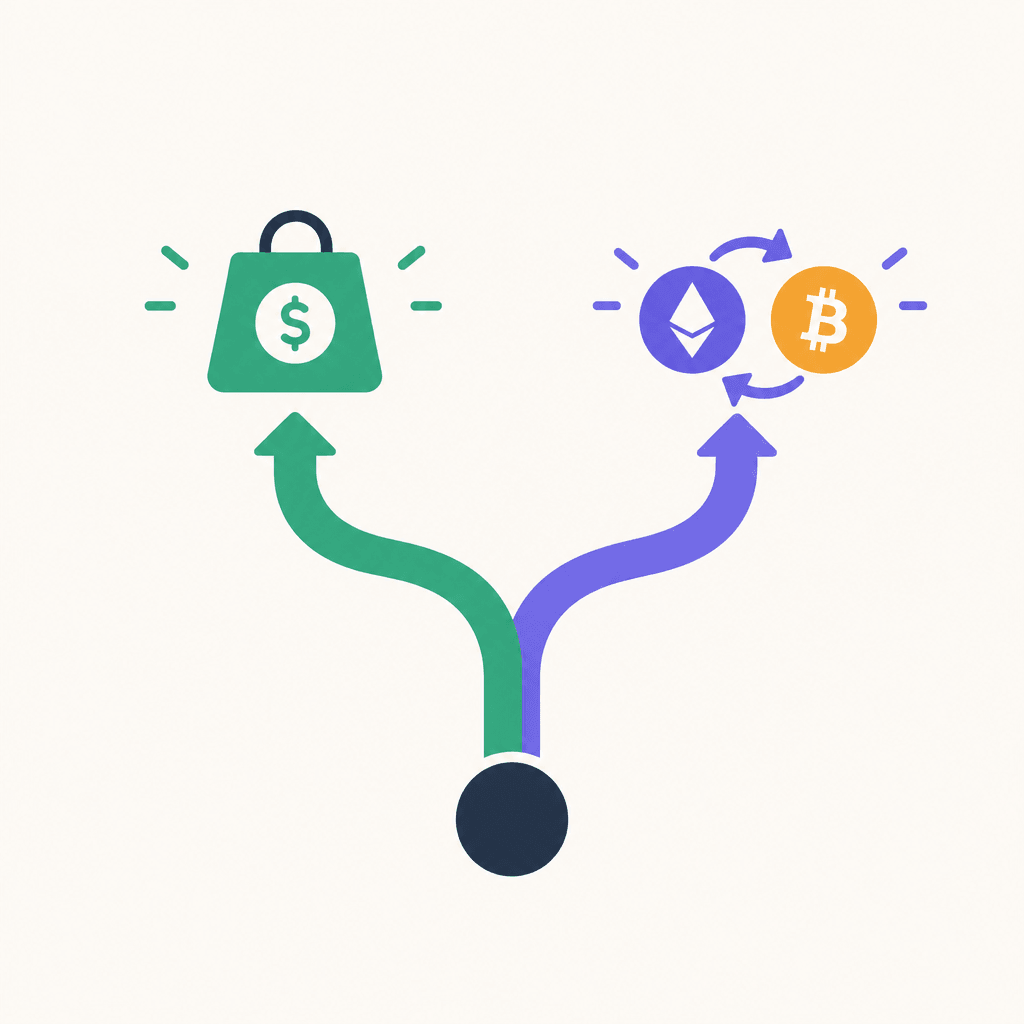
| Route | Starting funds | First-purchase question |
|---|---|---|
| Dollar-funded purchase | Dollars through a supported payment method | Does the purchase provider accept this US resident under its stated verification rules? |
| Crypto-to-crypto swap | Crypto already held | Where would the buyer acquire the initial crypto? |
| Peer-to-peer purchase | A payment method accepted by the individual seller | What platform rules, seller requirements, and dispute protections apply? |
Peer-to-peer platforms connect buyers directly with individual sellers. Cash-to-crypto transactions can potentially accommodate first-time buyers because they don't require existing crypto. But that describes the funding flow, not a verified recommendation, exemption from compliance, or assurance of seller reliability.
A page about a crypto card without a bank account addresses a different need: spending crypto without funding the card from a bank account. It doesn't establish how someone starting with dollars can acquire that crypto.
Confirm US eligibility before entering payment details
A provider's availability claim should explicitly cover US residents and any applicable state restrictions. A page loading successfully, a selectable dollar currency, or an accessible registration form isn't enough.
For someone comparing buy crypto no kyc options, eligibility belongs ahead of price. The relevant terms are those of the business handling the dollar payment and delivering the crypto. If checkout introduces another purchase provider, that provider's requirements also need review.
- Does the service explicitly permit the buyer's country and state of residence?
- Is the intended payment method supported for that resident?
- Does the payment account need to match the purchaser's name?
- Are purchase and withdrawal requirements disclosed before payment?
Missing answers are a reason to pause and request clarification. Buyers shouldn't misstate residency, ownership, or identity to make an otherwise unavailable purchase proceed. Published eligibility also doesn't guarantee individual approval.

Read buy crypto no kyc claims by transaction stage
"No documents at registration" is narrower than "no documents needed to receive purchased crypto." A useful review separates account creation, payment authorization, purchase completion, and withdrawal. Each stage needs its own answer.
KYC stands for Know Your Customer and involves verifying customers' identities. The practical issue for this purchase isn't the acronym; it's what information the provider requires, when it requires it, and what happens to committed funds if verification can't be completed.
A buyer hoping to buy crypto without ID verification should check whether the published policy reserves additional checks and explains their consequences. Crypto purchase verification triggers shouldn't be treated as instructions for avoiding review. If a required check is unacceptable, the appropriate decision is to stop before paying.
For a later spending-card application, the crypto card verification requirements guide explains why registration and ongoing use need separate scrutiny.
And reduced document collection doesn't make a transaction anonymous. Readers weighing the privacy of subsequent card spending can consult the limits of crypto card privacy without confusing that topic with purchase eligibility.
Does connecting a wallet establish a document-free purchase?
No. A wallet connection doesn't establish that a service accepts dollars, serves US residents, or waives identity checks for purchases.
The wallet connection vs identity verification distinction matters because a swap interface and a dollar checkout can look like parts of the same journey. If an interface redirects to a purchase provider, the buyer needs that provider's eligibility, verification, custody, and refund terms before authorizing payment.
For a buy crypto no kyc search, the decisive evidence is a disclosed dollar-funded purchase process, not a connect-wallet button.
Fiat on-ramp: A service that enables a purchase of cryptocurrency using conventional money, such as US dollars.
Custody: The arrangement determining who controls purchased crypto and how the buyer can access or withdraw it.
Security deserves its own review, too. Someone considering a spending card afterward can examine WaldenPay's security information, but a card platform's safeguards don't validate an unrelated crypto seller or purchase checkout.
Check custody and refund terms before committing funds
A completed payment and accessible crypto aren't necessarily the same milestone. Before authorization, the buyer should establish whether delivery goes directly to an external wallet or first appears in a provider-controlled account.
When assessing buy crypto no kyc offers, withdrawal terms deserve the same attention as checkout requirements. An account balance isn't a satisfactory endpoint if the buyer's intended use requires an external transfer and the conditions for that transfer remain unclear.
Refund terms should address a rejected purchase, an incomplete transaction, and a verification request that prevents completion. The buyer needs to know whether dollars or crypto would be returned, where the return would go, which disclosed deductions could apply, and how a dispute reaches support.
A compact pre-purchase checklist keeps the decision focused:
- Starting funds: The service accepts dollars through the intended payment method, rather than requiring tokens first.
- Eligibility: Published terms cover the buyer's actual US residence.
- Verification: Requirements are clear for payment, delivery, and withdrawal.
- Quote: The total dollar charge, crypto amount, and applicable purchase or withdrawal costs are visible.
- Custody: The buyer understands who controls the crypto before final delivery.
- Failure handling: Refund conditions and a usable support process are available before payment.
Saving the quote and applicable terms helps preserve what was presented at checkout. It doesn't guarantee a refund, but it gives a support request a clear transaction record rather than a recollection of an advertisement.
Make the purchase decision from disclosures, not the label
A first crypto purchase without KYC is worth considering only when the actual process fits the buyer's circumstances and the published terms support proceeding. If a provider describes swaps but leaves dollar funding unexplained, it hasn't answered the purchase question.
The phrase buy crypto no kyc isn't an eligibility statement or a refund policy. When essential requirements are missing, the next action is a support inquiry, not a deposit. If identity documents are required, the buyer can either use the disclosed process or decline the purchase.
After acquisition, readers planning ordinary online spending can use the online crypto card buying guide to evaluate that separate payment stage. Purchasing crypto doesn't guarantee that a later prepaid-card transaction will be accepted.
FAQ
Can a buy crypto no kyc offer accept a US debit card?
The advertising phrase alone doesn't establish that. The buyer needs explicit US eligibility, support for the intended debit-card payment, and verification requirements from the actual purchase provider. An accessible checkout isn't confirmation of approval.
Is a token swap a first purchase if the buyer starts with dollars?
No. A crypto-to-crypto swap requires an asset to exchange. Without a separate dollar-funded purchase route, it doesn't solve the initial acquisition problem, even if the swap itself doesn't request identity documents.
Does a cash seller establish a legitimate buy crypto no kyc option?
Cash can be a starting payment method, but it doesn't establish seller reliability, platform eligibility, or the absence of verification obligations. Published rules, delivery arrangements, and dispute protections still need review before any payment.
What if verification appears after payment?
The buyer should follow the provider's legitimate support and verification process, or request cancellation under its published terms. Another account or false information isn't an appropriate response. Refund availability and timing depend on the applicable transaction terms.
Already holding crypto for spending?
WaldenPay offers a crypto-funded prepaid card, not a dollar-to-crypto purchase service. For the next buy crypto no kyc decision, the buyer should recheck current US eligibility, stage-specific verification, custody, and refund terms before committing funds.
Get started with WaldenPay