Facebook Ads Payment Crypto Card: Fund Ad Accounts in 2026
By James Whitfield, Payments Specialist · Updated August 8, 2026
Facebook Ads Payment Crypto Card: Fund Ad Accounts in 2026
Media buyers running multiple ad accounts know the drill. A card gets declined mid-campaign. A bank flags a "suspicious" charge pattern and freezes the account for review. An agency card gets tied to one Business Manager and suddenly three client accounts go down at once.
None of that has much to do with crypto, really. It comes down to how traditional banking rails deal with ad platforms processing thousands of micro-transactions a day. But crypto-funded cards have turned into a practical fix for a specific slice of this problem: funding flexibility, faster issuance, and a payment method that isn't tied to one bank's risk appetite.
This guide walks through how a facebook ads payment crypto card actually functions, what fees and limits to expect in 2026, and how to set one up without doing anything that puts the ad account itself at risk.

Why Facebook Ads Can't Be Paid With Crypto Directly
Meta does not accept direct crypto wallet transfers - no BTC, no USDT, no on-chain payment - as a Facebook Ads payment method. Ads Manager bills through card networks (Visa, Mastercard) or select bank-linked options. That's the whole list.
So the workaround isn't really a workaround. It's the only path available: convert crypto into a fiat-denominated card balance first, then let Meta bill that card the same way it would bill any personal or business Visa card. The conversion happens before the ad spend, not during it.
That's why virtual cards funded by USDT, BTC, ETH and similar assets have become the standard bridge between a crypto treasury and an ad account. The card handles the conversion; Meta just sees a normal card transaction clearing in USD.
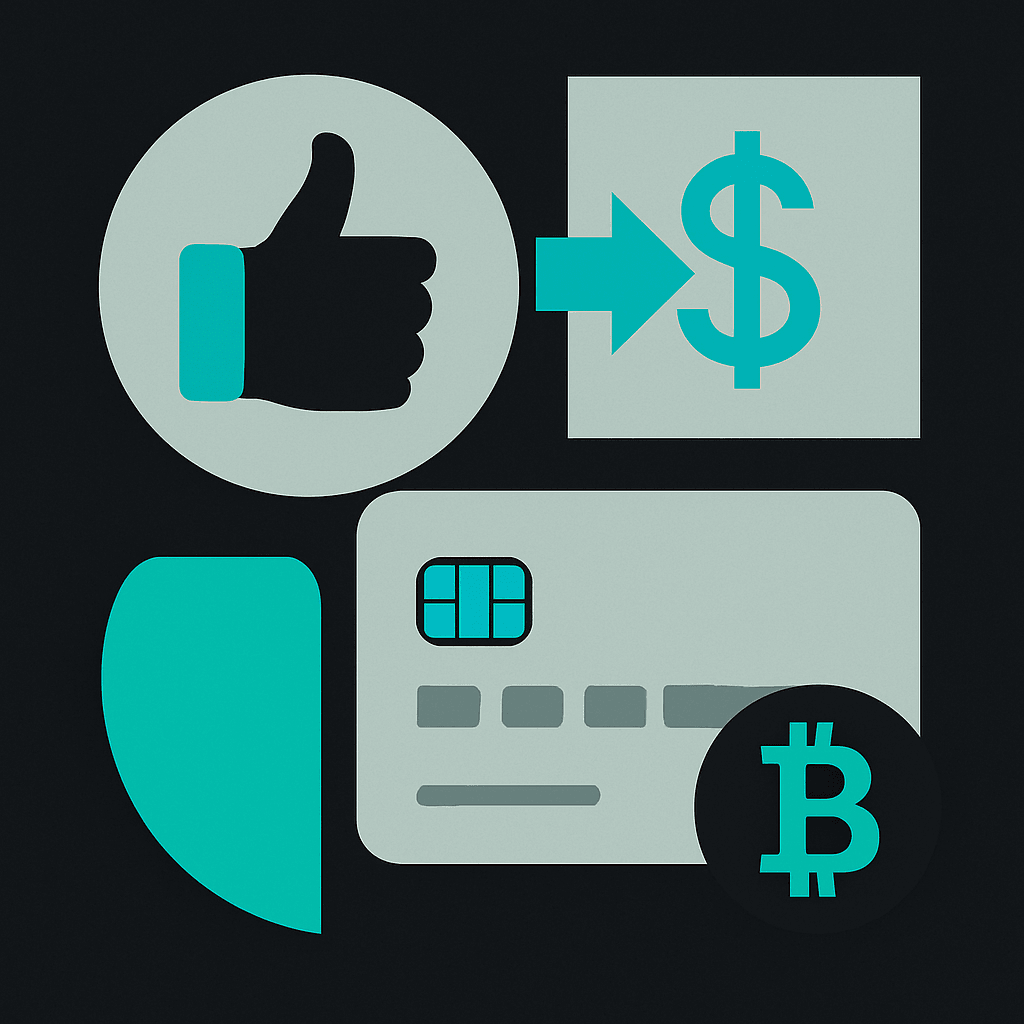
How a Facebook Ads Payment Crypto Card Works
The mechanics are fairly simple once you've done it once.
- Open an account with a virtual card provider and complete identity verification. Nearly every legitimate provider requires KYC - it's a regulatory requirement, not a nice-to-have.
- Fund the account wallet by sending crypto to a unique deposit address for whichever network you're using (USDT on Tron, ETH on its mainnet, and so on).
- The balance converts to the card's currency the moment it's loaded. Nothing sits as crypto "on" the card - it all becomes spendable fiat balance.
- Issue or top up the virtual card, usually ready somewhere between 5 minutes and a few hours depending on the provider.
- Add the card as a payment method in Facebook Ads Manager, entering the number, expiry, and CVV exactly like any other Visa or Mastercard.
That's the entire loop. No wire transfer, no FX desk, no bank account needed at any point.
Some providers, like Kripicard, market this exact flow: top up with USDT, Meta bills in USD, the transaction clears like a standard Visa payment. Others, such as Buvei, require account creation and email verification before a card gets issued. Trustee Plus (via Quicko Digital) and CoinW Card follow a similar pattern - convert crypto, get card details, plug them into the Facebook payment field. The mechanics stay consistent across providers because Meta's billing system doesn't leave any other entry point.
What to Check Before Choosing a Provider
Not all crypto cards for Facebook ads are built the same. A few things matter more than the marketing copy tends to suggest.
| Factor | Why it matters for ad spend |
|---|---|
| Transaction and spend limits | Agencies running several campaigns at once need daily/monthly caps that won't choke a scaling budget mid-flight. |
| Network and crypto support | More supported chains (USDT-TRC20, ERC20, BTC, SOL, etc.) means fewer conversion hops before funding the card. |
| KYC requirements | Legitimate providers require identity verification. Treat "no KYC" claims as a red flag, not a feature. |
| Card issuance speed | Slow issuance stalls campaign launches; a card ready in minutes matters more than most people realize until a deadline hits. |
| Apple Pay / Google Pay support | A crypto card Google Pay Facebook ads setup adds a backup rail for card-not-present billing and mobile checkout. |
| Fee transparency | Flat, published top-up fees beat vague "conversion spreads" that shift with market volatility. |
A card marketed as "the best virtual card for Facebook Ads in 2026" should tick most of these boxes: instant issuance, multi-currency funding, and enough BIN variety that one processor hiccup doesn't take down every campaign at once.
Fees and Funding: What to Expect
Fee structures vary by provider, but the general shape stays consistent: a top-up fee when loading crypto onto the card, plus sometimes a one-time issuance fee. There's rarely a monthly maintenance charge on virtual cards built for this use case, since the business model is transaction-based.
WaldenPay, for instance, charges a standard 5% top-up fee when loading the card plus a one-time card issue fee, with no monthly maintenance and free registration, balance checks, and support. Cards convert from 135+ cryptocurrencies across 35+ networks - USDT, USDC, BTC, ETH, SOL, TRX, and more - into spendable balance the moment funds land, and the card can be added to Apple Pay or Google Pay for both online billing and card-not-present transactions like Facebook Ads charges.
Worth comparing that against a competitor's spread-based conversion fee before assuming a "no fee" card is actually cheaper. Hidden FX spreads often end up costing more than a disclosed flat percentage.
Avoiding Account Flags: A Compliance-First Approach
Here's the part most guides skip or get wrong: a crypto card does not bypass Meta's policies, and it should never be pitched that way. Ad account bans usually come from policy violations, inconsistent billing signals, or behavior patterns that look automated or evasive - not from the payment method itself.
That said, a few practical habits keep billing smooth and cut down on unnecessary friction:
- Keep top-up amounts consistent. Wildly irregular funding patterns (huge top-up, then silence, then another huge top-up) can trigger card-issuer risk reviews, separate from anything Meta does.
- Match card details to account information. Billing name and business details should line up with what's registered in Business Manager.
- Don't run one card across dozens of unrelated ad accounts. Multiple BINs and separate cards per client or business line reduce the blast radius if one card gets flagged by an issuer.
- Fund ahead of spend, not during it. Topping up mid-campaign when a budget is about to run dry invites declines at the worst possible moment.
- Keep KYC documentation current. Expired verification on the card provider's side can freeze top-ups without warning.
A crypto card changes how ad spend gets funded. It doesn't change what Meta requires from the account running the ads.
For a deeper breakdown of provider-specific setups, the Best Crypto Card for Facebook Ads in 2026 guide compares issuers side by side. And for teams weighing prepaid options against crypto-funded cards, the Best Prepaid Card for Facebook Ads in 2026 post covers that tradeoff directly.
Setting Up WaldenPay for Ad Spend
For marketers who want a straightforward path, the flow looks like this: register an account, get a wallet with unique deposit addresses per network, send crypto, and let it convert to card balance automatically. Full setup details live on the how it works page, and the current fee breakdown is on pricing.
Once the card is issued, it can be added to Apple Pay or Google Pay, or its number, expiry, and CVV can be entered directly into the Facebook Ads Manager payment field - the same way any Visa card would go in. Security details, including how funds are held and what protections apply, are outlined on the security page. Full feature specs, including supported currencies and networks, are on features.
Freelancers paid in crypto, agencies managing multiple client accounts, and solo media buyers all use this setup a bit differently, but the underlying mechanic - crypto in, spendable card balance out - stays the same across the board.
Crypto Card vs. Traditional Bank Card for Ad Spend
Bank-issued cards route ad payments through a single institution's risk models. That's fine until a bank flags a pattern it doesn't recognize - unusual charge frequency, a new business category, a spike in daily spend - and puts a hold on the card or the whole account.
A virtual card for ad spend funded by crypto sits outside that particular bank relationship. It still runs through Visa or Mastercard rails, so Meta's billing system treats it identically to any other card. But the funding source is a crypto balance the marketer controls directly, which can mean faster reloads and fewer surprise holds tied to one bank's internal review process.
It's not a guarantee against declines - card issuers still apply their own fraud and risk checks. But for marketers juggling multiple ad accounts, or agencies funding client campaigns, having a card for ad spend that isn't dependent on a single traditional bank adds real operational flexibility.
Related reading on this exact tradeoff: Advertising Payment Card Crypto: Fund Ad Accounts in 2026 and Ad Account Payment Crypto Card: Fund Campaigns Without Bans both dig into agency-scale funding patterns.
FAQ
Can Facebook Ads be paid directly with Bitcoin or USDT?
No. Meta does not accept direct crypto wallet transfers for ad billing. A crypto-funded virtual card is required to convert digital assets into a spendable USD balance that Meta's billing system can process.
Is using a facebook ads payment crypto card against Meta's terms?
No, as long as the account information, billing details, and business verification are accurate and consistent. The card is just a payment method - it doesn't change what Meta requires from the underlying ad account.
How fast can a crypto card be issued for urgent ad spend?
Many providers issue virtual cards in around 5 minutes once identity verification is complete, though first-time KYC can take longer depending on the provider's review process.
What fees should marketers expect?
Expect a top-up fee on each crypto load (often a flat percentage, such as 5%) plus a one-time card issuance fee. Ongoing maintenance fees are uncommon for cards built around transaction-based funding.
Does a crypto card make ad spend anonymous?
No. Crypto cards offer privacy advantages over sharing a personal bank card, but they aren't anonymous or untraceable. Providers must follow AML and KYC regulations, and card issuers can still see funding and transaction activity.
Fund your ad accounts with a crypto-backed virtual card
WaldenPay converts 135+ cryptocurrencies into spendable card balance in minutes, with Apple Pay and Google Pay support for online and card-not-present billing - including Facebook Ads Manager.
Get your WaldenPay card