UK Crypto Sanctions: What US Holders Should Verify
By James Whitfield, Payments Specialist · Updated October 14, 2026
UK Crypto Sanctions: What US Holders Should Verify
A hypothetical US freelancer, Maya, pauses before a $25 crypto-card top-up after seeing MoneyCheck's report that Britain sanctioned five crypto platforms over alleged Russian financial ties. At that moment, the practical response to uk crypto sanctions is to verify the official notice, the exact entity, and any account restrictions before proceeding.
MoneyCheck's sanctions report makes that claim, but its publication date requires verification before the development can responsibly be described as new. The reported allegations shouldn't be treated as independently confirmed official findings.
For the mechanics of card funding rather than sanctions applicability, the site's crypto card spending guide provides the wider context.
What uk crypto sanctions reports actually establish
MoneyCheck's headline identifies five platforms and alleged Russian financial ties. Neither that number nor the allegation establishes which legal entity holds a particular customer's assets, what restrictions apply, or when those restrictions began.
The publication date, platform identities, official designation references, effective dates, and account-level consequences remain details requiring confirmation. A reader shouldn't infer them from the headline or attach today's date to the reported action.
For verifying crypto sanctions reports, the strongest starting point is the relevant official UK sanctions entry and accompanying notice, rather than a repost or search-result summary. Any asserted status "as of July 2026" also needs checking against subsequent official updates.
Two terms that prevent mistaken conclusions
Designation: An official identification of a person or entity under a sanctions regime, with consequences determined by the applicable rules.
Applicability: Whether those rules govern a particular person, entity, asset, or transaction given the relevant facts.
A crypto sanctions compliance checklist for entity matching
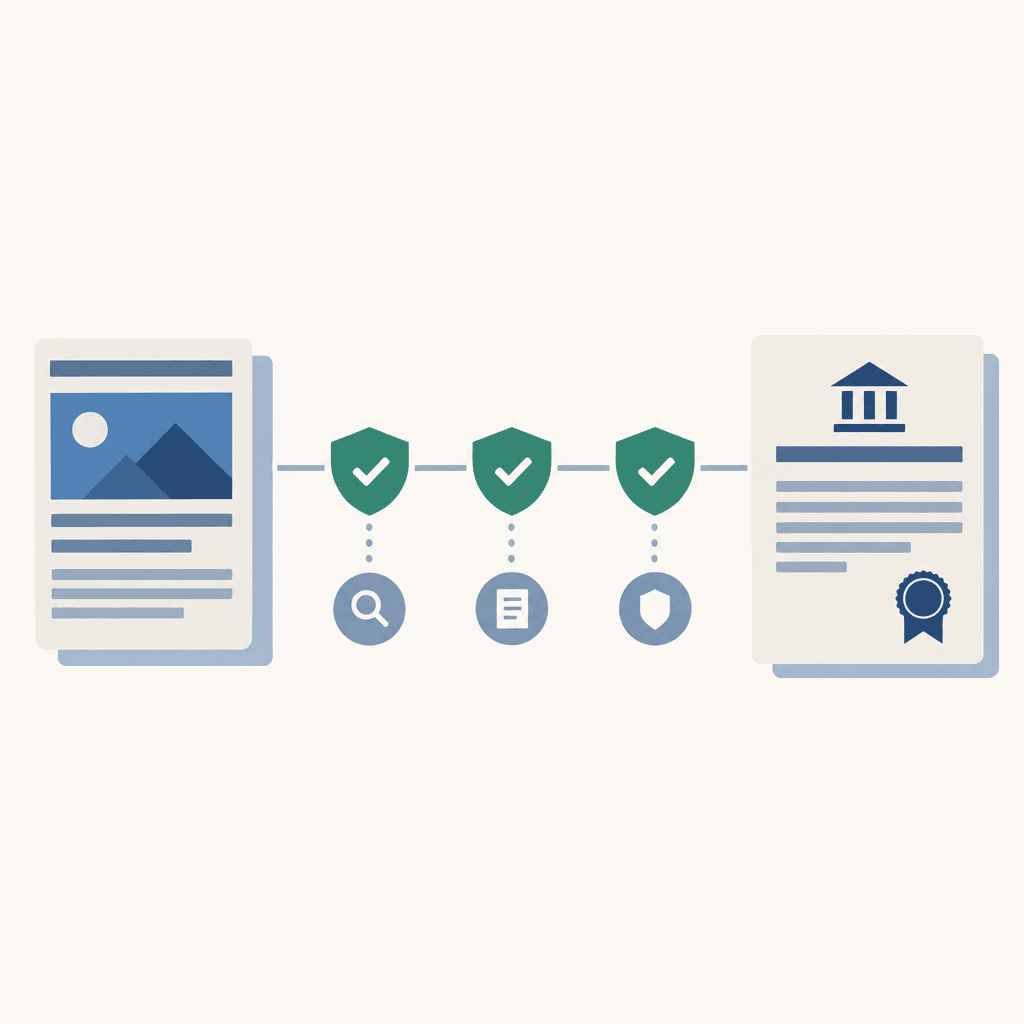
Before acting on uk crypto sanctions, a holder should assemble a record that connects the news report to the actual contracting entity. Similar names, shared branding, and references to a corporate group aren't sufficient on their own.
| Verification item | Evidence to examine |
|---|---|
| Exact identity | Legal name, aliases, registration details, and official designation reference. |
| Account relationship | The entity named in account terms and custody documentation. |
| Timing | Publication, designation, effective, and amendment dates, recorded separately. |
| Scope | The official restrictions and any relevant ownership or control provisions. |
A mismatch calls for clarification, not a conclusion that the account is unaffected. Where ownership or control is unclear, qualified advice is more useful than an assumption based on a platform's trading name.
Business holders face a similar distinction between infrastructure announcements and contractual eligibility; the business card verification checklist explains that separate documentation problem.
How US holders should assess applicability
UK sanctions applicability to US users requires more than checking nationality. Relevant questions include which entities participate in the transaction, where they operate, and whether UK or US restrictions affect the proposed activity.
A US holder shouldn't assume that a UK designation automatically resolves every US legal obligation. Nor should the absence of an obvious UK connection be treated as permission to proceed.
- Check relevant US sanctions notices independently rather than assuming both countries' lists match.
- Identify any UK-linked provider or intermediary involved in the account or transaction.
- Distinguish legal restrictions from a provider's separate contractual risk controls.
- Escalate uncertain ownership, jurisdiction, or authorization questions to qualified sanctions counsel.
And a platform's continued availability isn't proof that a particular transaction is permitted.
What uk crypto sanctions mean for account notices and cards
Crypto platform sanctions notices should identify the affected entity, effective timing, restricted functions, and the official support process. A generic service interruption doesn't establish a sanctions designation; equally, silence from a provider isn't clearance.
When uk crypto sanctions might affect an account, the holder should request written confirmation of whether deposits, withdrawals, transfers, or card funding are restricted. Existing balances and pending transactions need separate answers rather than a general statement that the account remains open.
A crypto card doesn't override sanctions or AML requirements. For example, WaldenPay's crypto virtual card is a prepaid product whose use remains subject to AML and regulatory requirements; this product explanation doesn't establish any connection to the reported action.
Another card, wallet, or payment route isn't a substitute for resolving an applicable restriction.
FAQ
Do uk crypto sanctions automatically prohibit every US holder's account?
A headline cannot establish that. The designated entity, applicable rules, transaction connections, and provider restrictions require individual assessment.
Does an allegation confirm a sanctions designation?
No. Official notices establish designation details; reported allegations shouldn't be expanded into findings beyond their wording.
Can an accessible withdrawal button establish permission?
No. Interface availability doesn't determine legal eligibility, and an uncertain transaction should await qualified clarification.
What should a holder bring to a compliance consultation?
The official notice, account entity details, transaction description, relevant dates, and provider correspondence give an adviser a concrete starting point. This checklist isn't legal advice.
Compliance comes before card funding
Verify uk crypto sanctions before proceeding.
Get started with WaldenPay