Crypto Apple Pay: How to Spend Bitcoin & Crypto in 2026
By James Whitfield, Payments Specialist · Updated September 21, 2026
Learning how to use a crypto card starts with checking eligibility, obtaining a card, funding it through a supported asset and network, and confirming the spendable balance. The cardholder can then pay online with card details or, where supported, add the card to Apple Wallet for Apple Pay purchases.
Apple Pay doesn't hold Bitcoin.
As of July 2026, its payment-card function is separate from a cryptocurrency wallet. A Bitcoin wallet cannot simply be connected to Apple Wallet for ordinary card purchases. Buying crypto using Apple Pay runs in the opposite direction: a conventional payment funds a crypto purchase, and the purchased asset arrives in the wallet specified by the provider.
For spending, WaldenPay's crypto virtual card provides a prepaid model: cryptocurrency converts to card balance when loaded, rather than whenever a purchase happens. The eligible card is added to Apple Wallet; the cryptocurrency itself isn't. That distinction matters when checking balances, planning top-ups, and understanding what a merchant receives.
The practical workflow extends beyond wallet enrollment. Wrong networks, pending deposits, insufficient card balance, and merchant restrictions can interrupt an otherwise valid payment. Fees, conversion timing, and the first-purchase checks all deserve attention before funds move.
Crypto Prepaid, Debit, and Rewards Credit Cards Explained
The funding agreement matters more than the word "crypto" printed on a product page. A prepaid card spends value loaded beforehand. A debit model draws against an available account balance under the provider's rules. A rewards credit card borrows against a credit line and may distribute rewards in cryptocurrency.
Only the first two necessarily involve spending crypto-funded value.
| Card model | Funding source | Possible conversion timing | Repayment | Custody considerations | Rewards conditions |
|---|---|---|---|---|---|
| Crypto prepaid | Value loaded before spending | Typically during a separate funding or loading step; terms control | No borrowing under the prepaid model | Loaded value depends on the card program, rather than remaining in a personal crypto wallet | Rewards aren't inherent; any program has separate eligibility and exclusions |
| Crypto debit | An available linked account or wallet balance | May involve a prior sale or conversion triggered by spending | Normally no credit repayment; overdraft features, if any, need separate review | Custody and spending permissions depend on the account and wallet arrangement | Rates, qualifying purchases, caps, and asset requirements may apply |
| Crypto rewards credit | A credit line used for purchases | Purchases needn't convert the customer's crypto; rewards may later be delivered as crypto | A statement balance must be repaid under the credit agreement | Reward assets may initially remain with a custodian | Rewards depend on the credit program's terms and eligible spending |
Prepaid spending separates the loading decision from checkout
WaldenPay is a virtual prepaid card on Visa/Mastercard rails, not a bank account or a credit line. Its crypto funding converts to card balance at loading time. A later purchase draws against that balance; it doesn't require another sale of the originally deposited Bitcoin for each transaction.
This model can suit a crypto holder who wants to set aside a defined spending budget. A freelancer paid in crypto can similarly separate funds intended for expenses from assets still held elsewhere. Neither use case requires treating the card as a place for long-term storage.
But preloading introduces provider exposure. The available balance is governed by the program's custody, access, and redemption arrangements. General CFPB guidance on prepaid cards helps explain the product category; it doesn't establish that every crypto-funded program has identical protections or eligibility.
Debit branding doesn't establish the conversion model
A provider may describe a product as debit while requiring a prior crypto sale into a spending account. Another arrangement may convert an eligible asset when a purchase occurs. Someone comparing how to use a crypto card should establish which event reduces the crypto holding: a manual sale, a card load, or a purchase-triggered conversion.
That answer affects balance tracking and recordkeeping. It also determines whether unconverted holdings remain exposed to price changes until checkout.
Crypto rewards are a separate proposition
A conventional credit card that earns Bitcoin rewards doesn't automatically let its holder spend Bitcoin. The purchase creates a conventional credit obligation, while the reward is a separate benefit. Reward percentages alone aren't enough for a comparison: qualifying categories, exclusions, redemption rules, and repayment costs can change the result.
For occasional online shoppers, a virtual prepaid card may offer a straightforward way to allocate spending value. Travelers need additional checks for physical-card requirements, deposits, and merchant restrictions. Freelancers need usable transaction records and a clear separation between business and personal spending.
Across these models, merchants generally receive conventional card payments, not the customer's cryptocurrency. The card network's reach doesn't guarantee approval of an individual payment, and a supported mobile wallet doesn't change a prepaid card into another card type.
Why Apple Pay Doesn't Hold Bitcoin or USDT
As of July 2026, Apple Wallet's payment-card role doesn't provide a native Bitcoin or USDT balance for ordinary Apple Pay purchases. A cryptocurrency wallet manages access to blockchain assets; Apple Pay presents an eligible payment credential through supported payment systems.
Three different actions often get grouped under "crypto Apple Pay":
- Adding a card: An eligible card is enrolled in Apple Wallet, subject to device, region, and card-program support.
- Buying cryptocurrency: Apple Pay authorizes a conventional payment to a supported purchase provider, which delivers crypto under its own terms.
- Spending crypto-funded value: An enrolled card pays from the balance or funding arrangement established by its provider.
As of July 2026, Apple Pay uses tokenized payment credentials rather than simply presenting the underlying card number at checkout. This reduces exposure of that number in the payment flow. It doesn't make transactions anonymous or prevent the card provider from maintaining transaction records.
WaldenPay supports Apple Pay and Google Pay, but compatibility still needs checking for the applicant's device, location, and card program before funding. Successful enrollment confirms neither universal merchant acceptance nor sufficient available balance.
For WaldenPay, conversion happens at card loading. That is a feature of its prepaid funding model, not something Apple Pay performs. Other crypto card programs may convert at a different stage, so an Apple Wallet badge alone doesn't explain how their balances work.
From Crypto Deposit to Settled Purchase: What Happens to the Balance
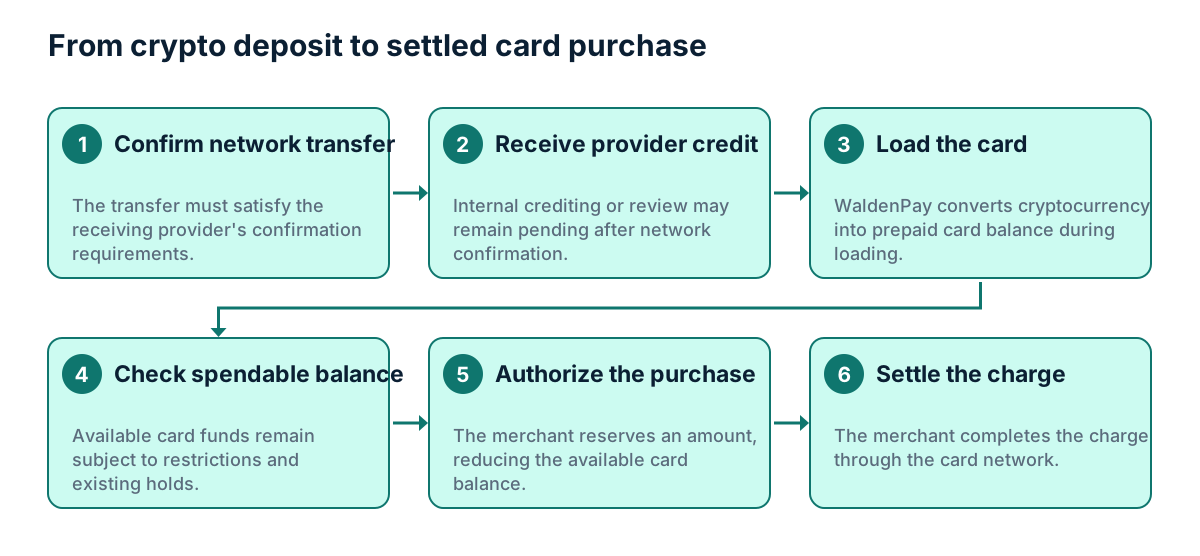
A blockchain transfer and a card purchase belong to different processing systems. Between them, funds can be received, awaiting credit, available for loading, spendable on the card, or reserved for a purchase. Treating every displayed balance as immediately spendable is a common source of confusion.
The stages below are conceptual descriptions, not claimed WaldenPay dashboard labels. Some programs combine stages or display them differently.
| Stage | What it means | Useful evidence |
|---|---|---|
| Crypto sent | The sending wallet or exchange has initiated a withdrawal | Withdrawal record and, once broadcast, transaction hash |
| Network confirmation pending | The transfer hasn't yet satisfied the receiving provider's confirmation requirements | Correct network, destination, and on-chain status |
| Provider credit pending | The network transfer may be confirmed while internal crediting or review remains incomplete | Provider deposit status, not just the blockchain explorer |
| Available funding balance | The account has credited value that may be available for a card load | Account wallet balance and applicable funding conditions |
| Card load | Value is allocated to the prepaid card; WaldenPay converts crypto at this point | Load confirmation showing the amount credited and applicable fee |
| Spendable card balance | Value is available for card transactions, subject to restrictions and existing holds | Card's available balance |
| Authorization hold | A merchant reserves an amount before the transaction is finalized | Pending card transaction and reduced available balance |
| Settlement | The merchant completes the charge through the card network | Posted transaction and final charged amount |
| Possible refund | A separate credit may follow a merchant-approved return or adjustment | Merchant refund record and eventual card credit |
The account wallet and card balance serve different purposes
WaldenPay provides an account wallet with unique deposit addresses per supported network. It supports funding with 135+ cryptocurrencies across 35+ networks, including USDT, USDC, BTC, ETH, SOL, TRX, and LTC. The asset and network must match the receiving instructions; a familiar token ticker isn't sufficient.
A received account deposit isn't automatically proof that the card has been loaded.
A practical part of understanding how to use a crypto card is identifying the balance checkout actually draws from. Where funding passes through an account wallet, the completed load and available card balance are the relevant checks before spending. Card value can then be used through supported Apple Pay, Google Pay, or virtual card details online.
Loading ends price exposure for the loaded card value
Once WaldenPay converts crypto into card balance, that loaded value no longer rises or falls with the original coin's market price. Cryptocurrency left outside the completed load remains separate. Stablecoins aim to maintain a reference value, but they aren't guaranteed to hold that value and still carry issuer, network, and custody risks.
For WaldenPay, crypto converts when the card is loaded. The merchant then receives a conventional card payment, not a transfer from the customer's crypto wallet.
Other providers may use spend-time conversion. Their records can therefore show crypto disposals associated with individual purchases rather than a separate loading event. U.S. readers should retain acquisition records, deposit hashes, loading confirmations, and transaction histories. The IRS guidance on digital assets explains relevant reporting principles; a qualified tax professional can assess individual obligations.
A reservation isn't a completed charge
An authorization hold reduces available spending power even while a payment remains pending. If an authorization is reversed or expires, reserved value may become available again without a separate refund. Settlement, by contrast, finalizes the merchant's charge.
A subsequent refund is another event. It shouldn't be assumed to restore the original quantity of Bitcoin or reverse the earlier card load. Timing and treatment depend on the applicable program and merchant process; the refund record and actual credited balance provide the evidence.
Eligibility, Identity Checks, and Wallet Support Before Applying
Access to a signup page doesn't establish eligibility for a financial product. Before sending cryptocurrency, an applicant needs to confirm that the current card program supports the applicant's residence, intended use, and required payment method. U.S. readers shouldn't interpret worldwide merchant coverage as confirmation that U.S. residents can obtain every card advertised online.
The distinction is between obtaining the card and using an eligible card.
- Residence eligibility: The applicant's actual country of residence must meet current program requirements. A temporary travel location doesn't replace residence information.
- Intended spending location: Merchant countries, transaction categories, and relevant program restrictions need separate review. Card-network acceptance alone doesn't resolve these conditions.
- Age requirements: The applicant needs to meet the program's stated minimum age. No universal age threshold should be assumed across providers.
- Virtual or physical format: The chosen product must provide the form needed for planned purchases. A virtual card doesn't supply a physical chip card for insertion.
- Device compatibility: The phone or watch must support the intended mobile wallet and meet its security and software requirements.
- Wallet eligibility: The specific card program, device, and region need to support enrollment. A provider's general wallet-support statement isn't a promise for every applicant.
- Documentation: Applicants should establish the initial information requirements and the circumstances that may trigger additional verification.
- Program restrictions: Funding sources, prohibited uses, and applicable transaction limits should be understood before funds leave the sending wallet.
Email signup doesn't remove compliance obligations
WaldenPay signup requires an email address, with no identity documents required for standard use. That describes the standard onboarding process; it doesn't promise permanent exemption from checks. Use remains subject to AML and regulatory requirements, and additional information may be required where applicable.
Privacy-focused use isn't anonymous use.
An applicant evaluating how to use a crypto card should distinguish reduced onboarding paperwork from transaction invisibility. Account access, card activity, provider records, and blockchain deposits can still leave identifiable records. No-document standard signup isn't permission to bypass sanctions, regional restrictions, or merchant rules.
Fast issuance and a usable payment method are separate checks
WaldenPay's virtual card is issued instantly after funding under the standard process. That speed doesn't guarantee approval, availability, or uninterrupted access, and it doesn't establish how quickly an external crypto transfer will be credited.
WaldenPay's verified offering is virtual. A traveler whose planned transaction requires a physical card should confirm an appropriate payment method before departure rather than assuming a phone presentation will satisfy the merchant. Where physical cards are offered by other programs, delivery and activation are additional steps.
Before loading, the applicant also needs to budget for WaldenPay's $10 one-time card issue fee, $50 minimum top-up, and top-up fee starting at 5%, with automatic volume discounts down to 3%. There is no monthly maintenance fee. The application and funding screens should resolve eligibility, required checks, and the applicable load amount before any irreversible crypto transfer.
Choose the Right Asset, Network, Address, and Funding Method
A safe card load starts with matching the asset and network to the receiving account's current instructions, rather than choosing whichever withdrawal option looks cheapest.
WaldenPay supports 135+ cryptocurrencies across 35+ networks and supplies unique account-wallet deposit addresses per supported network. But support for a cryptocurrency doesn't make every possible route valid. The same token symbol can exist on multiple blockchains: USDT on Ethereum, Tron, and Solana represents different transfer routes. A compatible-looking address isn't proof that the receiving service supports that asset on that network.
The Funding Safety Checklist
- Supported asset: The receiving screen must list the exact cryptocurrency being sent. A similarly named token or wrapped version shouldn't be treated as interchangeable.
- Matching network: The sender's withdrawal network must match the network selected in the receiving account. Network labels and token standards deserve a separate check from the ticker symbol.
- Current address: The sender should copy the address from the current account screen, then compare the pasted destination before confirming. An old screenshot or saved withdrawal entry shouldn't replace that check.
- Memo or destination tag: If the receiving instructions require one, it must accompany the address. Omitting it can prevent automatic crediting even when the blockchain transfer succeeds.
- Receiving minimum: Any account-deposit minimum must be checked separately from the card-loading requirement. WaldenPay's verified $50 minimum applies to card top-ups; it doesn't establish a universal minimum for account-wallet deposits.
- Sender requirements: An exchange or wallet may impose withdrawal minimums and deduct a withdrawal charge. The relevant amount is what reaches the destination, not merely what leaves the sending balance.
- Confirmation requirements: The receiving service determines when a transfer becomes credited and usable. A transaction appearing on a block explorer doesn't necessarily mean the account or card balance is ready.
A test transfer can reduce address-selection risk, provided it satisfies the receiving minimum. The sender should wait for actual account credit before sending the remainder and recheck the instructions each time. Repeating an uncredited transfer can compound the problem.
Asset Risk and Transfer Method
USDT and USDC aim to track the dollar, but stablecoin pegs aren't guarantees. Depegging can change the value received. BTC, ETH, SOL, TRX, and LTC also carry price risk between sending and loading. At WaldenPay, cryptocurrency converts to card balance at loading time, so the sending-time price doesn't lock in the eventual card credit.
Funding from an exchange withdrawal and funding from a self-custody wallet involve the same destination checks. A self-custody transfer also needs sufficient network resources to submit it; an exchange withdrawal can involve processing before the transaction reaches the blockchain. Actual costs and timing should be checked rather than assuming one network is always faster or cheaper.
Learning how to use a crypto card includes knowing when to stop: an unexplained network mismatch or missing credit warrants investigation, not another deposit. Recovery of an unsupported transfer isn't guaranteed. Support may need the transaction hash, asset, network, amount, and destination address, but never a wallet's recovery phrase.
The Best Crypto Card 2026 guide adds a broader selection framework for comparing funding support and everyday spending needs across providers.
How to Use a Crypto Card: Setup Through the First Purchase
The first purchase should happen only after the card is active, the spendable balance covers the transaction, and the chosen payment method is ready. Successful registration, a confirmed blockchain transfer, and wallet enrollment are separate milestones.
A Seven-Step First-Purchase Workflow
- Check eligibility and wallet support. The applicant confirms supported residence, permitted use, and compatibility with the intended phone wallet before transferring funds. A virtual card suits online and mobile-wallet payments; anyone needing a physical card should verify that the provider offers one and review its delivery and activation requirements.
- Submit the application through an official channel. Account details should be accurate and accessible for later recovery. Before proceeding, the applicant reviews the card type, funding process, issue charge, and current restrictions. Payment details or recovery credentials shouldn't be shared with an unsolicited support account.
- Complete any required verification. Registration and payment eligibility aren't necessarily the same decision. If additional checks appear, the applicant follows the provider's official process. A minimal-data signup doesn't exempt an account from AML requirements or guarantee approval.
- Confirm issuance or activation. A virtual card needs usable card details and an active status before checkout. Physical cards may have a separate activation process. If funding is required first, the applicant follows that order rather than assuming an empty account already contains an issued card.
- Confirm the spendable funding amount. The holder checks the account deposit, completes any separate card-loading step, and verifies the available card balance. A sent withdrawal, pending deposit, or account-wallet balance shouldn't be mistaken for money already available to the card.
- Make one straightforward purchase. A modest transaction with a known total is easier to check than a booking involving a deposit or estimated authorization. The holder follows the merchant's payment rules, completes requested authentication, and keeps another payment method available. Wallet enrollment doesn't guarantee transaction approval.
- Review the result before broader use. The merchant receipt should be compared with the card activity and remaining available balance. An authorization may remain pending before settlement. If the checkout result is unclear, checking both records is safer than immediately repeating the purchase.
WaldenPay and Apple Pay Example
For WaldenPay, registration is free and requires an email only, with no identity documents for standard use. Use remains subject to AML and regulatory requirements. Before funding, the applicant should account for the $10 one-time card issue fee and $50 minimum top-up, alongside the applicable top-up fee.
WaldenPay issues the virtual prepaid card instantly after funding. That doesn't promise an instant end-to-end setup: sending-service processing, blockchain confirmations, and any required checks can affect when funding is ready. Crypto converts to card balance when loaded.
The account provides card details and balance information. WaldenPay's Telegram bot can order and recharge cards, check balances, and provide transaction alerts. Balance checks are free; alerts help monitoring but don't replace checking the available amount before a purchase.
As of July 2026, the Apple Wallet setup path generally starts with the plus button and the option to add a debit or credit card. The holder enters the WaldenPay card details and completes any verification presented. The wording can vary by device or software version, and verification shouldn't be assumed to finish immediately.
Once enrollment succeeds, the holder selects the card and authenticates an Apple Pay purchase at a compatible checkout. WaldenPay also supports Google Pay; the Google Pay setup guide explains the alternative wallet workflow. These wallets use the card's balance, rather than holding a separate crypto deposit.
Top-Up Costs, Spending Limits, and a Worked Fee Example
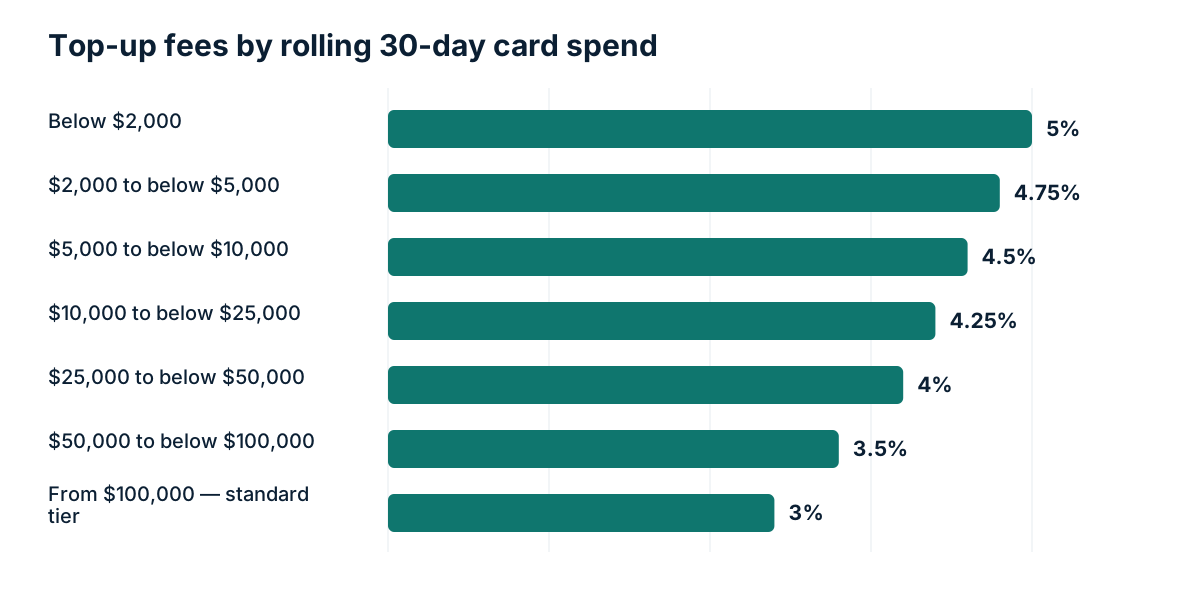
WaldenPay's top-up fee starts at 5% and falls automatically with qualifying card spend, reaching 3% at the published highest standard tier. It's not a flat 5% charge for every holder.
The fixed checkpoints are a $10 one-time card issue fee, $0 monthly maintenance, and a $50 minimum card top-up. Registration, balance checks, and support are free. The current pricing page provides a reference before loading, while the dashboard shows the account's applicable top-up fee.
Automatic Top-Up Fee Tiers
| Rolling 30-Day Card Spend | Top-Up Fee | Qualification |
|---|---|---|
| Below $2,000 | 5% | Starting tier |
| $2,000 to below $5,000 | 4.75% | Automatic |
| $5,000 to below $10,000 | 4.5% | Automatic |
| $10,000 to below $25,000 | 4.25% | Automatic |
| $25,000 to below $50,000 | 4% | Automatic |
| $50,000 to below $100,000 | 3.5% | Automatic |
| From $100,000 | 3% | Automatic standard tier |
| $250,000+/month | Individual pricing | Account-specific terms |
The discount depends on rolling 30-day card spend, not cumulative deposits or lifetime spending. Depositing enough to cross a threshold doesn't itself qualify the account. Discounts apply instantly without an application, and the dashboard displays current spend, the fee, and progress toward the next level. Because the window rolls, the applicable tier should be checked before each load.
A $100 Top-Up Fee Calculation
For someone learning how to use a crypto card, the useful calculation separates the fee component from the resulting balance. On a hypothetical $100 top-up calculation basis:
- At 5%: $100 multiplied by 0.05 gives a $5 top-up fee component.
- At 3%: $100 multiplied by 0.03 gives a $3 top-up fee component.
- Difference: The lower tier reduces that component by $2 on the same basis.
This example doesn't establish whether a fee is deducted from the submitted amount or collected separately. It therefore doesn't imply a $95 or $97 card credit, or a particular total deposit requirement. The loading screen should resolve the amount charged and the amount credited before confirmation. The $10 issue fee is a separate, one-time cost.
And a $100 top-up basis isn't automatically enough for a $100 purchase. The spendable balance after loading is the figure that matters at checkout.
Limits and Checks Before Spending
The $50 minimum top-up isn't a purchase limit or a daily spending allowance. Card-specific transaction and spending limits should be checked in the current account terms. Limits published for transfers or payment requests shouldn't be reused as card limits.
- Missing load: The holder checks the asset, network, destination, and required confirmations before sending again.
- Insufficient balance: The purchase total should be compared with available card funds after loading, not the original crypto amount.
- Merchant restriction: Adequate funding doesn't override a merchant's prepaid-card or virtual-card rules.
- Wallet problem: Enrollment and device readiness should be checked separately from account funding.
WaldenPay runs on Visa/Mastercard rails with a stated acceptance footprint of 150M+ merchants worldwide, but individual acceptance isn't guaranteed. For a broader comparison of published card costs, the Crypto Card Fee Index 2026 provides additional context beyond a headline top-up percentage.
In-Store Payments, Merchant Restrictions, and Authorization Holds
A funded virtual card can typically pay in stores through a supported mobile wallet, but the terminal, merchant policy, card program, and available balance all matter. WaldenPay's stated 150M+ merchant footprint describes its Visa/Mastercard network reach, not guaranteed acceptance at every checkout.
Learning how to use a crypto card includes separating the payment interface from the underlying product. WaldenPay is a virtual prepaid card that supports Apple Pay and Google Pay. Adding it to a phone doesn't create a physical chip-and-PIN card, grant ATM access, or override a merchant's prepaid-card restrictions. A contactless symbol identifies a terminal capability; it doesn't establish that a particular transaction will be approved.
| Payment method | What must be supported | Practical boundary |
|---|---|---|
| Online card details | Card-number checkout and virtual prepaid acceptance | Billing checks, authentication, and merchant restrictions still apply. |
| Mobile-wallet contactless | Eligible card and device, successful enrollment, compatible terminal | A wallet-ready card can still receive a payment decline. |
| Physical chip-and-PIN | A separately issued physical card with the required capabilities | A virtual card alone can't be inserted into a terminal; WaldenPay physical-card support isn't established. |
| Offline terminal | Compatible card-program and terminal authorization rules | Contactless support doesn't establish offline-payment support. |
| ATM withdrawal | Explicit withdrawal eligibility and compatible ATM access | Mobile-wallet enrollment doesn't establish ATM access; none is claimed for WaldenPay. |
Merchant policy comes before the tap
Some merchants require a different card type for deposits, rentals, or recurring arrangements. Card programs may also restrict transaction categories. The relevant checks are the merchant's current payment policy and the card program's permitted-use terms, rather than whether a network logo appears at checkout. No specific WaldenPay restricted-category list is established here.
Device authentication and payment authorization are separate steps. A successful device unlock doesn't prove that the issuer approved the purchase. Likewise, an offline terminal may be unable to obtain an authorization that a prepaid program requires. Where a checkout needs a physical card, phone-based contactless isn't an equivalent substitute.
Holds reduce purchasing power before settlement
A hotel, rental business, or automated fuel dispenser may request an authorization above the eventual purchase amount. That hold can reduce the spendable balance even though no final charge has posted. A card funded only for the expected bill may therefore lack enough available balance for the authorization.
The useful check is the requested hold, not just the advertised price.
Before committing to a deposit-based purchase, the cardholder should establish whether prepaid cards qualify, what authorization the merchant intends to request, and how release is handled. An outstanding hold isn't necessarily a duplicate settled charge. Release timing depends on the merchant and card program; another deposit won't cancel it.
As of July 2026, Apple Pay return guidance allows merchants to use the Apple Pay card number associated with the device, whose last digits may differ from the underlying card number. A receipt may show those device-associated digits. The original payment device may be needed for a return, so retaining it and the receipt helps the merchant locate the transaction. This is a mobile-wallet distinction, not a special crypto-card refund process.
How to Use a Crypto Card for Online Payments
Online checkout requires current card details, accurate billing information consistent with the card account, and enough spendable balance for the requested authorization. A visible crypto deposit or account-wallet balance isn't necessarily available on the card. For readers learning how to use a crypto card online, the critical distinction is between entering credentials successfully and obtaining payment approval. WaldenPay details can be used at eligible card checkouts; Apple Pay is another option where supported. Neither route overrides virtual prepaid restrictions.
An authentication request needs completion through the legitimate payment flow. EMVCo's 3-D Secure specification describes an authentication framework for online card payments, but not every transaction presents a visible challenge. A failed or abandoned challenge shouldn't prompt invented billing details or repeated submissions. The useful records are the merchant name, attempted amount, time, and displayed message, without exposing the full card number or security code.
Merchant names alone don't identify the billing arrangement. Buying from a Shopify storefront and paying Shopify platform bills are separate use cases whose current terms need checking. Likewise, an ordinary purchase and AWS usage-based billing can involve different authorization and collection requirements. Steam purchases are another reader use case, not a verified acceptance claim. The online crypto card buyer's guide adds selection criteria for evaluating checkout compatibility before funding. For each service, current prepaid-card eligibility, billing-country requirements, and authentication instructions need confirmation; a successful payment elsewhere doesn't establish acceptance.
Subscriptions, Streaming, and AI Services: Plan for Renewal
A successful initial subscription charge establishes only that the initial transaction was approved. Renewal still depends on recurring-payment consent, valid stored credentials, sufficient available balance, and the merchant's current payment rules. The next invoice may also change because of plan adjustments, add-ons, or usage. A practical routine records the billing date and checks the expected invoice against spendable funds before renewal. The crypto card subscription guide explains the recurring-payment considerations that matter beyond the first checkout.
Netflix and Spotify are streaming use cases; Claude Pro and ChatGPT Plus are subscription use cases. OpenAI API billing needs separate review because a usage-based arrangement can create a different funding requirement from a fixed subscription. Fanvue and OnlyFans also require checks of current payment and prepaid-card policies. These examples aren't acceptance endorsements for WaldenPay or any other card. For Claude-related billing questions, the Claude Pro payment guide provides additional payment-method and troubleshooting context, while the service's current terms remain decisive.
And funding a crypto card isn't the same as paying a merchant directly in cryptocurrency. With WaldenPay, cryptocurrency converts to card balance at loading time; subscription collection then uses the card payment arrangement. An account-wallet deposit alone shouldn't be treated as renewal funding. Removing a card or allowing its balance to run out also isn't a reliable substitute for canceling a subscription through the merchant. Cancellation confirmation, billing notices, and receipts belong alongside the card transaction record.
Reloading a Crypto Prepaid Card Without Balance Confusion
Reloadability depends on the product, and WaldenPay supports recharging an existing card through its dashboard and Telegram bot. That differs from ordering another card or receiving cryptocurrency into an account wallet. The $10 one-time issue fee concerns card creation; it isn't a stated per-recharge fee. The minimum card top-up is $50, and the published top-up fee starts at 5%, falling automatically to as low as 3% with qualifying rolling 30-day card spend.
Understanding how to use a crypto card between purchases means tracking the destination of each movement. An account-wallet deposit, a requested card recharge, and confirmed spendable card funds are separate states. Existing authorization holds can also leave less available for a purchase than the cardholder expects. The crypto prepaid card reload guide covers the detailed recharge process without treating a new deposit as proof that spending funds are ready.
Before another purchase attempt, the dashboard or bot balance check should confirm that the recharge reached the card and sufficient funds are available. A pending recharge calls for checking its status, not sending duplicate payments. No automatic reload function or guaranteed processing deadline should be assumed, and recharging doesn't remove an existing merchant hold.
Track Purchases and Keep the Card, Phone, and Account Secure
Transaction monitoring works best when alerts are matched against receipts and settlement records. WaldenPay's Telegram bot supports balance checks and transaction alerts, making it useful for spotting unfamiliar activity. But an alert isn't a complete reconciliation: a pending authorization, its final charge, and a later adjustment may represent stages of the same purchase rather than separate spending.
- After a purchase: The cardholder compares the merchant, amount, and status with the receipt.
- During reconciliation: Open holds stay separate from settled charges, with unexplained entries recorded for investigation.
- For account access: Email and messaging accounts need unique passwords and additional authentication wherever offered.
- For support: Contact routes should come from the provider's official site or account interface, not unsolicited messages.
A lost phone requires action on both device access and payments. The owner should use the device platform's official lost-device controls, secure linked email and messaging accounts, and contact the card provider about wallet access and exposed credentials. Card-lock controls are useful only where offered; no specific WaldenPay freeze button or recovery outcome is assumed. Suspected card compromise also calls for preserving transaction evidence rather than sharing credentials in a public forum.
Tokenization reduces exposure of underlying card credentials, but it doesn't prevent every scam or unauthorized account action. The virtual card safety guide explains these boundaries. Full card details, security codes, passwords, and login codes shouldn't enter support screenshots. WaldenPay is privacy-focused, not anonymous or untraceable, and use remains subject to AML and regulatory requirements.
Why a Crypto Card Gets Declined: A Quick Symptom Check
A decline message identifies a failed step, not necessarily its cause. Knowing how to use a crypto card includes separating wallet enrollment, funding, and purchase authorization. The payment decline explanation helps organize those checks before another attempt.
| Symptom | Possible cause | Safe next action | Escalation route |
|---|---|---|---|
| Card won't enter wallet or appears unready | Eligibility or enrollment issue | Check supported device, region, and card status. | Provider; wallet support |
| Deposit visible, purchase declined | Funds pending or not loaded onto card | Confirm spendable card balance. | Provider funding support |
| Balance lower than expected | Outstanding authorization holds | Match pending entries to purchases. | Merchant; provider |
| Details or authentication rejected | Entry error, billing mismatch, incomplete challenge | Compare credentials and legitimate billing information. | Merchant checkout support; provider |
| Renewal fails after initial success | Insufficient funds or recurring-payment restriction | Check invoice and recurring eligibility. | Merchant billing team; provider |
| One merchant repeatedly rejects payment | Prepaid-card policy or terminal incompatibility | Check accepted methods before retrying. | Merchant; provider |
Repeated retries can add confusion and potentially more pending authorizations. False billing information or attempts to bypass geographic and merchant rules aren't valid fixes. A recharge doesn't establish that a wallet token needs replacement, and a generic error doesn't establish a propagation delay.
Reddit anecdotes can suggest questions, but they don't verify current eligibility or diagnose an account. The virtual card decline troubleshooting guide provides broader checks. Support needs the exact message, merchant, amount, time, and transaction status, with sensitive credentials removed.
Refunds, Reversed Holds, and Chargebacks Aren't the Same
A released authorization restores availability after a hold ends; a merchant refund returns money after a settled payment. A card dispute asks the provider to investigate a transaction under the applicable program rules. A blockchain transfer is a separate payment mechanism and doesn't acquire card-dispute protection merely because the sender also holds a crypto card.
These distinctions determine which record matters. For a hold, the relevant evidence is the pending authorization and any merchant cancellation. For a refund, it is the original settled purchase and the merchant's refund confirmation. For a disputed transaction, receipts, correspondence, cancellation evidence, and account records may matter. A promised refund isn't the same as a posted credit, so the transaction history still needs checking.
A card refund doesn't necessarily restore the original quantity of cryptocurrency used to fund the purchase. Refund denomination and posting time depend on the relevant terms. Separately, market prices can change the cost of acquiring that same quantity of crypto later. No WaldenPay refund currency, posting deadline, withdrawal right, or chargeback policy is established here.
A chargeback is a card-payment reversal process, not a guaranteed recovery service. Eligibility, evidence requirements, and filing deadlines require checking the card program's terms promptly. The crypto card chargeback guide explains the distinction between a merchant resolution and a formal dispute. Network participation alone doesn't guarantee reimbursement, and a card dispute can't simply reverse an unrelated on-chain deposit. The appropriate route depends on which transaction actually needs investigation.
Getting Paid in Crypto and Managing Freelance or Business Expenses
A freelancer paid in cryptocurrency needs a documented path from invoice to available spending balance. The practical sequence is to agree on the invoice denomination, receive and reconcile payment, retain the receipt record, load an appropriate spending amount, and match each business purchase to its receipt.
The denomination matters before payment begins. An invoice for a fixed USD amount isn't the same agreement as an invoice for a fixed quantity of BTC or USDT. The contract should identify the amount owed, accepted asset and network, payment deadline, and responsibility for payment costs. For a USD-denominated invoice payable in crypto, both parties also need an agreed way to determine when the obligation has been satisfied.
For contractors learning how to use a crypto card, receiving revenue and funding spending should remain separate bookkeeping events.
Receiving a fixed-dollar payment
WaldenPay's Collect Payments creates a request for a fixed USD amount from $1 to $10,000, with a description, delivered through a shareable link or QR code. A client can pay in 135+ cryptocurrencies across 35+ networks without opening a WaldenPay account. The creator receives the exact requested USD amount in the account wallet; the payer covers a 0.2% conversion fee. That wallet receipt isn't automatically a card top-up.
If a payment falls short, the system tracks the underpayment and generates a fresh address for the remainder. Incomplete payments are automatically refunded to the payer's wallet. An invoice shouldn't be marked paid merely because a client provides a transaction hash; the request's completed status and received amount need reconciliation.
The guide to accepting crypto payments adds merchant-side context for freelancers issuing payment requests and vendors displaying a QR code at the till.
Turning receipts into an expense budget
A contractor receiving USDT directly can retain the receipt details, then use a supported funding route to load the amount intended for near-term expenses. A "USDT card" doesn't mean that merchants receive USDT: with WaldenPay, cryptocurrency converts to card balance at loading time. Stablecoin payroll follows the same practical separation between compensation received and spending funded, but the employer remains responsible for its payroll arrangements. WaldenPay isn't a payroll processor or a business bank account.
- Income record: Invoice, client reference, agreed denomination, receipt date, asset, network, amount, and transaction hash or payment-request reference.
- Funding record: Amount submitted, top-up fee, credited card balance, and the provider's transaction reference.
- Expense record: Merchant receipt, purchase date, business purpose, card charge, and any later refund.
- Reconciliation: Separate income, wallet movements, card loads, and purchases so an internal movement isn't counted as fresh revenue.
And a spending budget should follow actual obligations rather than the size of the latest invoice. Keeping only an appropriate operating amount on a prepaid card reduces dependence on that card for funds that aren't needed immediately. It also leaves a clearer boundary between reserves and day-to-day spending.
Business use depends on card terms, employer reimbursement policies, merchant rules, and suitable bookkeeping. A successful payment doesn't establish that the expense is reimbursable or deductible. Crypto receipts and subsequent transactions may carry reporting consequences; a qualified tax professional should determine the applicable treatment.
The virtual crypto card feature guide explains the related account and card tools, which should be evaluated separately from payroll administration, accounting software, and business banking needs.
Sending Balance to a Friend by Email Versus Sending Crypto On-Chain
A transfer to another WaldenPay user doesn't need a blockchain transaction. Send to Friend moves balance through WaldenPay's internal ledger using the recipient's email address, with a zero transfer fee and arrival in seconds.
The sender sees a recipient-name preview before sending and confirms every transfer with a password. The limits are $1 minimum, $10,000 per transfer, and $20,000 per rolling 24 hours. A mismatched name is a reason to stop and verify the email, rather than treating a recognizable address as sufficient confirmation.
| Detail | Send to Friend | External crypto transfer |
|---|---|---|
| Destination | Another WaldenPay user identified by email | A wallet address on a specified network |
| Movement | Internal account ledger entry | On-chain cryptocurrency transaction |
| Completion record | Platform transfer record | Blockchain transaction record |
| Recipient receives | Balance within WaldenPay | Cryptocurrency at the destination address |
For someone learning how to use a crypto card to split shared expenses, the distinction prevents a bookkeeping mistake: this isn't automatically a withdrawal from an existing card balance or a direct reload of the recipient's card. The recipient receives balance within WaldenPay; any subsequent card funding is a separate action subject to the applicable top-up terms.
But an email transfer doesn't deliver crypto to a self-custody wallet. That requires the separate external transfer route and its asset, network, and address checks. The Send to Friend guide expands on the email-based process and its confirmation steps.
Travel and International Payments: Prepare Before Departure
A traveler needs separate confirmation of account eligibility, mobile-wallet availability, and merchant acceptance. Residence-based eligibility doesn't establish that every destination is supported, and successful wallet enrollment doesn't establish that a particular merchant accepts prepaid cards.
- Residence and destination: Current provider terms should support the account holder's residence and intended use abroad. Any uncertainty belongs with official support before departure.
- Merchant policies: Accommodation and transportation bookings need explicit checks for prepaid-card restrictions and deposit requirements.
- Device access: The phone, wallet enrollment, screen lock, account email, and authentication methods should remain accessible throughout the trip.
- Connectivity: A dependable connection is important for account access, funding, alerts, and support. Offline acceptance shouldn't be assumed.
- Backup payments: An independent payment method and a separate plan for cash access reduce reliance on a single virtual card.
The search phrase "no KYC crypto card for travellers" needs careful interpretation. WaldenPay requires an email at signup and no identity documents for standard use. That doesn't promise unrestricted access or exemption from checks: use remains subject to AML and regulatory requirements.
And a virtual prepaid card doesn't solve ATM access, guarantee a hotel deposit, or replace a physical card where one is required. A traveler should resolve those dependencies before committing to a booking.
The international crypto card guide adds planning context for overseas use. Support contact details and relevant booking policies are worth retaining outside the payment app, so an account-access problem doesn't also remove access to help.
Privacy, Tokenization, and Traceability: Who Can See What?
A crypto-funded card can limit which payment details reach a merchant without making the purchase anonymous. Its privacy properties depend on the payment route and the records held by each participant, not simply on whether signup requested identity documents.
This is worth being blunt about.
As of July 2026, Apple Pay uses tokenized card credentials rather than presenting the underlying card number in the ordinary payment flow. Payment tokenization substitutes a token for sensitive payment data; it doesn't erase the transaction or prevent authorized participants from connecting it to an account. A purchase made by manually entering card details follows a different data path from a tokenized wallet purchase.
Understanding how to use a crypto card privately therefore starts with a visibility map.
| Participant or record | Potential visibility | Privacy boundary |
|---|---|---|
| Merchant | Purchase amount, order information, payment references, and customer details supplied at checkout | A routine card payment doesn't itself provide the crypto funding address or blockchain history. |
| Mobile wallet | Device-linked payment credentials and information required for wallet operation | Tokenization protects card credentials; it doesn't make the device or account anonymous. |
| Card provider and payment partners | Account records, funding activity, card transactions, and applicable compliance information | Merchant-facing privacy doesn't remove operational or regulatory records. |
| Public blockchain | Transfer addresses, amounts, and transaction history visible on the relevant chain | An address isn't necessarily a named person, but other records may connect it to one. |
The merchant boundary isn't absolute. A seller that previously received a direct crypto payment, collected an invoice containing a wallet address, or obtained identifying information elsewhere may associate those records with a later card purchase. An ordinary card transaction doesn't disclose the entire funding trail, but "merchants can never connect the two" would overstate the protection.
WaldenPay is operated by BlueHouse Software B.V., Rotterdam, Netherlands, through a licensed partner model. It isn't a bank. Signup requires an email only, with no identity documents for standard use, while account use remains subject to AML and regulatory requirements. Email-only registration doesn't establish that transactions are anonymous, untraceable, or exempt from review.
So practical privacy means limiting unnecessary disclosure while retaining accurate records. Users shouldn't publish deposit addresses alongside identifying invoices, share unredacted account screenshots, or send credentials to anyone claiming to resolve a payment issue.
The no-document crypto card guide explains the distinction between reduced onboarding requirements and ongoing compliance obligations. Financial sovereignty concerns control and informed choices; it doesn't mean invisibility to every participant in a regulated payment system.
Frozen Funds, Custody Risk, and Provider Shutdowns
Funded account and card balances depend on the provider and its payment partners. They aren't equivalent to cryptocurrency held in a wallet whose private keys remain under the holder's exclusive control. Access can depend on account systems, compliance reviews, card-program operations, and the continued availability of the service.
A declined purchase alone doesn't establish that the account is frozen.
A merchant-specific decline may leave other account functions available. An account restriction can affect broader access, while a provider shutdown creates a different problem involving service continuity and claims under the applicable terms. Repeatedly attempting payments won't establish which event occurred, and additional funding can increase the amount exposed.
- Pause unnecessary activity: Further deposits and repeated purchase attempts should stop while the scope of the problem is unclear.
- Preserve records: Available and pending balances, transaction references, deposit hashes, receipts, notices, and support correspondence should be retained securely.
- Contact official support: The account holder should request the restriction's scope and any required next steps through verified channels.
- Review the terms: Relevant account, card, complaint, and closure provisions should guide the next response.
Knowing how to use a crypto card includes knowing when to stop funding it. The frozen crypto card guide expands on the initial response to restricted access without treating every decline as an account freeze.
But a shutdown requires separate investigation. The provider shutdown guide addresses that scenario; recovery depends on the relevant arrangements and circumstances, not the presence of a card-network logo.
No unfreeze deadline, deposit insurance, repayment priority, or guaranteed recovery should be assumed. Keeping essential-expense reserves outside a single card program provides practical continuity if access is interrupted. Legal questions about recovery or creditor rights belong with a qualified professional.
Crypto Card, Exchange Sale, or Direct Crypto Payment?
A crypto-funded card suits purchases through ordinary card checkout; an exchange sale suits moving proceeds into an existing payment account; direct crypto payment requires merchant support. An existing conventional card may be simpler when cash is already available and no crypto sale is needed.
Choosing between these routes is part of understanding how to use a crypto card, rather than assuming every purchase needs one. The useful comparison is the complete path from the funding balance to the merchant, including who holds funds along the way and where a refund returns.
| Payment route | Workflow and merchant compatibility | Custody transitions | Records to retain | Refund route |
|---|---|---|---|---|
| Crypto-funded prepaid card | Load crypto, convert it into card balance, then pay through supported card checkout. Prepaid-card restrictions still apply. | Funds leave the crypto wallet and become a balance held within the card program. | Deposit transaction, loading conversion, fees, purchase receipt, and card statement. | Typically credited through the card program, rather than returned as the original crypto. |
| Exchange sale plus existing payment account | Sell crypto, withdraw proceeds to an eligible account, then use its payment methods. Withdrawal availability must be checked separately. | Funds may pass from a wallet to exchange custody, then to the receiving financial institution. | Crypto transfer, trade confirmation, withdrawal, account credit, and purchase receipt. | Typically returns through the payment method used for the purchase, not the exchange trade. |
| Direct merchant crypto payment | Pay the merchant's supported asset and network, directly or through its processor. Ordinary card acceptance isn't enough. | Crypto moves from the payer's wallet to the merchant or processor. | Invoice, asset amount, network, transaction identifier, and refund terms. | Depends on merchant terms; the refund asset, amount, and destination need confirmation. |
| Existing conventional card | Spend an existing account balance or use a credit line under its repayment terms. Merchant and card restrictions still apply. | No crypto custody transition occurs unless crypto is sold separately to fund payment. | Receipt, card statement, and any separate funding or repayment records. | Typically credited back to the original card account. |
A prepaid balance is spending capacity loaded in advance, not borrowed money. A crypto-funded prepaid card can remove a separate manual cash-out to another payment account, but it doesn't remove conversion.
But buying crypto through a mobile-wallet checkout runs in the opposite direction: money purchases crypto. It doesn't establish that a merchant accepts crypto for goods.
The decision rule is practical: compare the steps, published costs, custody exposure, and refund terms for the actual purchase. Neither a blockchain transfer nor a card payment should be assumed to provide the other's dispute process. Records of any crypto disposal should remain available for review with a qualified tax professional.
Bottom Line: Verify, Fund Carefully, and Test One Purchase
A crypto-funded virtual prepaid card fits eligible holders who want card-based spending and understand loading costs, custody exposure, and merchant restrictions. It isn't a substitute for every physical-card, cash, or credit use case.
Before committing a larger balance, the practical next actions are limited:
- Confirm current regional eligibility, verification requirements, and mobile-wallet support.
- Check the exact deposit asset, network, minimum funding amount, and published loading fee.
- Wait for spendable card balance, then test a modest purchase with a merchant that permits prepaid cards.
- Retain the funding and purchase records, and keep another payment method available.
WaldenPay is one example: its virtual prepaid cards support funding with 135+ cryptocurrencies across 35+ networks, including USDT, BTC, and ETH. Crypto converts into card balance at loading time. Card creation costs $10, the minimum top-up is $50, and top-up fees start at 5%, falling automatically to as low as 3% based on rolling 30-day card spend. There's no monthly maintenance fee.
Cards support Apple Pay and Google Pay, with network reach across 150M+ merchants worldwide. That reach doesn't guarantee any particular transaction's acceptance. WaldenPay is privacy-focused, not anonymous; use remains subject to AML and regulatory requirements.
And the details worth monitoring aren't adoption forecasts. Wallet eligibility, supported networks, pricing, verification requirements, and merchant prepaid-card policies can change. A previously successful payment isn't proof that every future purchase will work, so current terms matter more than an old setup tutorial.
Frequently Asked Questions About Everyday Crypto Card Use
Can Apple Pay hold Bitcoin, USDT, or USDC directly?
No. As of July 2026, Apple Pay stores supported payment credentials, not cryptocurrency balances. With WaldenPay, deposited crypto converts to card balance at loading time, and purchases draw from that prepaid balance.
Is there a simple checklist for how to use a crypto card with Apple Pay?
The basic sequence is to confirm eligibility and wallet support, fund the card through a supported network, add it to the wallet, and test a small purchase. WaldenPay issues the card instantly after funding, but the deposit must first be credited; blockchain confirmation times vary. As of July 2026, Apple Pay setup also depends on a supported device and region, so issuance alone doesn't guarantee successful wallet enrollment.
How much does it cost to load crypto onto a WaldenPay card?
WaldenPay charges a top-up fee starting at 5%, which automatically drops to as low as 3% based on rolling 30-day card spend. The card has a one-time $10 issue fee, a $50 minimum top-up, and no monthly maintenance fee. For example, the top-up fee on a $100 load is $5 at the 5% tier; the card issue fee is separate.
Can the same crypto card work with both Apple Pay and Google Pay?
WaldenPay supports adding its cards to both Apple Pay and Google Pay, subject to device, regional, and wallet eligibility requirements as of July 2026. Both wallets access the same underlying card balance rather than creating separate balances. A normal recharge typically doesn't require adding the card again, although a replacement card may need fresh setup.
Does a crypto card without document verification make spending anonymous?
No, document-free signup doesn't make card spending anonymous or untraceable. WaldenPay requires an email for signup and no identity documents for standard use, but use remains subject to AML and regulatory requirements. That isn't a promise that additional checks can never occur.
Why won't a crypto card add to Apple Pay even when it has a balance?
A funded balance doesn't establish wallet eligibility; card details, device settings, regional support, or the provider's provisioning process may still prevent enrollment. As of July 2026, Apple Pay requires an eligible card and compatible setup. The cardholder should record the exact error, check the provider's current instructions, and contact official support rather than repeatedly funding the card.
Can a crypto prepaid card cover online subscriptions and business expenses?
It can cover eligible online purchases where the merchant accepts that prepaid card, but recurring billing and business-service acceptance aren't guaranteed. Enough available balance must remain for renewals and any authorization holds. Business users should retain invoices, funding records, and card receipts, and consult an accountant about expense treatment.
How can a freelancer get paid in crypto without asking clients to open an account?
A freelancer can use WaldenPay Collect Payments to create a fixed-USD payment request and share its link or QR code. Requests range from $1 to $10,000, and the client can pay in 135+ cryptocurrencies across 35+ networks without a WaldenPay account. The freelancer receives the exact requested USD amount in the account wallet, while the payer covers a 0.2% conversion fee. Loading the card afterward is a separate step with its own top-up fee.
Can crypto be sent to a friend's email address instead of a wallet address?
WaldenPay Send to Friend transfers account balance between WaldenPay users by email, rather than sending cryptocurrency on-chain. It arrives in seconds with no transfer fee, with a $1 minimum, a $10,000 per-transfer maximum, and a $20,000 limit per rolling 24 hours. A recipient name preview and password confirmation help the sender check the transfer before submitting it.
What happens to a crypto card balance if the provider freezes funds or shuts down?
Access may be restricted, and recovery depends on the reason for the freeze, the contractual arrangements, and any applicable insolvency process. The cardholder should preserve balance statements, deposit records, transaction IDs, and support correspondence, then follow official review or claims instructions. A card balance shouldn't be assumed to have the same protections as an insured bank deposit. Professional legal advice may be appropriate if a significant balance is inaccessible.
What is the chargeback policy on a crypto card?
The applicable card program's terms determine whether a purchase can be disputed, what evidence is required, and which deadlines apply. A merchant refund, an expired authorization hold, and a chargeback are different processes. WaldenPay's verified product facts don't specify chargeback deadlines or guarantee recovery, so the cardholder should request the current dispute policy from support. A card dispute also doesn't automatically reverse the blockchain deposit used to fund the balance.
What should digital nomads check before relying on a crypto card abroad?
They should confirm current regional eligibility, merchant acceptance, access to account verification methods, and a backup payment option before departure. A virtual prepaid card may not meet a merchant's requirements for deposits or particular purchase categories, even when ordinary purchases typically work. WaldenPay doesn't bypass geographic restrictions, merchant rules, or AML requirements. Travel plans shouldn't depend on uninterrupted access to a single card or provider.