USDT Payment Card: How to Spend Tether Anywhere in 2026
By James Whitfield, Payments Specialist · Updated 2026-08-08
USDT Payment Card: How to Spend Tether Anywhere in 2026
Spending Tether used to mean converting it to dollars or euros on an exchange, waiting for a bank transfer, then finally paying for something days later. That gap is basically gone now.
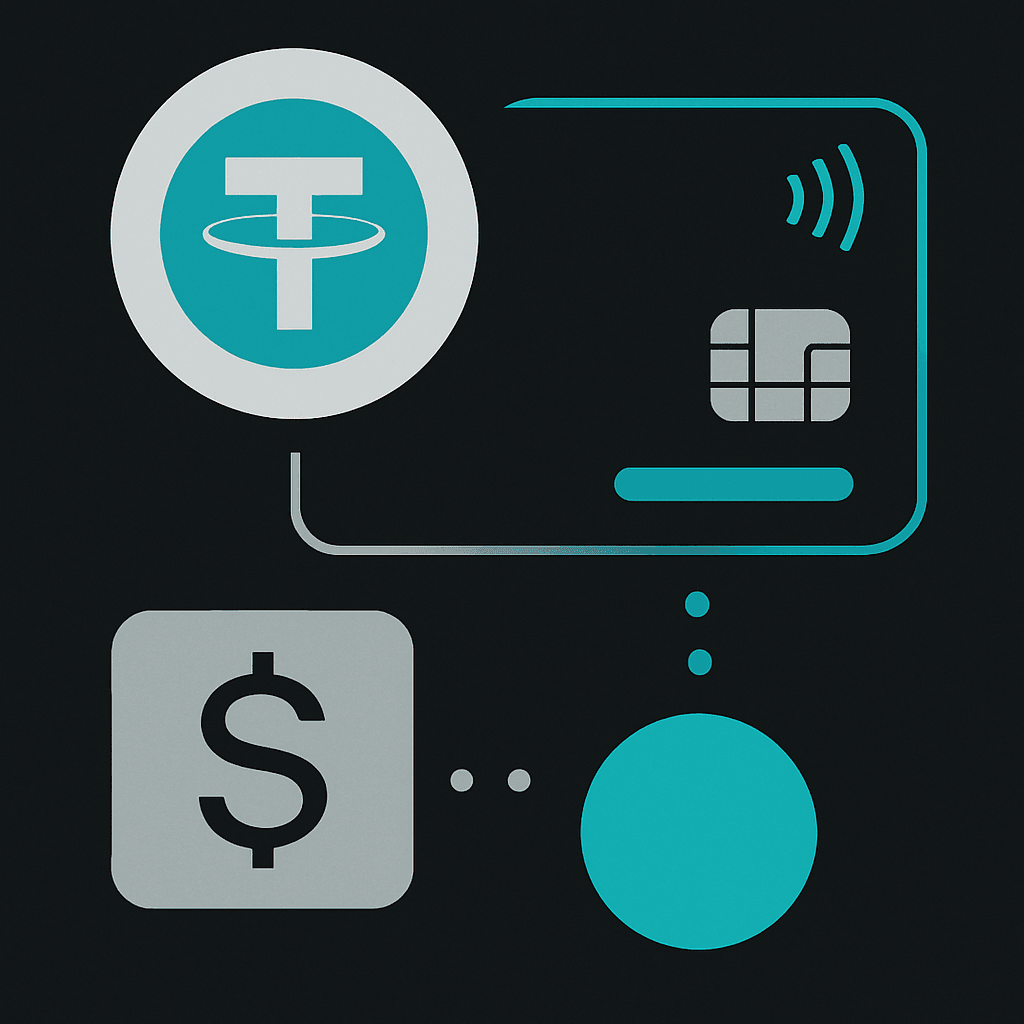
A USDT payment card closes it. Load stablecoins onto a card, and the balance is spendable the same way a regular debit card is spendable - tap to pay, online checkout, ATM withdrawal in some cases. The crypto part happens quietly in the background.
This guide breaks down how that actually works under the hood: which blockchain networks matter, how top-up fees eat into a balance, what KYC really means for usability, and how to pick a provider without falling for the "anonymous card" myth that keeps circulating in crypto forums.
How a USDT Payment Card Actually Works
The mechanics are simpler than most explainers make them sound.
A user sends USDT from a wallet or exchange to a deposit address tied to their card account. The provider converts that USDT into a card balance - either instantly reflected as spending power, or converted to fiat behind the scenes depending on the platform. From there, the card works like any prepaid Visa or Mastercard: swipe, tap, or enter the details online.
According to reporting from CryptoSlate in 2026, USDT payment cards let users spend their Tether balance directly without first converting to fiat on a separate exchange. That's the core value proposition - one less step, one less delay.
At the point of sale, the conversion to local currency happens automatically. Oobit's 2026 coverage of USDT-linked Visa cards notes this explicitly: the card works wherever Visa is accepted, and the crypto-to-fiat math is handled at checkout, not by the user. Coincodex made a similar point in 2026 - card balances don't fluctuate with crypto market moves once the funds are loaded, since USDT itself is pegged to the dollar. That stability is a big part of why Tether specifically has become the default asset for this kind of card, rather than a more volatile token.
Where the Card Can Actually Be Used
Because these cards ride on Visa or Mastercard rails, acceptance is not really a crypto question - it's a "does this merchant take cards" question. WaldenPay cards, for instance, are accepted at over 150 million merchants worldwide, both online and in physical stores. That number matches ordinary card networks because it is the ordinary card network; the crypto part is just the funding source.
Physical in-store USDT spending is still less common as a direct crypto payment (paying a merchant in raw USDT), but that's a separate thing from a USDT payment card. MuralPay's 2025 analysis makes this distinction well: direct crypto payments in physical stores remain limited, but crypto debit cards sidestep that entirely by letting the cardholder spend at any store that already accepts Visa or Mastercard. If a merchant doesn't take crypto directly, the card still works because from the merchant's point of view, it's just a card transaction, per Cryptomus's breakdown of how these conversions happen behind the scenes.
TRC20 vs ERC20: Why the Network Choice Matters
This is the part most listicle articles skip entirely, and it's arguably the most practical thing to understand before funding a card.
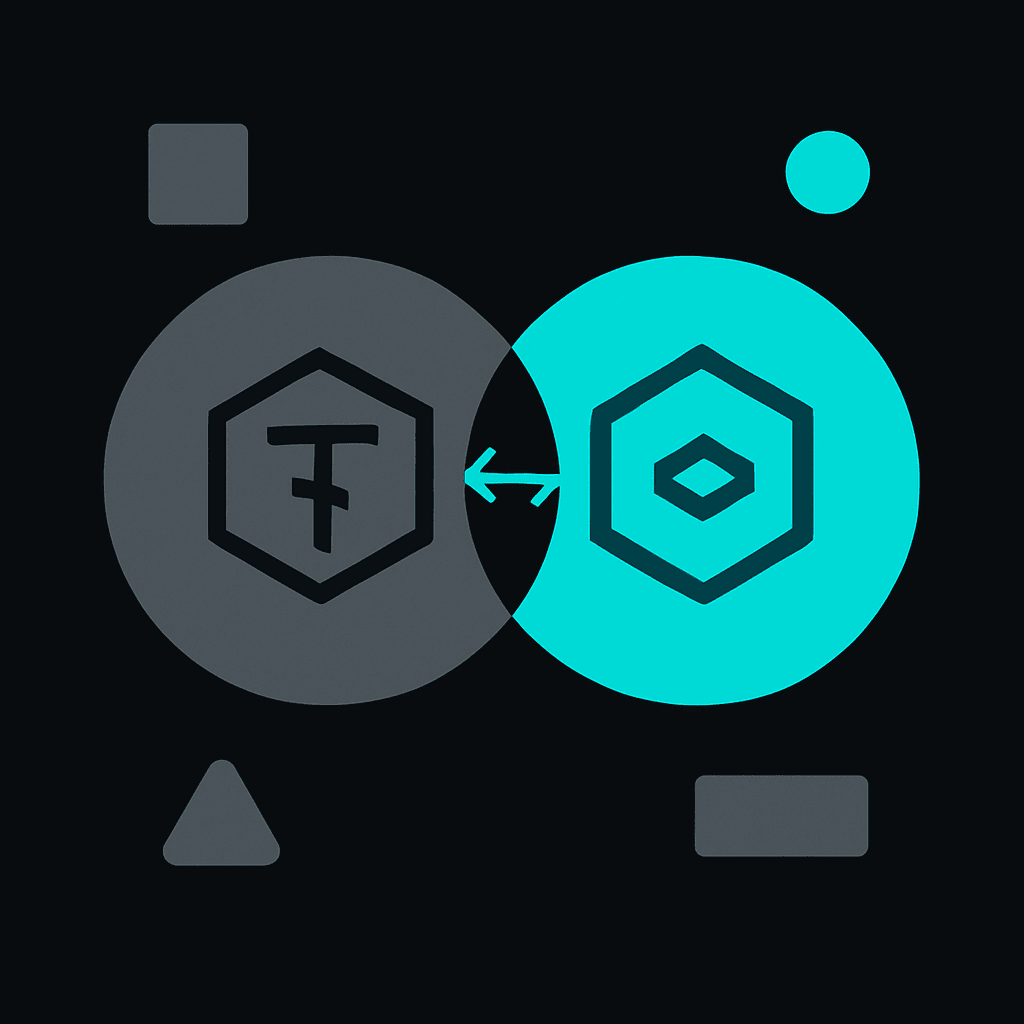
USDT isn't one single token on one blockchain. It exists natively on more than 10 different chains, with bridged versions on upwards of 80 networks according to 0xProcessing's 2026 analysis. But liquidity and actual usage concentrate on a handful of them - mainly Tron (TRC20) and Ethereum (ERC20), with Polygon and a few others picking up secondary volume.
Why does this matter for a card user? Fees and speed.
- TRC20 (Tron): Typically the cheapest and fastest option for moving USDT. Referenced 2026 Tron network analysis from VentureBurn (via 0xProcessing) points to consistently low transaction costs, which is why most USDT card providers - including WaldenPay - lean on TRC20 for deposits.
- ERC20 (Ethereum): Widely supported and deeply liquid, but gas fees can spike depending on network congestion. Fine for larger, less frequent top-ups; less ideal for someone topping up a card every few days.
- Multi-chain support (Polygon, Arbitrum, etc.): Some providers now accept Tether across a multi-chain approach, letting users pick Tron or Polygon specifically to dodge high fees, per 2026 reporting cited in ria.sc.gov's overview of stablecoin card infrastructure.
Sending ERC20 USDT to a TRC20-only deposit address (or vice versa) is one of the more common - and costly - mistakes new users make. Always double check which network a provider's deposit address expects before hitting send.
Fees: What a "standard 5%" Structure Actually Costs
Every USDT payment card has some kind of fee structure. The honest ones are upfront about it; the vague ones bury it in FAQ pages nobody reads.
WaldenPay, for example, charges a standard 5% top-up fee when loading a card, plus a one-time card issue fee when the card is first created. There's no monthly maintenance fee, and registration, balance checks, and support are free. That's a straightforward structure to model: load $200, roughly $10 goes to the fee, $190 lands as spendable balance.
When comparing crypto card fees across providers, look at the full picture, not just the headline number:
| Fee type | What to check |
|---|---|
| Top-up fee | Flat percentage, tiered, or hidden in a bad exchange rate? |
| Card issue fee | One-time cost, or does it recur on renewal? |
| Monthly/maintenance fee | Some providers charge this even with zero activity |
| FX/conversion spread | The rate used at checkout can quietly add cost beyond the stated fee |
| ATM withdrawal fee | Often separate and higher than point-of-sale fees |
A card advertising "0% top-up fee" but with a poor conversion rate baked in can end up costing more than a transparent standard 5%. Always run the math on a real transaction before assuming one provider is cheaper than another.
Adding a USDT Payment Card to Apple Pay or Google Pay
Once a card is issued, most providers let it be added to a mobile wallet, which is where a lot of the day-to-day usefulness actually shows up.
The process is generally the same as adding any other card: open Apple Pay or Google Pay, enter the card details (or scan them), confirm with the issuing provider, and it's ready for tap-to-pay. WaldenPay supports this directly, alongside using the raw card details for online and in-store checkout when a mobile wallet isn't an option.
For freelancers getting paid in crypto or e-commerce sellers moving between countries, this matters more than it might seem. A phone with a mobile wallet loaded is a lot less friction than carrying multiple physical cards across borders, and top-ups can happen from anywhere there's an internet connection - no bank branch, no wire transfer.
Managing the Card via Telegram
WaldenPay's Telegram bot handles ordering a new card, recharging an existing one, checking balances, and sending transaction alerts - all without needing a separate app download. For anyone already living inside Telegram for crypto trading groups or project updates, that's one less context switch. It won't suit everyone (some people prefer a dedicated app), but for a lot of digital nomads and freelancers, it's a genuinely convenient way to manage a stablecoin payment card without extra software.
Privacy vs. Anonymity: What to Actually Expect
This is where a lot of guides mislead readers, intentionally or not.
A USDT payment card is not an anonymous card. It's not untraceable. Any legitimate provider issuing cards on Visa or Mastercard rails operates under AML (anti-money-laundering) obligations and regulatory oversight, which typically means some level of identity verification is required somewhere in the process - even if it's lighter than a traditional bank account.
What a privacy-focused card can offer is discretion: the card doesn't need to be linked to a primary bank account, spending doesn't show up on a traditional bank statement, and the funding source (a crypto wallet) is separate from a person's everyday banking identity. That's meaningfully different from anonymity, and readers who go in expecting the latter usually end up disappointed or, worse, exposed to shady providers making promises they can't keep.
Privacy within the rules is achievable. Anonymity on a regulated card network is not - and any provider claiming otherwise is a red flag, not a feature.
For a deeper look at where the "no KYC" claims hold up and where they fall apart, see WaldenPay's breakdown in No KYC Crypto Card: What's Real vs. Risky in 2026. The short version: some providers offer lighter verification tiers with lower limits, but full anonymity isn't a realistic expectation anywhere that touches Visa or Mastercard.
Choosing a Provider: A Practical Checklist
Before funding any USDT payment card, it's worth running through a short checklist rather than picking whatever shows up first in a search result.
- Supported networks: Does it accept TRC20, ERC20, or both? Mismatched networks cause lost funds or failed deposits.
- Fee transparency: Is the top-up fee flat and disclosed, or buried in a conversion spread?
- KYC requirements: What level of verification is needed, and does it match the person's comfort level and spending limits needed?
- Merchant acceptance: Visa and Mastercard networks are the safest bet for broad acceptance; confirm which one the card runs on.
- Mobile wallet support: Apple Pay and Google Pay compatibility matters a lot for daily convenience.
- Support and management tools: App-based, Telegram-based, or web dashboard - pick what fits actual habits.
For a broader walkthrough of getting a stablecoin card set up from scratch, WaldenPay's pillar guide on the USDT virtual card: how to get one and spend it anywhere covers the account setup process in more depth. Entrepreneurs specifically funding ad accounts might also want to check the best crypto card for Facebook ads in 2026 guide, since ad platforms have their own quirks around card verification and spending limits.
Those buying mostly online rather than in physical stores may find more relevant detail in the crypto card for online payments buyer's guide, which goes deeper into checkout flows and merchant compatibility.
A Quick Look at WaldenPay's Setup
WaldenPay issues virtual cards funded with USDT (TRC20) or USDC (ERC20 and TRC20), typically ready in about 5 minutes. Funding works through a unique deposit address tied to the account wallet - send USDT, it lands as card balance minus the standard 5% top-up fee, and the card is usable immediately for online checkout or added to Apple Pay and Google Pay.
There's no monthly maintenance fee. Registration, balance checks, and customer support don't cost anything beyond the one-time card issue fee and the top-up fee itself. Management happens either through the Telegram bot or the standard account flow, and transaction alerts come through automatically.
Full details on the setup, exact fee breakdown, and account structure are covered in WaldenPay Crypto Card: How It Works, Fees & Setup. Anyone comparing multiple no-KYC-style options should also read Best No KYC Crypto Card in 2026: What Actually Works to understand where verification tiers realistically land in 2026.
More general reference material also lives on WaldenPay's features, how it works, pricing, and security pages.
FAQ
Is a USDT payment card the same as a USDT Visa card?
Usually yes, in practice. Most USDT payment cards are issued on the Visa or Mastercard network, so a "USDT Visa card" is just a payment card funded by Tether that happens to run on Visa's rails. The underlying mechanics - load USDT, spend anywhere the network is accepted - are the same regardless of branding.
Which network should be used to load USDT onto a card, TRC20 or ERC20?
TRC20 (Tron) is generally cheaper and faster for routine top-ups, and it's the network most providers, including WaldenPay, prioritize for USDT deposits. ERC20 works fine too, but Ethereum gas fees can make small, frequent top-ups more expensive.
Can a USDT payment card be used for spending online and in physical stores?
Yes. Because these cards run on standard Visa or Mastercard infrastructure, they work at any merchant that accepts those networks - both online checkout and in-store, including tap-to-pay through Apple Pay or Google Pay where supported.
Is spending with a USDT payment card anonymous?
No. It offers privacy in the sense that spending isn't tied to a traditional bank account, but it is not anonymous or untraceable. Providers operate under AML and regulatory requirements, which usually involves some identity verification depending on the platform and spending limits.
What fees should be expected with a stablecoin payment card in 2026?
Expect a top-up fee (WaldenPay charges a standard 5%), a one-time card issue fee, and potentially FX spread or ATM fees depending on the provider. Look for platforms with no monthly maintenance fee and free balance checks, since those recurring charges add up over time.
Ready to spend Tether without the extra steps?
Load USDT or USDC onto a WaldenPay virtual card, add it to Apple Pay or Google Pay, and manage everything through the Telegram bot - card issued in about 5 minutes, standard 5% top-up fee, no monthly maintenance.
Get your WaldenPay card