How Virtual Cards Work
By James Whitfield, Payments Specialist · Updated September 21, 2026

Virtual cards have quietly become one of the more practical tools in everyday finance. They power a huge share of online checkouts, most digital wallet transactions, and a growing number of crypto-to-fiat spending setups. But most explanations either stop at "it's a card without plastic" or jump straight into crypto jargon without connecting the dots. This article walks through the full lifecycle so the mechanics actually make sense.
What Is a Virtual Card, Exactly?
A virtual card is a digital representation of a payment card. It has a 16-digit card number, an expiration date, a CVV, and sometimes a billing zip - everything a merchant terminal or checkout page needs. The difference is there's no physical plastic tied to that specific number by default.
Virtual cards run on the same rails as physical ones. Visa, Mastercard, and similar networks don't really care whether the card was printed or generated on a server; they process the transaction the same way either way. That's part of why virtual card vs physical card comparisons usually come down to convenience and control, not the underlying technology.
- Bank-issued virtual cards - usually linked to a checking account or credit line, often single-use or merchant-locked.
- Prepaid virtual cards - loaded with a set balance in advance, no linked bank account required.
- Crypto virtual cards - funded with digital assets like USDT or USDC, converted to a spendable balance at load time.
WaldenPay's cards fall into that third category - stablecoin virtual cards that convert crypto into a card balance without needing a traditional bank account behind them.
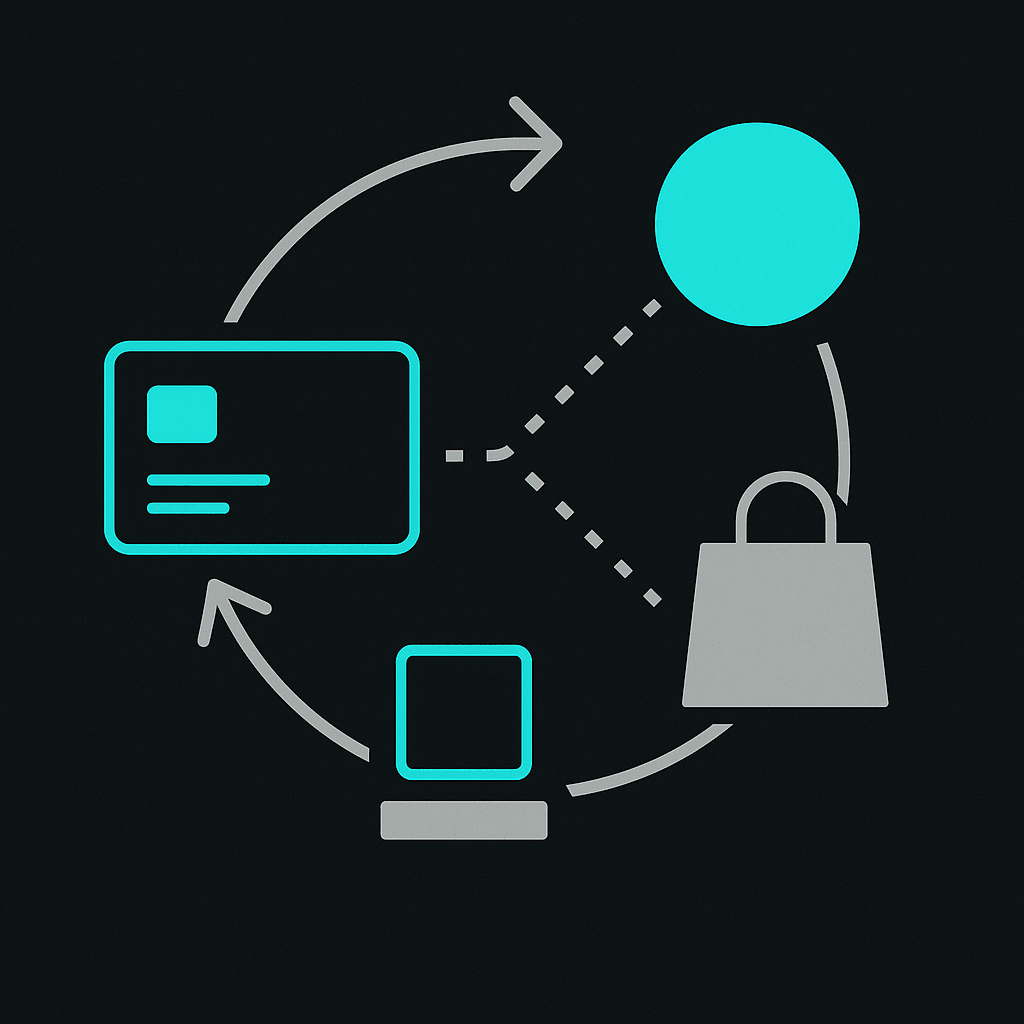
How Virtual Cards Work: The Full Lifecycle
This is the part most articles skip. Here's the step-by-step flow, from request to receipt.
Step 1: Issuance
A card issuer - a bank, fintech, or crypto card platform - generates a unique card number tied to an account or wallet. For crypto-funded cards, this step is often fast: WaldenPay issues cards in about 5 minutes, compared to days for some bank-mailed physical cards. That speed is one of the practical answers to "how to get a virtual card" without waiting on postal delivery.
Step 2: Funding
This is where the underlying source of money actually reaches the card. For a bank-issued virtual card, that might mean drawing from checking. For a prepaid virtual card, it means loading a balance directly - which is the basic answer to how prepaid virtual cards work. For a crypto virtual card, funding means sending USDT or USDC to a wallet address, which then gets converted into the card's spendable balance.
This conversion step matters. Stablecoins hold roughly steady value, but the topup itself typically carries a fee - WaldenPay charges a standard 5% top-up fee, plus a one-time card issue fee when the card is first created. There's no monthly maintenance charge, and checking a balance or registering doesn't cost anything.
Step 3: Authorization
When someone taps, swipes, or enters card details online, the merchant's payment processor sends an authorization request through the card network. The issuer checks whether there's enough balance, whether the card's active, and whether the transaction looks legitimate. If it clears, the merchant gets an approval code, usually in under a second.
Step 4: Settlement
Authorization isn't the same as final payment. Settlement happens afterward, usually within a day or two, when the actual funds move from the issuer to the merchant's bank. For crypto-funded cards, the crypto-to-fiat conversion already happened at funding, so settlement works the same way it would for any prepaid balance - the issuer just pays out from the balance it's already holding.
So the full chain looks like this: crypto or cash in, balance converted and loaded, card number generated, transaction authorized, funds settled to the merchant. Once that clicks, the rest of the details - fees, security, wallet integration - are easier to place in context.
Virtual Card Numbers and Where They Live
A virtual card doesn't need a wallet or a phone to exist - it's really just data. But most people access it through:
- A mobile app or dashboard showing the number, expiry, and CVV
- A digital wallet like Apple Pay or Google Pay, where the card is tokenized
- A messaging bot or web portal, in the case of some crypto card providers
Virtual card Apple Pay Google Pay integration is one of the more underrated features here. Adding a virtual card to a mobile wallet means tapping to pay in-store without ever exposing the raw card number to a terminal. WaldenPay cards support this, which lets stablecoin balances get spent at physical checkout counters, not just online.
Virtual Card Security: Tokenization and Beyond
Security is where virtual cards genuinely beat old-fashioned plastic in a few ways.
- Tokenization - when a virtual card is loaded into Apple Pay or Google Pay, the wallet doesn't store the real card number. It stores a token, so even if a merchant's system is compromised, the actual card number never touched it.
- Single-use or merchant-locked numbers - some virtual card providers generate a fresh number for every transaction or lock a number to one merchant, limiting exposure if that number leaks.
- Freeze and reissue - because there's no physical card to physically destroy, freezing or replacing a compromised virtual card number is usually instant from an app or bot.
None of this makes spending anonymous or untraceable. Crypto-funded cards, including WaldenPay's, remain subject to standard AML and regulatory requirements - the privacy benefit is about not exposing every transaction to a linked bank account, not about avoiding oversight. For a deeper look at how these protections apply specifically to crypto cards, see How Do Crypto Cards Work? and the general overview in What Is a Crypto Card?.
Virtual Card vs Physical Card vs Crypto Card
| Feature | Physical card | Virtual card (bank/prepaid) | Crypto virtual card |
|---|---|---|---|
| Issuance time | Days (mailed) | Minutes | About 5 minutes |
| Funding source | Bank account | Bank or prepaid balance | USDT/USDC deposit |
| Mobile wallet ready | After manual entry | Usually yes | Yes |
| Typical fees | Varies by issuer | Varies by issuer | standard 5% top-up fee + one-time issue fee |
| Monthly maintenance | Sometimes | Sometimes | None |
For freelancers paid in crypto, digital nomads moving between countries, or online sellers who need to fund ad accounts without waiting on wire transfers, that funding-time gap is often the deciding factor. More on this comparison lives in Virtual vs Physical Crypto Cards.
Practical Use Cases
- Online payments - virtual card for online payments is arguably the most common use case; no physical card is needed, just the number, expiry, and CVV at checkout.
- Ad account funding - entrepreneurs running ad campaigns often prefer a virtual card that isn't tied to a primary bank account, limiting exposure if the card number gets flagged or blocked.
- Travel and remote work - digital nomads holding stablecoins can spend directly from crypto without routing through a local bank first.
- Freelance income - freelancers paid in USDT or USDC can load a card directly instead of off-ramping to a bank account first.
For a broader rundown of why crypto-funded cards fit these situations, see Benefits of Crypto Cards. And for readers weighing privacy-focused options generally, the blog post Best No KYC Crypto Card in 2026: What Actually Works covers what's realistic versus overhyped in that space.
FAQ
How do virtual cards work compared to a regular debit card?
A virtual debit card explained simply: it works the same as a physical debit card at checkout, using a card number, expiry, and CVV, but it exists digitally from the start rather than being tied to plastic. The authorization and settlement process behind the scenes is identical.
Can a virtual card be used in physical stores?
Yes, if it's added to a mobile wallet like Apple Pay or Google Pay. The card gets tokenized, and tapping the phone at a terminal works the same as tapping a physical contactless card.
Are crypto-funded virtual cards safe to use?
They use the same tokenization and network-level protections as any other virtual card. That said, use is subject to standard AML and regulatory requirements - crypto cards offer privacy from routine bank statement visibility, not anonymity from oversight.
What fees should someone expect with a stablecoin virtual card?
Expect a top-up fee each time the card is funded and usually a one-time issue fee when the card is created. WaldenPay, for example, charges a standard 5% top-up fee and a one-time issue fee, with no monthly maintenance and free registration and balance checks. Full details are on the pricing page.
Ready to see how virtual cards work with your own stablecoins?
WaldenPay issues USDT and USDC virtual cards in about 5 minutes, ready for Apple Pay, Google Pay, or online checkout. Check the how it works page or explore features before getting started.
Get your WaldenPay card