Stablecoins Explained
By Elena Petrova, Blockchain Researcher · Updated September 21, 2026

Anyone new to crypto eventually hits the same wall: coins like Bitcoin or Ethereum can swing 5-10% in a single day, which makes them a poor fit for everyday spending or saving. That's the problem stablecoins were built to solve.
This guide breaks down what are stablecoins from the ground up, walks through the different collateralization models, looks at real de-peg events that tested those models under pressure, and then covers something most explainers skip entirely: how to actually spend stablecoins in daily life.
What Are Stablecoins, Exactly?
A stablecoin is a digital token that lives on a blockchain but is designed to track the value of another asset - almost always the US dollar. One USDT or one USDC should always be worth roughly one dollar, give or take a fraction of a cent.
So how do stablecoins work in practice? The issuer holds reserves (cash, short-term bonds, other crypto, or some mix of these) and mints new tokens only after receiving an equivalent amount of value into those reserves. When someone redeems a stablecoin, the issuer burns the token and releases the backing asset. That cycle - mint on deposit, burn on redemption - is what keeps the peg intact, at least on paper.
In practice, how well that peg holds up depends entirely on what's backing it. And that's where things get interesting.
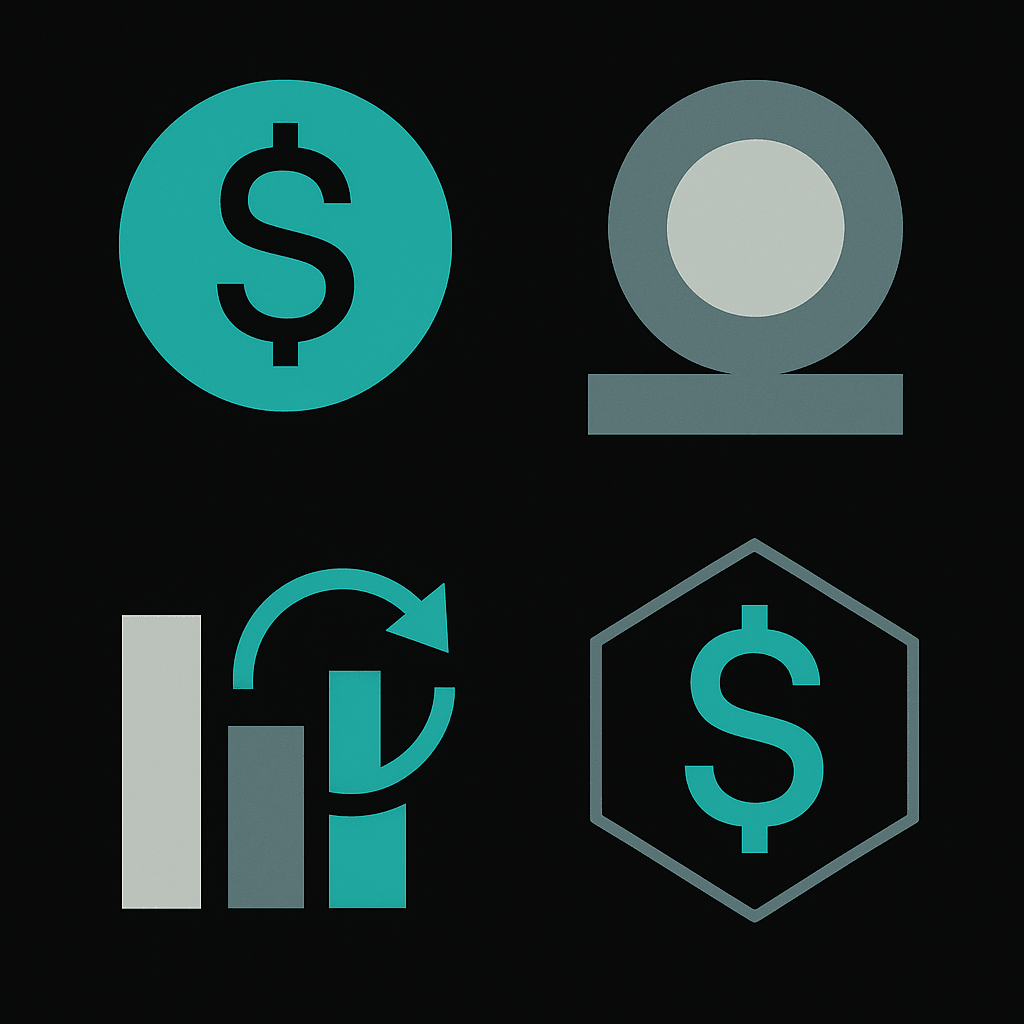
Types of Stablecoins: The Four Models
Not all stablecoins are built the same way. There are four broad categories, and knowing the differences matters if someone's trying to judge how safe a given coin actually is.
- Fiat-collateralized stablecoins: Backed 1:1 by cash and cash-equivalents held in reserve by a central issuer. USDT (Tether) and USDC (Circle) both fall here. These are the most common and, generally, the most trusted for everyday use.
- Crypto-collateralized stablecoins: Backed by other cryptocurrencies, usually over-collateralized (e.g., $150 of ETH locked to mint $100 of the stablecoin) to absorb price swings. DAI is the classic example.
- Algorithmic stablecoins: No hard collateral at all. Instead, smart contracts use supply and demand mechanics (minting and burning a paired token) to hold the peg. This model has by far the worst track record.
- Commodity-collateralized stablecoins: Backed by physical assets like gold. A smaller niche, and less relevant for daily spending.
For anyone weighing which model fits their needs, fiat-collateralized coins tend to win on simplicity and predictability, while crypto-collateralized and algorithmic models trade some of that stability for decentralization.
Stablecoin Pegs Explained: What Can Go Wrong
A peg only holds as long as people trust that a token can be redeemed for what it claims to represent. When that trust cracks, even briefly, the price can slip.
Two events are worth knowing about, because they show just how differently a peg can break.
TerraUSD (UST), 2022
UST was an algorithmic stablecoin with no real collateral behind it - just a paired token (LUNA) and a minting mechanism meant to keep the price anchored. When confidence broke during a period of heavy withdrawals, the whole system spiraled: UST lost its peg, LUNA's supply exploded, and both tokens collapsed to near zero within days. This is still the go-to example of why purely algorithmic stablecoins carry structural stablecoin risks that collateralized models don't.
USDC and Silicon Valley Bank, 2023
USDC is fiat-collateralized and fully backed, but a portion of its reserves sat in Silicon Valley Bank, which failed suddenly. For about a weekend, USDC traded as low as roughly $0.87 as markets priced in the risk that those reserves might not be recoverable. Once US regulators guaranteed depositor funds, USDC recovered its peg within days. The lesson here: even well-collateralized stablecoins carry counterparty and banking risk, not just crypto risk.
Both cases point to the same conclusion: are stablecoins safe? Safer than volatile crypto assets for holding value day-to-day, but not risk-free. Reserve quality, issuer transparency, and banking relationships behind a stablecoin matter just as much as the peg mechanism itself.
USDT vs USDC: The Two Everyday Leaders
For anyone comparing the best stablecoins 2026 has to offer for daily use, it almost always comes down to USDT vs USDC.
| Factor | USDT (Tether) | USDC (Circle) |
|---|---|---|
| Backing | Cash and cash-equivalents, mixed reserve composition | Cash and short-term US Treasuries |
| Networks | Widely available on TRC20, ERC20, and others | Widely available on ERC20, TRC20, and others |
| Liquidity | Largest by trading volume globally | Very high, especially in regulated/institutional contexts |
| Reserve reporting | Quarterly attestations | Monthly attestations |
Neither one is "better" across the board. USDT tends to win on raw liquidity and network availability; USDC is often preferred by users who want more frequent reserve disclosures. Both work fine for what most people actually care about: moving value and spending it.
Stablecoin Use Cases: Beyond Trading
Most explainers stop at "stablecoins are used for trading pairs on exchanges." True enough, but it undersells things. Real stablecoin use cases in 2026 include:
- Freelancers and remote workers getting paid in crypto without waiting on slow bank wires
- E-commerce sellers and entrepreneurs holding working capital in a stable asset instead of a volatile one
- Digital nomads moving money across borders without repeated currency conversion, related to how foreign currency payments typically work
- Everyday holders wanting a store of value that isn't tied to a single country's banking system
- Spending crypto value directly for goods and services, without first converting to a bank account
That last point is where things get practical - and where most guides leave readers hanging.
How to Spend Stablecoins in Real Life
Holding USDT or USDC is one thing. Spending it at a coffee shop, on a subscription, or funding an ad account is another matter entirely. Historically, that meant converting to fiat through an exchange, waiting for a bank transfer, and then using a regular debit card - a slow process that adds friction back into something crypto was supposed to simplify in the first place.
Crypto virtual cards close that gap. A platform like WaldenPay lets someone load USDT (TRC20) or USDC (ERC20 and TRC20) directly onto a virtual card, issued in minutes, and spend it anywhere the card network is accepted - which covers 150M+ merchants worldwide, in-store or online. The card can be added to Apple Pay or Google Pay, and a Telegram bot handles top-ups, balance checks, and transaction alerts without needing a separate app.
There's a standard 5% top-up fee when loading value onto the card, plus a one-time card issue fee, and no monthly maintenance charge - registration, balance checks, and support all stay free. Worth being clear-eyed here too: using a card like this is privacy-focused, not anonymous, and any provider operating in this space is subject to AML and regulatory requirements. Financial sovereignty and staying within the rules aren't mutually exclusive - that's really the whole point.
For readers specifically weighing privacy trade-offs against compliance requirements, the blog post on the best no-KYC crypto card in 2026 covers what's realistic and what isn't. And for a deeper look at how card transactions actually clear once a stablecoin balance is loaded, How Online Card Payments Work fills in the mechanics.
FAQ
What are stablecoins backed by?
It depends on the type. Fiat-collateralized stablecoins like USDT and USDC are backed by cash and cash-equivalents (including short-term government bonds). Crypto-collateralized stablecoins are backed by other cryptocurrencies, usually over-collateralized. Algorithmic stablecoins aren't backed by hard reserves at all - they rely on code-based supply adjustments, which is why they've historically been the riskiest category.
Are stablecoins safe to hold long-term?
They're far more stable than volatile crypto assets, but "safe" isn't the same as "risk-free." Reserve quality, issuer transparency, and banking relationships all matter. The USDC/SVB event in 2023 showed that even well-collateralized stablecoins can wobble temporarily if their banking partners run into trouble, even though the peg recovered within days.
What's the practical difference between USDT and USDC?
Both aim for the same 1:1 dollar peg and both run on networks like TRC20 and ERC20. USDT generally has deeper liquidity and wider global availability; USDC tends to appeal to users who prioritize more frequent reserve attestations. For everyday spending through a virtual card, either one works.
Can stablecoins be spent directly, or do they need to be converted to cash first?
They can be spent directly if loaded onto a crypto-funded card. Instead of converting to fiat through an exchange and waiting on a bank transfer, a virtual card lets someone load USDT or USDC and spend it wherever the card network is accepted, both online and in-store.
Turn stablecoins into everyday spending power
Load USDT or USDC onto a WaldenPay virtual card, ready in about 5 minutes, and spend at 150M+ merchants worldwide - no bank account conversion required.
Get your WaldenPay card