What Happens to Your Crypto Card If the Company Shuts Down?
By Elena Petrova, Blockchain Researcher · Updated September 21, 2026
What Happens to My Crypto Card If the Company Shuts Down? The Short and Long Answer
TL;DR If a crypto card company shuts down, the outcome depends on who actually held the funds - the card issuer, the program manager, or a separate custodial wallet. Planned wind-downs (like BitMEX in 2026) usually give users a withdrawal window. Sudden collapses or exit scams often don't. Crypto sitting on-chain survives any single company's failure; balances converted and held inside a provider's custodial ledger do not have that same protection. This guide breaks down the actual mechanics, cites real 2026 cases, and gives a checklist for vetting any provider before loading funds.Anyone holding a balance on a crypto-funded card has probably wondered, at some point, what happens to my crypto card if the company shuts down. It's a fair question, and most answers fall into one of two unhelpful camps: blanket panic ("your money is gone, always") or blanket reassurance ("don't worry, it's regulated"). Neither holds up, because the real answer depends on the entity structure behind the card - and almost nobody bothers explaining that structure.
This article does. It walks through the custodial chain, what actually happens during a shutdown, real 2026 precedents, and a practical checklist for reducing exposure before it becomes a problem. A separate guide covers crypto card freezes and recovery, including escalation steps when access is restricted.
The Custodial Chain: Who Actually Holds Your Money
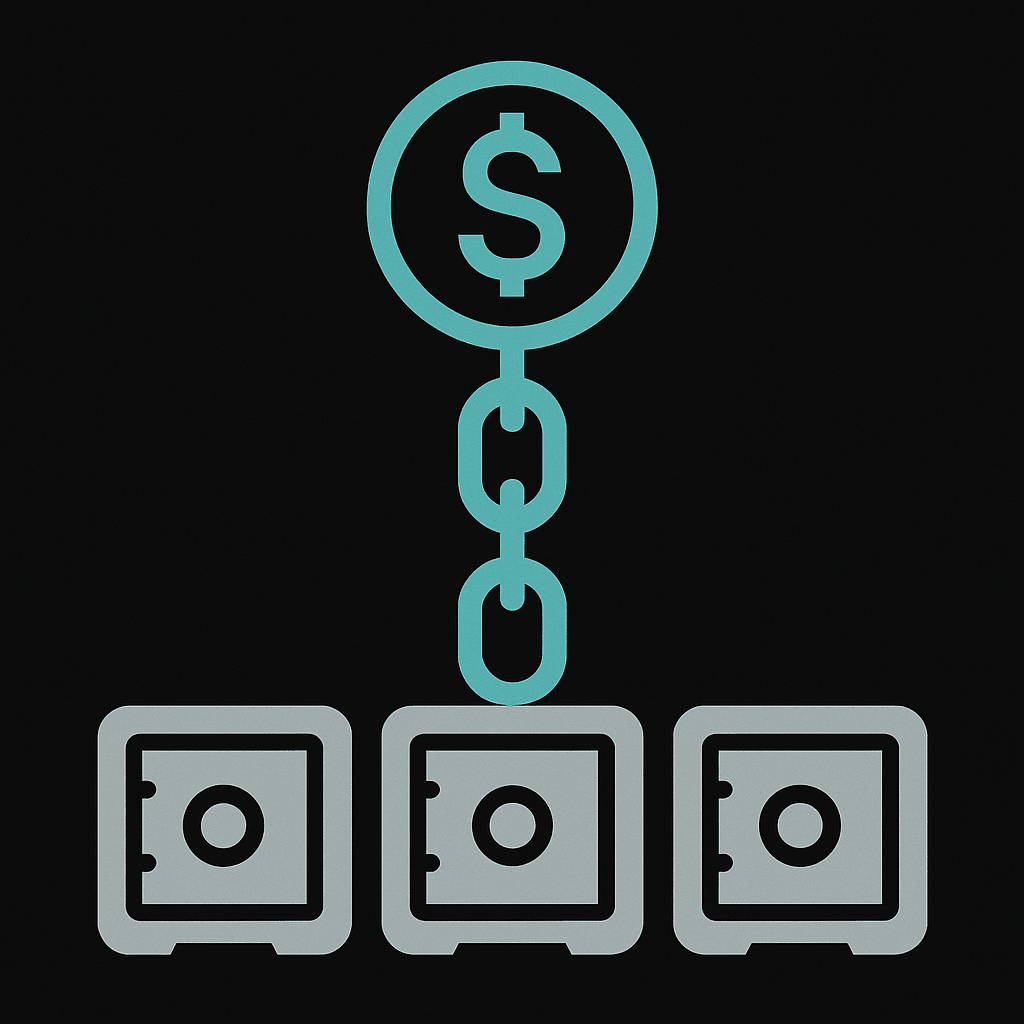
A crypto card isn't one company. It's usually three or four layers stacked on top of each other, and each layer fails differently.
- The card network (Visa, Mastercard) sets rules and processes transactions but doesn't hold customer balances.
- The issuing bank or e-money institution is the licensed entity that technically issues the card and, in many jurisdictions, is required to safeguard customer funds separately from operating capital.
- The program manager - often the brand a customer actually interacts with - builds the app, sets fees, and manages the crypto-to-balance conversion.
- The crypto custody layer holds or processes the cryptocurrency before it's converted into spendable card balance.
When a crypto card company shuts down, the question isn't "is the company gone" - it's which of these layers failed, and whether the safeguarding obligations at the bank/issuer level were actually met. A program manager going out of business is a very different event from the underlying issuing bank collapsing. One might just mean the app disappears and a new provider takes over the portfolio. The other can freeze every account overnight.
Crypto held in a wallet was never actually stored in the app - it exists on the blockchain, and the seed phrase is the key regardless of whether the company behind the app still exists.
That distinction matters a lot for crypto card custodial risk specifically. A self-custody wallet survives its app vanishing because the blockchain keeps running, maintained by thousands of independent nodes, not by any single developer. A custodial card balance doesn't have that fallback. Once crypto is converted into card balance sitting on an issuer's internal ledger, its safety depends entirely on that issuer's solvency and how well it segregated customer funds.
What Happens to Your Crypto Card Balance, Step by Step, When a Shutdown Happens
So, mechanically, what happens to card balance if company closes? It generally follows one of three paths.
1. Planned wind-down
This is the best-case scenario. The company announces closure in advance, gives users a withdrawal window, and reserves are confirmed to cover balances. BitMEX followed this path in 2026: it announced on July 23 that it would stop operating, with a full wind-down completed by September 23, 2026 at 04:00 UTC, stating customer assets remained safe and reserves covered customer balances. Card programs that fail this way typically freeze new top-ups first, then open a withdrawal or transfer-out window lasting weeks.
2. Bankruptcy or insolvency proceedings
If the entity can't cover liabilities, it may enter formal bankruptcy. Withdrawals get frozen immediately, and recovering funds means becoming a creditor in a legal process that can take months or years - and often returns only a fraction of the original balance. This is where crypto card insolvency protection, if it exists at all, actually gets tested. Most no-KYC or offshore card programs offer none.
3. Sudden shutdown or exit scam
No notice, no withdrawal window, support channels go dark. This is the scenario people are really afraid of when they ask what happens to my crypto card if the company shuts down without warning. It's also the hardest to protect against after the fact - the checklist further down exists specifically to catch this before money goes in.
AscendEX offers a useful middle case. Established in 2018 and having reached millions of registered users, it announced its shutdown on July 11, 2026, after failing to secure a MiCA license for the European market and losing a key liquidity partnership. That's not fraud - it's a licensed platform that couldn't keep up with rising compliance costs, a pattern that's increasingly pushing smaller providers out of the market in favor of the largest, best-capitalized exchanges and card programs.
Real 2026 Precedents Worth Knowing
A crypto exchange or card provider shutting down doesn't automatically mean funds are lost - planned closures, bankruptcies, and liquidations follow genuinely different withdrawal rules. In 2026 alone, BitMEX, BitMart, AscendEX, and EXMO.com all handled customer withdrawals differently during their respective shutdowns, which is exactly why "is my crypto card safe" can't be answered with a yes-or-no template.
| Shutdown type | Withdrawal outcome | Example |
|---|---|---|
| Planned wind-down with reserves | Full or near-full recovery within a set window | BitMEX, 2026 |
| Licensing/regulatory failure | Withdrawal window, sometimes with reduced services | AscendEX, 2026 |
| Bankruptcy/insolvency | Frozen funds, creditor claims process, partial recovery over months or years | Various historical exchange collapses |
| Abrupt shutdown / exit scam | Little to no recourse, especially offshore | Various no-KYC card operators |
It's also worth remembering the older, larger example non-crypto readers usually recognize: Wirecard, the German payment processor whose 2020 collapse froze prepaid and virtual cards issued through it globally overnight, despite being a regulated, publicly listed company. Regulation reduces risk. It doesn't eliminate it.
Are Crypto Cards Regulated? Yes, But That's Not the Whole Story
Most legitimate crypto card programs partner with a licensed e-money institution or bank, and that licensing does come with real obligations - safeguarding customer funds, capital requirements, reporting. So are crypto cards regulated? Generally, the reputable ones are, at least at the issuing layer. But regulation varies wildly by jurisdiction, and "regulated" doesn't mean "insured" the way a bank deposit might be. There's no FDIC-style backstop for a crypto card balance in most cases, and readers should be skeptical of any provider implying otherwise.
This is also where crypto card exit scam signs tend to show up early, if anyone's looking:
- Withdrawal delays that get longer, not shorter, over successive requests
- Sudden, unexplained changes to fee structures with no notice period
- Support going quiet right after a funding round, "rebrand," or leadership change
- No published information on which bank or issuer actually processes the card
- Aggressive push notifications to top up right before service quality visibly drops
How to Protect Crypto Card Funds: A Practical Checklist
None of this means avoiding crypto cards altogether, including crypto-funded cards for Apple Pay - it means treating provider selection with the same seriousness as choosing where to park savings. A few things worth checking before loading a significant balance:
- Licensing transparency. Can the provider name its issuing bank or e-money license, and is that license verifiable on a regulator's public register?
- Reserve or safeguarding disclosure. Does the company publish anything about how customer funds are segregated from operating funds?
- Fee structure clarity. Are top-up fees, spending fees, and volume discounts published and predictable, or buried and subject to sudden change? A dashboard showing current fee tier, rolling 30-day spend, and progress toward the next discount level is a good sign of a provider that isn't hiding its economics.
- Withdrawal speed and limits. How fast can funds actually move out, and what are the caps? Test this with a small amount before committing more.
- Wallet design. Does the provider give unique deposit addresses per network and let users see balances clearly, or is everything opaque behind a single internal number?
- Track record and communication history. Has the company weathered market stress before, and how did it communicate during it?
WaldenPay is one example of a provider that publishes this kind of information openly - top-up fees start at 5% and drop automatically with volume, down to as low as 3% at higher rolling 30-day spend, with the current tier and progress visible in the dashboard rather than hidden in fine print. That kind of fee and volume transparency, paired with per-network deposit addresses in the account wallet, is exactly the sort of detail worth looking for in any provider - not a guarantee against every risk, but a meaningful signal. Readers can review the full breakdown in the WaldenPay Review 2026 or the dedicated trust and safety review.
Reducing Exposure: Lean Balances and Diversification
The single most effective protection against virtual card shutdown risk has nothing to do with picking the "perfect" provider - it's behavioral. Keep card balances lean. Load what's needed for near-term spending, not a large reserve sitting on someone else's ledger. Crypto not immediately needed for spending is generally safer left in a personal wallet, where it's governed by the blockchain rather than a company's solvency.
Diversifying across two providers for different use cases - one for daily spending, another for ad accounts or subscriptions - also limits how much exposure sits with any single company at any given time. Freelancers and e-commerce sellers already do this instinctively with bank accounts; it applies just as well here, and it directly answers the recurring worry behind what happens to my crypto card if the company shuts down: the less sitting in one place, the less there is to lose if that one place fails.
For teams managing multiple cards and ad spend across platforms, this diversification logic gets more important, not less - see the crypto corporate cards buyer's guide for how that plays out at scale, and the Facebook Ads card guide for a practical example of why a backup funding method matters.
FAQ
What happens to my crypto card if the company shuts down suddenly, with no warning?
Recourse is limited, especially with offshore or unregulated operators. Document account balances and transaction history immediately, watch for any official claims process, and file a claim as early as the window opens if one exists. Sudden shutdowns without any communication are the hardest scenario to recover from, which is why vetting a provider's licensing and fund-segregation practices matters before loading a balance, not after.
Is my crypto card safe if the provider is licensed?
Licensing meaningfully reduces risk because it typically requires fund safeguarding and regulatory oversight, but it isn't a guarantee. Wirecard was a regulated, publicly listed processor and its 2020 collapse still froze cards worldwide overnight. Regulation lowers the odds of a bad outcome; it doesn't remove them.
What happens to card balance if company closes but crypto was never converted?
If funds are still on-chain in a personal wallet and haven't been converted to card balance, they remain accessible via the seed phrase regardless of what happens to the company, since the blockchain is maintained by independent nodes, not the app developer. Once converted into a custodial card balance, though, recovery depends on the issuer's solvency and safeguarding practices.
Are crypto cards regulated the same way everywhere?
No. Licensing regimes vary significantly by country, and some providers operate in lighter-touch or offshore jurisdictions specifically to reduce compliance costs. That can mean lower fees but also weaker fund-safeguarding requirements, which is part of why rising compliance costs have pushed several smaller providers toward shutdown in 2026 rather than adapting to stricter rules.
How to protect crypto card funds without avoiding crypto cards entirely?
Keep loaded balances lean, verify licensing and fee transparency before committing significant funds, test small withdrawals early, and split usage across more than one provider. None of this requires giving up the convenience of a crypto card - it just treats provider selection as seriously as any other place money is parked, all while staying within standard AML and regulatory requirements that apply to any card provider.
Compare providers with fee and volume transparency built in
WaldenPay's dashboard shows the current top-up fee, rolling 30-day spend, and progress to the next discount tier at all times - no guesswork, no hidden fine print. See how it fits into a diversified, lean-balance approach to crypto card spending.
Get your WaldenPay card