Best No KYC Crypto Card for USA: 2026 Comparison
By James Whitfield, Payments Specialist · Updated September 17, 2026
Which virtual card lets you fund with crypto and spend in the United States without uploading a driver's license or passport?
The best no KYC crypto card for USA signups in 2026 is WaldenPay: email-only registration, funding with 135+ cryptocurrencies across 35+ networks, instant card issue, and acceptance at 150 million merchants including major US grocery chains, gas stations and online retailers. Alternatives like SolCard and Bing Card offer similar no-document entry paths, but each comes with different fee structures and spending caps that change the effective cost in dollars.
A freelancer in Austin converts $1,500 worth of USDT on Tron to pay for Facebook Ads, only to discover the card they chose caps unverified users at $500 per transaction. The ad account rejects the payment. That's the gap this comparison fills.
What "No KYC" Actually Means for US-Based Crypto Card Users
No KYC means you can sign up and fund the card without submitting a photo ID, selfie video, or Social Security Number. It does not mean anonymous or untraceable spending.
Every provider runs some form of AML screening—email verification, device fingerprinting, transaction monitoring—and most cap unverified accounts at $2,000 to $10,000 per month to stay within FinCEN's prepaid card rules. The card network (Visa or Mastercard) and the issuing bank also log every transaction, so "no KYC" describes the signup step, not the regulatory obligations that apply once you start spending.
For American users, the practical benefit is speed: you can go from crypto wallet to funded card in under ten minutes without waiting for manual document review. The tradeoff is lower limits and higher fees than fully verified accounts.
Understanding how no-KYC cards balance privacy and compliance helps set realistic expectations before you load the first dollar.
Best No KYC Crypto Card for USA: Side-by-Side Comparison
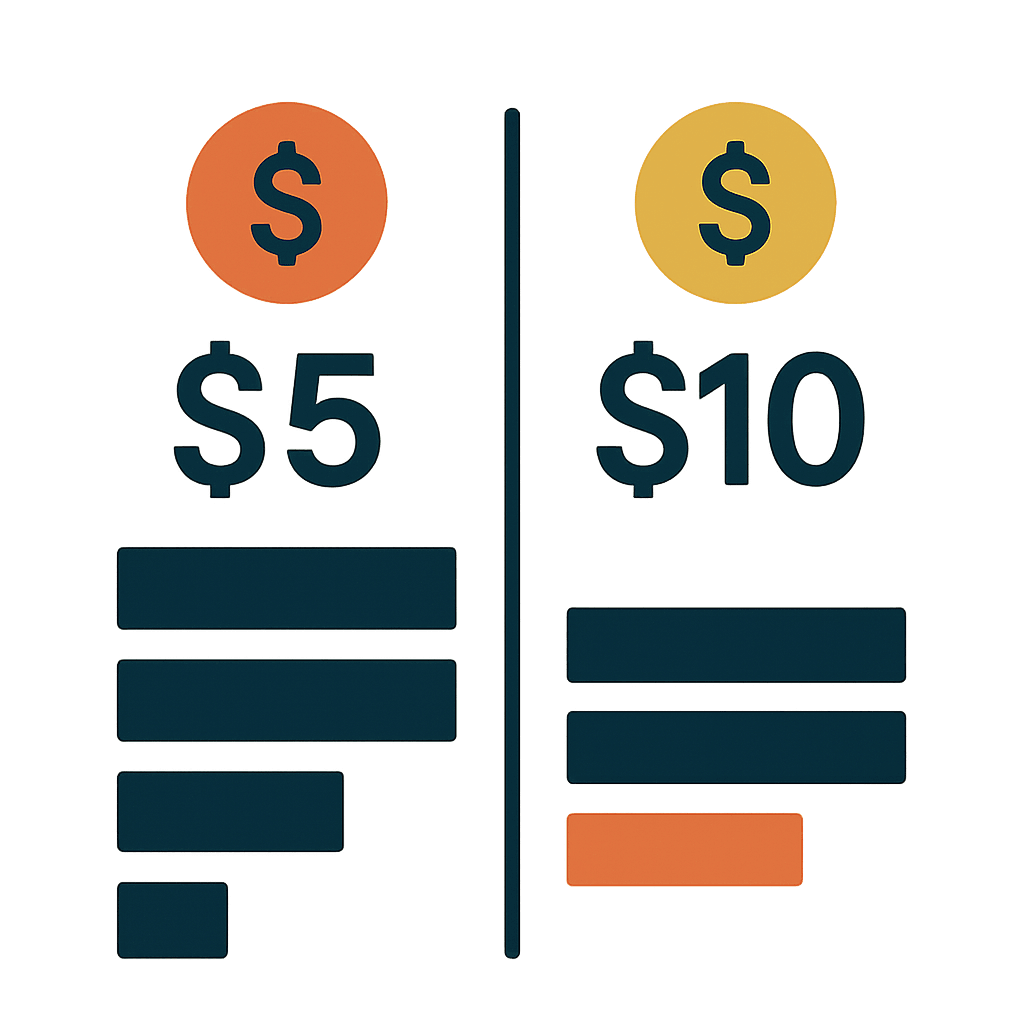
Five providers accepted US signups without identity documents as of mid-2026. Here's how they stack up on the metrics that matter for American crypto holders.
| Provider | Signup Requirement | Top-Up Fee | Monthly Limit (Unverified) | Supported Networks |
|---|---|---|---|---|
| WaldenPay | Email only | 5% down to 3% (volume discounts) | No stated cap | 135+ coins, 35+ networks |
| SolCard | Email only | Varies by tier | $2,000-$5,000 | Solana ecosystem |
| Bing Card | Email only | Undisclosed | $3,000 | Major stablecoins |
| KAST K Card | Email + phone | Undisclosed | $10,000 | Multi-chain |
WaldenPay stands out for network breadth: USDT and USDC on Tron, Ethereum, Polygon, Arbitrum, Base and BNB Smart Chain; BTC, ETH, SOL, LTC and over a hundred others. The top-up fee starts at 5% and drops automatically to 3% once your rolling 30-day card spend crosses $100,000—no applications, the discount applies instantly.
SolCard focuses on the Solana ecosystem, which means lower network fees (fractions of a cent per transaction) but narrower coin support. Bing Card and KAST K Card sit somewhere in between, with multi-chain support but less transparent fee schedules.
Fees That Actually Matter: Worked Examples in USD
Top-up fees look small in percentage terms until you run the numbers on typical US spending scenarios.
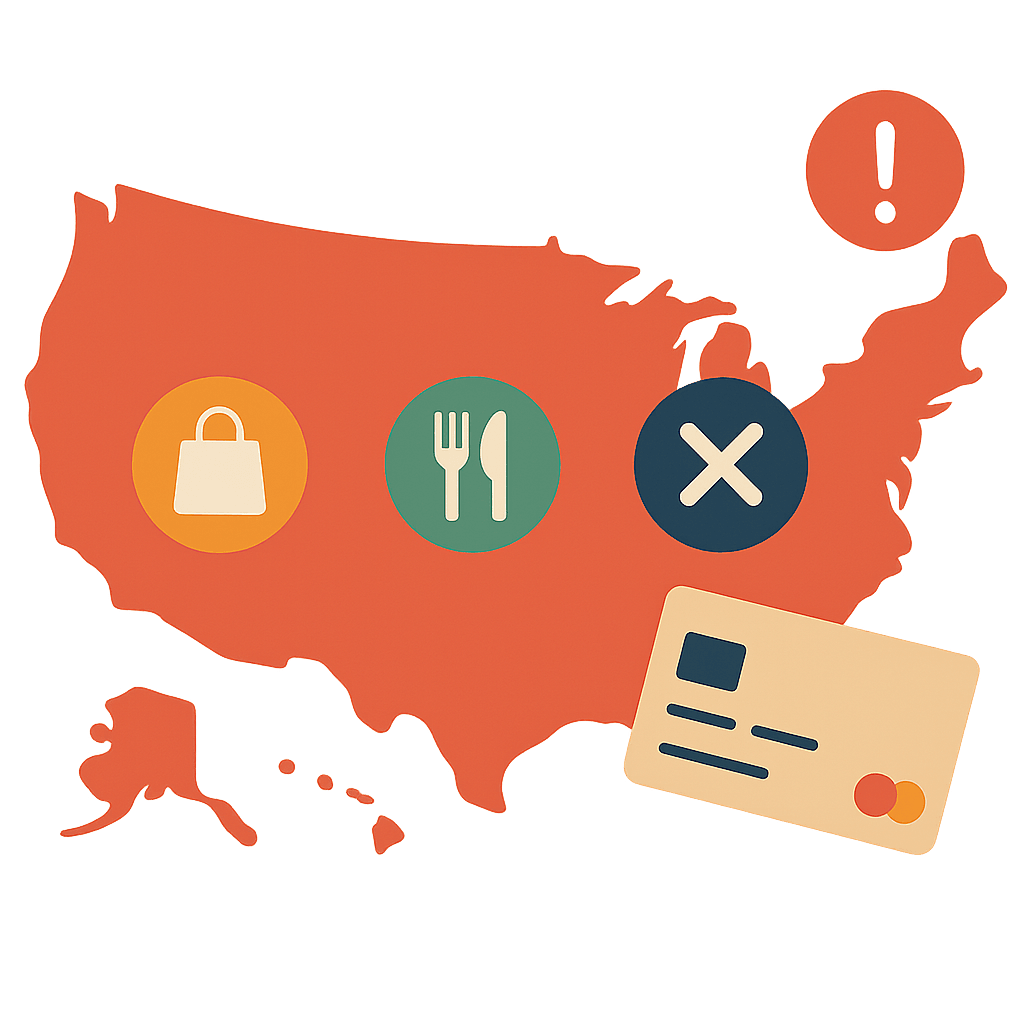
A $500 grocery run at Whole Foods costs $525 to fund on a 5% card, $515 on a 4% card, and $510 on a 3% card. Over a year of weekly $500 shops, the difference between 5% and 3% is $520—enough to cover two months of groceries.
For a $2,000 monthly Google Ads spend, 5% costs $100 per top-up ($1,200 annually), 4% costs $80 ($960), and 3% costs $60 ($720). WaldenPay's automatic volume discounts mean you hit the 4.75% tier after your first $2,000 in card spend, then 4.5% at $5,000, 4.25% at $10,000, and so on—no forms to fill, the system tracks your rolling 30-day total and applies the new rate on the next top-up.
Other providers publish tiered pricing less clearly, or reserve volume discounts for verified accounts, which defeats the purpose of the best no KYC crypto card for USA users.
Hidden Costs: Currency Conversion and Declined Transactions
Most virtual card usa crypto options are denominated in USD, so domestic spending avoids the double conversion (crypto to USD, then USD to local currency) that UK or European users face. But fraud filters at US merchants add a different friction.
Gas stations often preauthorize $75-$125 before you pump, then settle the actual amount hours later. If your card balance sits below the preauth threshold, the terminal declines the transaction even though you have enough for the fuel you need. Grocery self-checkouts and car rental desks flag international prepaid BINs as high-risk, triggering manual verification or outright rejection.
WaldenPay cards work with Apple Pay and Google Pay, which improves acceptance rates because the merchant sees a tokenized device transaction rather than a raw prepaid card number. SolCard and Bing Card also support mobile wallets, though user reports suggest acceptance varies by merchant and terminal firmware.
US Merchant Acceptance: Where These Cards Work (and Where They Don't)
A prepaid crypto card united states users can rely on needs to clear three hurdles: the card network (Visa or Mastercard), the merchant's payment processor, and the terminal's fraud rules.
All five providers in the comparison issue cards on Visa or Mastercard rails, so network acceptance reaches 150 million merchants worldwide. The friction comes at the processor level: Square, Stripe, PayPal and Authorize.Net each maintain their own risk models, and many flag non-US-issued prepaid cards for manual review or decline them outright.
WaldenPay cards typically work at major US grocery chains (Kroger, Safeway, Albertsons), big-box retailers (Target, Walmart, Home Depot), and national gas station brands (Shell, Chevron, ExxonMobil). Online shopping is smoother: Amazon, eBay, Shopify stores and subscription services process the card like any other prepaid Visa.
Car rental desks and hotel check-ins are hit or miss. Many require a credit card (not debit or prepaid) for the deposit hold, and those that accept prepaid often reject international issuers. Same story for recurring subscriptions that verify card validity with a $1 authorization—some processors flag the card's country of issue and decline.
If you're comparing options for online payments specifically, acceptance rates are higher because e-commerce fraud filters focus on billing address and CVV rather than card BIN.
FinCEN Rules and What They Mean for No-KYC Cards
The Financial Crimes Enforcement Network treats prepaid cards differently than cryptocurrency exchanges. An exchange moving your coins into fiat requires full KYC under the Bank Secrecy Act. A prepaid card provider loading your crypto onto a card balance sits in a lighter-touch category, closer to a money transmitter than a bank.
That's why no kyc card american users can access exists at all in 2026. Providers cap unverified accounts at levels that keep them below the thresholds triggering enhanced due diligence—typically $2,000 to $10,000 per month—and run automated AML screening (sanctions lists, transaction pattern analysis) in the background.
State-level money transmitter licenses add another layer. A provider operating in all 50 states needs licenses in 48 of them (Montana and New Mexico exempt small operators). WaldenPay's partner model—operated by BlueHouse Software B.V. in the Netherlands through a licensed partner—sidesteps the state-by-state patchwork while still serving US customers.
The practical upshot: you won't upload a passport, but the provider still knows your email, device fingerprint, IP address, and transaction history. That's enough to freeze your account if you trigger an AML alert, and it's enough for law enforcement to request records under a valid subpoena.
Spending Limits: How They Work and When They Bite
Every no-KYC card caps unverified users in at least two ways: per-transaction limit and monthly spending limit. Some add a third: maximum card balance.
WaldenPay sets a $10,000 per-transfer limit for the Send to Friend feature and a $20,000 rolling 24-hour cap, but does not publish a monthly card spending limit for unverified users. That's unusually permissive. SolCard caps unverified accounts at $2,000 to $5,000 per month depending on the tier. Bing Card sits at $3,000. KAST K Card allows $10,000 but requires a phone number in addition to email.
Per-transaction limits matter more for lump-sum purchases. A $4,000 laptop buy gets declined if your card caps transactions at $2,500, even if your monthly limit is $10,000. You'd need to split the payment across two cards or wait for a partial shipment model that charges in installments.
The spending limits breakdown explains how caps stack and what happens when you hit them mid-month.
How Volume Discounts Change the Math
WaldenPay's automatic volume discounts mean the effective fee drops as you spend more. Start at 5% for the first $2,000 in rolling 30-day card spend. Cross $2,000 and the next top-up costs 4.75%. Hit $5,000 and you're at 4.5%. Reach $100,000 and you're at 3%.
For a user spending $3,000 per month on ad accounts and SaaS subscriptions, the first month costs 5% on the first $2,000 ($100 fee) and 4.75% on the next $1,000 ($47.50 fee), total $147.50. Month two starts at 4.75% because the rolling window includes the prior month's spend. By month four, the user crosses $10,000 cumulative and drops to 4.25%, saving $22.50 per $3,000 top-up compared to the starting rate.
That's a feature other providers reserve for verified accounts or don't offer at all.
Security and Privacy: What You Actually Get
No-KYC signup means minimal data collection at registration, not zero tracking once you start spending. The card network logs every transaction—merchant name, amount, timestamp, terminal location. The provider sees your funding sources (which wallets sent crypto, on which networks) and your spending patterns.
WaldenPay encrypts card details with AES-256 and uses TLS 1.3 for data in transit. Two-factor authentication (2FA) protects account access. You can freeze the card instantly from the dashboard or Telegram bot if you suspect fraud. Those are table stakes for any prepaid card in 2026.
The privacy benefit is upstream: the provider doesn't ask for your SSN, home address, or employment details, so that data never enters their database. If the provider suffers a breach, there's less personal information at risk. But the transaction ledger—what you bought, where, and when—is still visible to the provider, the card network, and (under subpoena) law enforcement.
For users who want stronger privacy guarantees, the Europe no-KYC guide covers jurisdictional differences and what "minimal data collection" means in practice under GDPR versus US rules.
WaldenPay vs. the Field: Why It's the Top Pick for US Users
WaldenPay takes the best no KYC crypto card for USA slot for four reasons: network breadth, transparent pricing, automatic volume discounts, and US merchant acceptance.
You can fund the card with 135+ cryptocurrencies across 35+ networks—USDT on Tron for low fees, USDC on Polygon for speed, BTC or ETH if that's what you hold. The top-up fee starts at 5% and the schedule is published on the pricing page: no guessing, no fine print, no "contact sales" gates.
The card works with Apple Pay and Google Pay, which smooths acceptance at US merchants that flag raw prepaid card numbers. A Telegram bot handles card orders, balance checks and transaction alerts without opening a browser. Send to Friend moves dollars between WaldenPay users by email in seconds with zero fees—useful for splitting bills or paying a contractor. Collect Payments turns a dollar amount into a shareable QR code or link that anyone can pay in crypto, no WaldenPay account needed.
SolCard and Bing Card are solid alternatives if you're already deep in the Solana ecosystem or prefer a provider with a longer track record. But for a US-based crypto holder who wants the widest coin support, the clearest fee schedule, and the best shot at approval at a Kroger self-checkout, WaldenPay is the answer.
How to Get Started: The Actual Signup Flow
Sign up at waldenpay.com with an email address. No phone number, no ID upload, no selfie video.
The dashboard generates unique deposit addresses for every supported network—TRC20, ERC20, Polygon, Arbitrum, Base, BNB Smart Chain, Solana, Bitcoin, Litecoin and more. Send USDT, USDC, or any of the 135+ supported coins to the corresponding address. The crypto converts to USD card balance at the current market rate minus the top-up fee (5% to start, dropping automatically with volume).
Once the balance confirms, order a virtual card from the dashboard or the Telegram bot. The card issues in about five minutes. Add it to Apple Pay or Google Pay, or copy the card number, expiration and CVV for online purchases. The one-time $10 issue fee deducts from your balance.
Top up again anytime by sending more crypto to the same deposit address. The system tracks your rolling 30-day card spend and applies the next discount tier automatically—no forms, no manual review.
For step-by-step walkthroughs on funding with specific coins, see the network-specific guides: TRON card, Solana card, Base card, or BEP20 card.
What to Watch Out For: Realistic Limitations
No-KYC cards are prepaid cards, not credit cards. You can't spend more than the loaded balance, there's no dispute resolution beyond what the card network provides for prepaid products (less protection than credit), and the provider can freeze your account if an automated AML check flags unusual activity.
US fraud filters decline some transactions even when your balance covers the amount. Gas station preauths, car rentals and hotel deposits are the most common pain points. If a terminal rejects the card, trying again at a different location or using Apple Pay instead of the physical card number sometimes works.
Top-up fees are higher than exchange trading fees. If you're converting $10,000 worth of crypto, a 5% card top-up costs $500 versus maybe $50-$100 in exchange and withdrawal fees for a fully verified account. The no-KYC premium is speed and privacy, not cost efficiency.
And despite the "no KYC" label, the best no KYC crypto card for USA options are not anonymous. The provider, the card network, and any merchant you pay can see your transaction history. Law enforcement can request records. If you need stronger privacy, you're looking at cash, not a prepaid card on Visa rails.
Comparing WaldenPay to Verified Alternatives
If you're willing to upload a driver's license and wait a few days for manual review, verified crypto cards from Crypto.com, Wirex and Bitpanda offer lower fees (1-2% top-up), higher limits ($25,000+ per month), and better merchant acceptance (fewer declines at gas pumps and car rental desks).
The side-by-side comparison tool shows exactly what you gain and lose by choosing verified over no-KYC. For most US users, the tradeoff comes down to one question: is saving 3-4% on top-up fees worth uploading a passport and linking a bank account?
If you're spending $500 per month, the fee difference is $15-$20. If you're spending $5,000 per month, it's $150-$200. At $10,000+ per month, verified cards make financial sense unless privacy is the primary goal.
FAQ
Can I get the best no KYC crypto card for USA with absolutely no verification?
Yes, for standard use. WaldenPay, SolCard and Bing Card all accept US signups with email only—no photo ID, no SSN, no address proof. But the provider still runs automated AML screening (sanctions lists, transaction monitoring), logs your email and device fingerprint, and caps unverified accounts to stay within FinCEN prepaid card rules. If you trigger an alert, the provider may freeze your account and request documents. "No KYC" describes the signup step, not the regulatory obligations that apply once you start spending.
Do these cards work at US gas stations and grocery stores?
Usually, but not always. WaldenPay cards work at major chains like Kroger, Safeway, Shell and Chevron when added to Apple Pay or Google Pay. Paying with the raw card number at a self-checkout or pump terminal has a higher decline rate because fraud filters flag international prepaid BINs. Gas stations that preauthorize $75-$125 before you pump will decline the card if your balance sits below the preauth amount, even if you have enough for the fuel you need. Success rates are higher at staffed registers where you can tell the clerk the exact amount.
How does the top-up fee compare to exchange fees?
Higher. WaldenPay starts at 5% and drops to 3% with volume; SolCard and Bing Card sit in a similar range. A centralized exchange charges 0.1-0.5% to trade crypto to USD, plus network withdrawal fees (a few dollars for Tron USDT, $10-$30 for Ethereum). For a $1,000 conversion, the exchange route costs $10-$35 total versus $50 on a 5% card or $30 on a 3% card. The no-KYC premium buys speed (card ready in minutes versus days for exchange withdrawal) and privacy (no ID upload, no bank link).
What happens if my card gets declined at a US merchant?
Try again with Apple Pay or Google Pay if you used the raw card number, or vice versa. Some terminals accept tokenized mobile wallet transactions but decline prepaid card numbers. If the merchant's fraud filter is the issue (common at car rental desks and hotel check-ins), switching payment methods won't help—you'll need a different card or a verified account. WaldenPay's dashboard shows the decline reason when available (insufficient balance, merchant category restriction, or processor rejection), which helps diagnose the problem.
Can I load the best no KYC crypto card for USA with Bitcoin or only stablecoins?
WaldenPay accepts 135+ cryptocurrencies including BTC, ETH, SOL, LTC and dozens of others, not just stablecoins. Everything converts to USD card balance at load time, so you're spending dollars at the merchant, not sats or wei. SolCard focuses on Solana ecosystem tokens. Bing Card and KAST K Card support major stablecoins and a handful of large-cap coins. If you hold an altcoin outside the top 50 by market cap, check the provider's supported assets list before you send—most cards reject unsupported coins and refunding them is a manual process.
Ready to spend crypto in the US without uploading ID?
WaldenPay issues a virtual Visa in minutes: email-only signup, 135+ coins across 35+ networks, automatic volume discounts from 5% down to 3%, and acceptance at 150 million merchants including US grocery chains, gas stations and online stores.
Get started with WaldenPayThe no-KYC landscape will tighten as state and federal regulators refine prepaid card rules, so check provider terms before you load your next balance.