Crypto Card India: How Virtual Cards Work in 2026
By James Whitfield, Payments Specialist · Updated September 15, 2026
Can you actually use a crypto card in India in 2026, or is the entire idea blocked by RBI restrictions?
A crypto card India solution issued by a non-Indian entity works for international spending and online subscriptions, but it's a prepaid Visa or Mastercard funded with cryptocurrency - not a way to convert crypto to INR or spend freely at domestic merchants. Indian residents face tax obligations, FEMA reporting rules, and acceptance limits that most guides ignore.
What Is a Crypto Card India Setup
A crypto card India arrangement is a prepaid virtual card on Visa or Mastercard rails, issued by a non-Indian entity and funded with cryptocurrency from your wallet. You send USDT, Bitcoin, Ethereum or another supported coin to the card provider's deposit address. The provider converts it to USD or EUR card balance at the moment of funding, and the card spends that fiat balance wherever the card network is accepted.
It's not a direct crypto-to-INR conversion. The card holds a foreign currency balance - usually USD - and merchants process it as an international card transaction. If you're paying a merchant that bills in INR, your card network applies its own foreign exchange rate and any cross-border fees the card issuer charges.
Crypto-funded virtual credit cards allow users to load cards via USDT (TRC20 or ERC20), Bitcoin, or other stablecoins, with some providers supporting 40+ tokens. Virtual cards can be issued instantly after any required verification, and some platforms allow up to 10 cards per user for spend isolation or account separation.
The card itself looks like any prepaid card: sixteen digits, expiry date, CVV. You add it to Google Pay or Apple Pay, use the details for online checkout, or enter them into subscription billing forms. Merchants see a standard card authorization; they don't see your wallet address or the fact that the funding came from crypto.
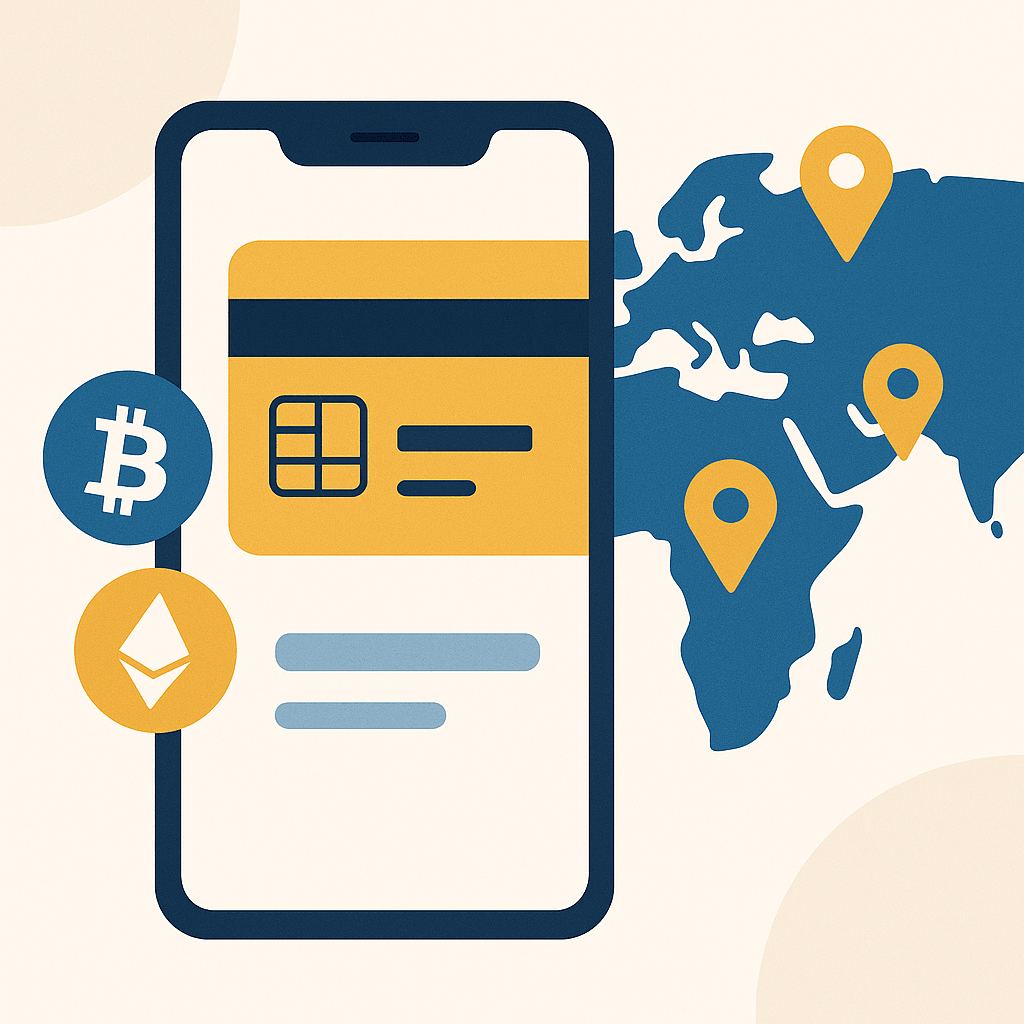
How Crypto Card India Issuance Works
Because Indian regulations restrict crypto-to-fiat on-ramps, every international crypto card serving Indian residents is issued by a non-Indian entity - typically a European, US or offshore prepaid card program manager working with a licensed issuer bank. You sign up on the provider's platform, fund your account wallet with cryptocurrency, and request a virtual card.
Some providers require no identity documents for standard use; others run tiered verification where low limits need only an email and higher limits trigger KYC. Virtual credit cards funded by USDT do not require PAN card, Aadhaar, or bank approval from Indian institutions, because the card relationship is with the foreign issuer, not an Indian bank.
Cards are ready within minutes for Google Pay use in 2026, though Apple Pay availability in India remains limited by Apple's regional wallet policies. The card arrives as a set of details in your account dashboard or via a Telegram bot if the provider uses that channel.
What Happens When You Load the Card
You send cryptocurrency to a unique deposit address the provider generates for your account. The provider receives the on-chain transaction, converts the crypto to fiat at the current market rate (minus a conversion or top-up fee), and credits your card balance in USD, EUR or another fiat currency the card program supports.
That conversion is instant and irreversible. Once the card balance is in fiat, crypto price movements don't affect what you can spend. But the conversion itself is a disposal of a Virtual Digital Asset under Indian tax rules, triggering a taxable event at the moment you load the card.
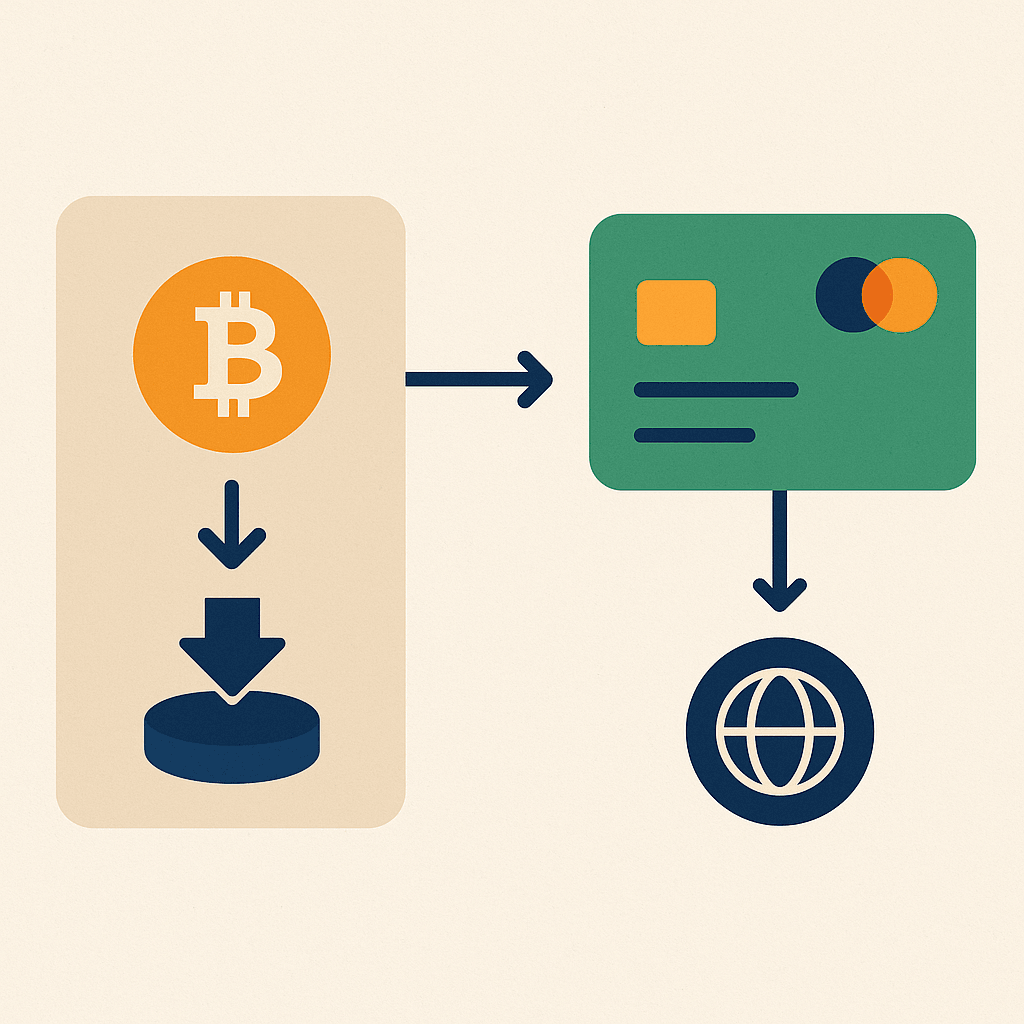
Spend Crypto in India: Where the Card Actually Works
A crypto card India setup works best for international merchants and online subscriptions billed in foreign currency. Netflix, Spotify, AWS, Google Workspace, Adobe, ChatGPT Plus, and any SaaS platform that accepts Visa or Mastercard will process the card as a standard international payment.
Travel spending is another strong use case. Book flights, hotels, car rentals and tours on international platforms; use the card at ATMs abroad (if the card supports cash withdrawal) or swipe it at point-of-sale terminals overseas. The card balance is already in USD or EUR, so you're not converting INR twice.
Domestic acceptance in India is hit-and-miss. Some large e-commerce platforms and chain retailers accept international cards without issue; others block them as part of fraud prevention rules or because RBI restrictions make processing international prepaid cards more complex. A crypto payment card works at 150 million merchants worldwide, but that figure includes the entire Visa and Mastercard network - not every merchant in India will authorize a foreign-issued prepaid card.
And you cannot use the card to convert crypto into INR and withdraw it to an Indian bank account. That's a regulated on-ramp activity Indian exchanges must handle through banking partners, and a prepaid card issued outside India doesn't have those relationships.
Practical Checklist for Indian Users
- Fund the card with a stablecoin (USDT or USDC) to minimize price volatility between the moment you send crypto and the moment you spend.
- Check the provider's top-up fee and any foreign exchange markup before loading large amounts.
- Use the card for international subscriptions, online purchases and travel spending where acceptance is predictable.
- Keep records of every funding transaction (wallet address, amount sent, date, conversion rate) for tax reporting.
- Report foreign remittances under FEMA if your annual card spending exceeds the Liberalised Remittance Scheme threshold of $250,000.
Tax and Legal Reality: What Crypto Card India Users Must Know
India's effective tax rate on crypto transactions is 31.2% - a 30% flat tax plus 4% cess - with 1% TDS withheld at the time of transfer and no ability to offset losses. Spending crypto via a card is considered a "transfer" or disposal of a Virtual Digital Asset (VDA), so every time you load a card, you've triggered a taxable event at the difference between your acquisition cost and the card balance you receive.
If you bought USDT at 83 INR per dollar and load the card when USDT trades at 84, you've made a one-rupee-per-dollar gain that's taxable at 31.2%. If you load Bitcoin that's appreciated since you acquired it, the entire gain is taxable. The card provider won't withhold Indian TDS - they're not Indian tax entities - so the obligation to report and pay falls entirely on you.
Crypto payment cards convert cryptocurrency holdings at the point of purchase, making every spend a taxable transfer under India's VDA rules. The Income Tax Department expects you to report these transactions in your annual return under the VDA section, with full details of acquisition cost, transfer value and resulting gain or loss (even though losses can't offset other income).
FEMA and Foreign Remittance Rules
When you send cryptocurrency to a foreign card provider, you're effectively making a foreign remittance. If your total outbound remittances in a financial year exceed $250,000 under the Liberalised Remittance Scheme, you must file additional disclosures and may need RBI approval for amounts beyond that threshold.
Most individual crypto card users stay well below $250k annual spend, so LRS reporting isn't triggered. But if you're a freelancer routing client payments through a crypto card or a business owner funding ad accounts at volume, those remittances add up and require proper FEMA compliance.
This isn't legal advice. Consult a chartered accountant familiar with VDA taxation and FEMA rules if your card usage is significant or if you're uncertain about reporting obligations.
Bitcoin Card India and Other Coin Options
A bitcoin card India setup works the same way as a USDT card: you send BTC to the provider's deposit address, they convert it to fiat card balance, and you spend that balance on the card network. The difference is volatility. Bitcoin's price can swing several percent between the moment you initiate the transfer and the moment the provider credits your card, so you might receive more or less fiat balance than you expected.
Stablecoins like USDT and USDC are the practical choice for most users. A USDT virtual card funded on TRC20 or ERC20 gives you predictable conversion and lower on-chain fees than Bitcoin or Ethereum. Providers in 2026 support 40+ tokens, so you can also fund cards with SOL, LTC, TRX, MATIC and dozens of other coins, but conversion happens the moment you load - the card never holds crypto.
Some users prefer a bitcoin card because they hold BTC long-term and want to spend small amounts without selling through an exchange. That's valid, but remember the tax implication: spending appreciated Bitcoin triggers capital gains tax at 31.2% on the difference between your acquisition cost and the card balance you receive.
Crypto to INR Card: Why It's Not That Simple
Searches for a "crypto to INR card" usually mean a card that converts crypto into Indian rupees and spends at domestic merchants like a regular debit card. That product doesn't exist in 2026 for Indian residents, because RBI has not authorized any Indian bank or payment institution to issue rupee-denominated prepaid cards funded directly with cryptocurrency.
Indian crypto exchanges like WazirX, CoinDCX and ZebPay let you sell crypto for INR and withdraw to your bank account, but they're not issuing cards. International crypto card providers issue USD, EUR or GBP cards that work internationally and online, but they don't convert to INR at the point of loading.
When you use an international crypto card at an Indian merchant that bills in rupees, the card network applies its foreign exchange rate to convert your USD card balance into INR for settlement. That's two conversions: crypto to USD when you load the card, then USD to INR when you pay. Each step has a fee or spread, so the effective cost is higher than a direct crypto-to-INR on-ramp would be.
Real Use Cases for Crypto Card India Holders
Freelancers paid in crypto use international crypto cards to spend client payments without routing through an Indian exchange and a bank account. If a US client pays in USDT, loading a virtual card and using it for SaaS subscriptions, cloud hosting and online tools keeps the entire flow outside the traditional banking system (though it's still taxable and must be reported).
Digital nomads and frequent travelers fund cards before trips to avoid carrying INR and exchanging it at airport kiosks. A card loaded with stablecoins works at hotels, restaurants and shops worldwide, and the balance is already in a stable foreign currency.
E-commerce sellers and media buyers use crypto cards to fund ad accounts on Google, Facebook, TikTok and other platforms that require international cards. A virtual card for media buying isolates ad spend from personal finances, and the ability to issue multiple cards per account helps separate campaigns or test different creatives without risking the main account.
Privacy-conscious users who want to pay for VPNs, secure email, domain registration and other services without linking them to an Indian bank account or credit card find crypto-funded cards a practical middle ground. The card isn't anonymous - use is subject to AML and regulatory requirements - but it reduces the data trail compared to a card tied to your PAN and Aadhaar.
Fees, Limits and What to Expect
Most international crypto card providers charge a one-time card issuance fee (often $5-$15), a top-up or conversion fee when you load the card (typically 3-5%), and sometimes a monthly maintenance fee if the card sits unused. Some platforms waive monthly fees entirely; others charge $1-$3 per month after an initial grace period.
Top-up fees drop with volume on some platforms. A provider might charge 5% on the first $2,000 of monthly card spend, then 4.5% above $5,000, and so on. If you're funding ad accounts or paying for significant business expenses, those volume discounts add up. Check the fee calculator to see exactly what a given top-up will cost before you send crypto.
Spending limits vary. No-verification cards often cap at $500-$1,000 per month; higher limits require identity documents, proof of address, and sometimes a selfie video. A crypto virtual card with minimal verification is practical for subscriptions and small purchases, but serious spending requires full KYC.
And remember: acceptance is never guaranteed. A prepaid card on Visa or Mastercard rails works at millions of merchants, but individual merchants can decline international cards, prepaid cards, or cards from certain BINs as part of their fraud rules. If a card declines at an Indian merchant, try a different merchant or use the card for an international purchase where acceptance is more predictable.
Privacy, Security and What the Card Does Not Do
Crypto cards are privacy-focused, not anonymous. The card provider knows your funding wallet address, the amount you loaded, and every merchant you paid. If the provider is subject to KYC regulations (most are), they'll collect identity documents at some spending threshold and may be required to report transactions to tax or law enforcement authorities under AML rules.
Merchants see a standard Visa or Mastercard authorization; they don't see your wallet address or the fact that the card was funded with crypto. That's a meaningful privacy improvement over paying directly from a crypto wallet (where the merchant sees your wallet address on-chain) or using an Indian bank card (where the transaction appears on your bank statement and is linked to your PAN).
Virtual cards include security features such as instant freeze, 3DS protection, and real-time notifications, and providers in 2026 offer advanced fraud monitoring to catch suspicious transactions before they settle. But the card is still a prepaid instrument with a fixed balance - if someone steals your card details and drains the balance, you've lost that money. Most providers won't reverse fraudulent transactions the way a credit card issuer might.
And the card does not make you untraceable or exempt from Indian tax and FEMA rules. Every funding transaction is on-chain and visible to anyone with your wallet address. The card provider has full records of your spending. The Income Tax Department expects you to report VDA transfers, and using a foreign-issued card doesn't change that obligation.
How WaldenPay Fits the India Use Case
WaldenPay issues virtual prepaid cards funded with 135+ cryptocurrencies across 35+ networks, with email-only signup and no document verification for standard use. Cards are ready in about five minutes after funding, work with Google Pay, and can be used at millions of merchants online and internationally.
The top-up fee starts at 5% and drops automatically to as low as 3% based on rolling 30-day card spend, with volume discounts kicking in at $2,000, $5,000, $10,000 and higher tiers. There's a $10 one-time card issue fee and no monthly maintenance. A Telegram bot handles card orders, top-ups, balance checks and transaction alerts, and the platform includes Send to Friend (instant zero-fee transfers between WaldenPay users by email) and Collect Payments (shareable payment links and QR codes payable in any supported crypto).
For Indian users, that means funding a card with USDT on TRC20 or any other supported coin, spending it on international subscriptions or travel, and managing everything through Telegram without opening a browser. The WaldenPay explainer covers the full funding and spending flow, and the pricing page lists every fee and volume discount tier.
WaldenPay is a prepaid card on Visa rails, so it works where Visa is accepted - but like any international crypto card, acceptance at Indian domestic merchants is not guaranteed, and every funding transaction is a taxable VDA transfer under Indian law.
FAQ
Can I get a crypto card India solution that converts directly to INR?
No Indian bank or payment institution is authorized by RBI to issue rupee-denominated cards funded directly with cryptocurrency in 2026. International crypto card providers issue USD, EUR or GBP cards that work online and internationally, but they don't load INR balances. When you use the card at an Indian merchant billing in rupees, the card network converts your fiat balance to INR at the time of payment, adding a foreign exchange spread to the cost.
Is a crypto card India setup legal for Indian residents?
Yes, using an international prepaid card funded with crypto is not illegal, but it comes with tax and reporting obligations. Every time you load the card, you're disposing of a Virtual Digital Asset and triggering a taxable event at 31.2% on any gain. If your annual card spending exceeds $250,000, you must report it under FEMA's Liberalised Remittance Scheme. The card provider is a foreign entity, so they won't withhold Indian TDS - you're responsible for reporting and paying tax yourself.
Will a crypto card India funded with USDT work at domestic merchants?
Sometimes. A USDT-funded virtual card is an international prepaid card on Visa or Mastercard rails, and acceptance at Indian domestic merchants depends on the merchant's payment processor and fraud rules. Large e-commerce platforms and chain retailers often accept international cards; smaller merchants and some payment gateways block them. The card works reliably for international online purchases and subscriptions.
Do I need KYC to get a crypto payment card as an Indian resident?
It depends on the provider and the spending limits you need. Some platforms issue cards with email-only signup and no document verification for limits around $500-$1,000 per month. Higher limits typically require identity documents, proof of address, and sometimes a selfie or video verification. A virtual card with no ID is practical for subscriptions and small purchases, but serious spending requires full KYC.
What happens if my crypto card India gets declined?
Declines happen for several reasons: insufficient card balance, the merchant blocks international or prepaid cards, the card BIN is flagged by the merchant's fraud system, or the transaction triggers 3DS verification and you didn't complete it. If a card declines at an Indian merchant, try a different merchant or use it for an international purchase where acceptance is more predictable. Check your card balance and transaction history to rule out a funding issue.
Ready to spend crypto internationally?
WaldenPay issues virtual cards in minutes, funded with 135+ cryptocurrencies. Top-up fees from 5% down to 3%, no monthly maintenance, and a Telegram bot for instant management.
Get started with WaldenPay