Crypto Card Argentina: Can US Travelers Use One?
By James Whitfield, Payments Specialist · Updated October 19, 2026
Crypto Card Argentina: Can US Travelers Use One?
A US residential address matters more than an Argentina itinerary when determining eligibility. For a US traveler researching crypto card argentina options, the practical answer is conditional: a crypto-funded prepaid card may fit the trip only if its provider accepts US residents, permits use in Argentina, and supports the payment methods required by individual merchants. WaldenPay's published capabilities don't confirm those travel-specific conditions.
For broader product selection, the no-document crypto card guide explains what matters beyond a signup claim. For this trip, eligibility and usability deserve separate checks before any crypto moves.
Check crypto card argentina eligibility against US residence
A travel destination doesn't replace a residential address.
The provider needs to assess the applicant under its current eligibility rules, not simply whether the destination has card terminals. A US citizen residing elsewhere may face different requirements from a US resident taking a vacation. The application should reflect the traveler's actual circumstances; an overseas hotel address isn't a substitute for residence.
Before paying an issue fee, the traveler should obtain answers to these distinct questions:
- Does the provider currently accept applicants residing in the United States, including the traveler's state?
- Is the specific virtual prepaid product available to that applicant?
- Does the provider permit that card's use while traveling in Argentina?
- Could additional verification be required before funding or during use?
A crypto card argentina eligibility check should produce a product-specific answer, rather than a general statement that a card works internationally. Support should know the applicant's residence, the intended destination, and whether the trip requires online purchases, mobile-wallet purchases, or both.
As a relevant example, WaldenPay's crypto virtual card has email-only signup and no identity documents for standard use. Those published features don't establish that every US resident can obtain one. Use remains subject to AML and regulatory requirements, and privacy-focused service doesn't mean anonymous or untraceable spending.
For travelers comparing country-specific guidance, the India virtual card guide provides another destination context. Its country details shouldn't be carried over to Argentina; the same separation between applicant eligibility and destination use still matters.
Match crypto card argentina options to actual purchases
The useful question isn't whether a merchant displays a familiar card-network logo. It's whether that merchant can process the particular prepaid card through the payment method the traveler has available.
As of July 2026, WaldenPay's published product capabilities include adding its virtual prepaid card to Apple Pay and Google Pay, plus using card details for online purchases. Those capabilities aren't confirmation of Argentina availability, successful wallet enrollment for every applicant, or approval at an individual merchant. A virtual card also doesn't provide a physical card to insert into a terminal.
So a crypto card argentina purchase plan should separate online bookings, contactless purchases, and transactions requiring a physical card.
Online reservations and deposits need separate checks
Before booking accommodation, transport, or an activity, the traveler should ask whether a virtual prepaid card is acceptable for the actual transaction. If a deposit or authorization hold is involved, the merchant should confirm its requirements, including whether the same physical card must be presented later. An accepted advance payment doesn't settle the check-in requirements.
Any hold also needs room in the spending plan. The traveler should confirm how much balance the merchant requires and how release works, rather than treating all loaded funds as immediately available for other purchases.
Phone payments need a working setup and another option
Wallet enrollment should be completed before departure where eligibility allows. A successful test purchase verifies that particular setup and transaction; it doesn't guarantee approval abroad. The mobile wallet travel checks explain why wallet support and merchant acceptance require separate attention, without making India-specific details applicable to Argentina.
For virtual card payments in Argentina, the traveler should confirm contactless acceptance directly with important merchants. A charged phone, access to account authentication, and a separate physical payment method reduce dependence on any single checkout method.
But repeated attempts aren't a substitute for resolving a decline. If a merchant rejects prepaid cards, another permitted payment method is the appropriate choice.
Budget the published funding costs before loading
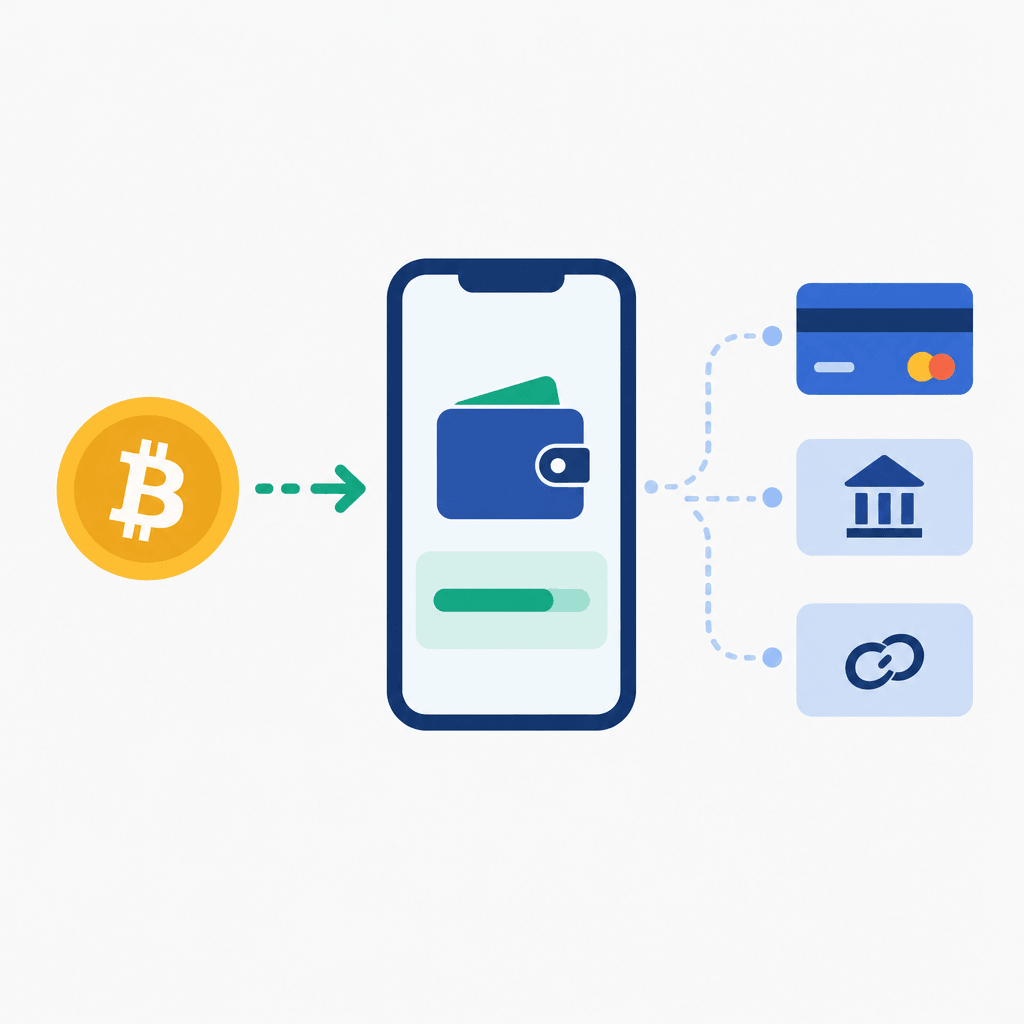
WaldenPay converts cryptocurrency into card balance when it is loaded. Its published funding support covers 135+ cryptocurrencies across 35+ networks, including USDT, USDC, BTC, ETH, and SOL. Spending Bitcoin in Argentina through this model means funding a prepaid balance first; the merchant isn't receiving Bitcoin through the card transaction.
A crypto card argentina budget should therefore separate obtaining the card from replenishing it. These are WaldenPay's published card costs and funding minimum, not confirmation that the product is available for this particular trip.
| Item | Published amount or rule |
|---|---|
| Card issue fee | $10, one time |
| Monthly maintenance | $0 |
| Minimum top-up | $25 |
| Starting top-up fee | 5% |
| Lowest standard top-up tier | 3%, from $100,000 in rolling 30-day card spend |
On a hypothetical $500 top-up amount, a 5% top-up fee is $25. At the confirmed 3% tier, the fee on the same amount is $15, a $10 difference before the separate one-time card issue fee.
The lower rate isn't triggered simply by depositing more crypto. Discounts depend on rolling 30-day card spend: 4.75% from $2,000, 4.5% from $5,000, 4.25% from $10,000, 4% from $25,000, and 3.5% from $50,000, before reaching 3% from $100,000. Individual pricing applies at $250,000 or more per month.
The published card pricing is the place to check those costs before committing funds. Discounts apply automatically, while the dashboard shows the current fee, rolling spend, and progress toward the next tier. A traveler shouldn't budget around the lowest advertised percentage unless the account qualifies.
When evaluating another provider, the crypto funding comparison guide offers a framework for separating documented charges from terms that still need confirmation. The relevant comparison is the expected cost at the traveler's actual spending level.
Complete an Argentina crypto card travel checklist
The final verification should happen before the card becomes part of a nonrefundable booking plan.
A useful crypto card argentina checklist records the answer, its source, and the date checked. A saved support response about eligibility is more useful than an undated marketing screenshot, especially when the response identifies the specific product and applicant circumstances.
- Confirm residence eligibility. The provider should address the traveler's actual US residence and any applicable restrictions.
- Confirm destination permission. Argentina usage should be checked separately from account opening and card issuance.
- Check critical merchants. Accommodation, deposits, and essential transport deserve direct confirmation of prepaid and virtual-card requirements.
- Prepare the payment interface. Complete permitted mobile-wallet setup and retain access to authentication while traveling.
- Review the funding screen. Verify the supported cryptocurrency, network, destination details, displayed fee, and resulting balance before sending funds.
- Arrange a backup. A separate physical payment method and an appropriate cash plan should cover situations where the virtual card can't be used.
Account recovery deserves attention before departure, too. The card security information can help travelers review available protections and prepare for a lost phone or suspicious transaction. Sensitive recovery information shouldn't be stored only on the device used for payments.
For a multi-country itinerary, the Mexico crypto card guide provides a separate planning reference. Permission or merchant acceptance in one country doesn't establish either in another.
FAQ
Does a crypto card argentina search confirm US-resident eligibility?
No. Search results may describe destination spending without addressing who can apply. The provider must confirm eligibility for the traveler's actual residence and the specific card product before funding.
Does WaldenPay's network reach prove acceptance in Argentina?
No. WaldenPay publishes reach across 150M+ merchants worldwide, but that figure doesn't confirm Argentina availability or acceptance by an individual merchant. Provider restrictions, merchant rules, and transaction approval remain separate checks.
Can a traveler keep loaded card funds in USDT?
WaldenPay converts crypto into card balance at loading time. USDT can be a funding asset, but loaded card funds aren't retained as USDT for the merchant to receive through a card purchase.
Is email-only signup a promise that documents will never be requested?
No. WaldenPay's standard signup requires only an email, with no identity documents for standard use. AML and regulatory requirements still apply; that signup description isn't a promise of unrestricted access or exemption from further checks.
Should a virtual prepaid card be the only travel payment method?
No. Even a properly issued and funded card can encounter a merchant restriction, a declined transaction, or an unavailable phone. A backup should remain usable independently of the same virtual card and mobile device.
Consider WaldenPay after verification
Verify crypto card argentina eligibility before funding.
Get started with WaldenPay