Crypto Card vs Selling on Exchange: Spend or Cash Out?
By James Whitfield, Payments Specialist · Updated October 13, 2026

Crypto Card vs Selling on Exchange: Spend or Cash Out?
Crypto card vs selling on exchange: which route fits the next payment? A crypto-funded prepaid card serves card purchases, while an exchange sale followed by withdrawal serves the goal of moving proceeds into a bank account, subject to provider requirements and availability.
The deciding factor is where the money needs to land. For the broader mechanics, how crypto card spending works explains the connection between crypto funding and ordinary card checkout.
Card Balance or Bank Balance?
A merchant's payment requirements should come before the choice of crypto liquidation options.
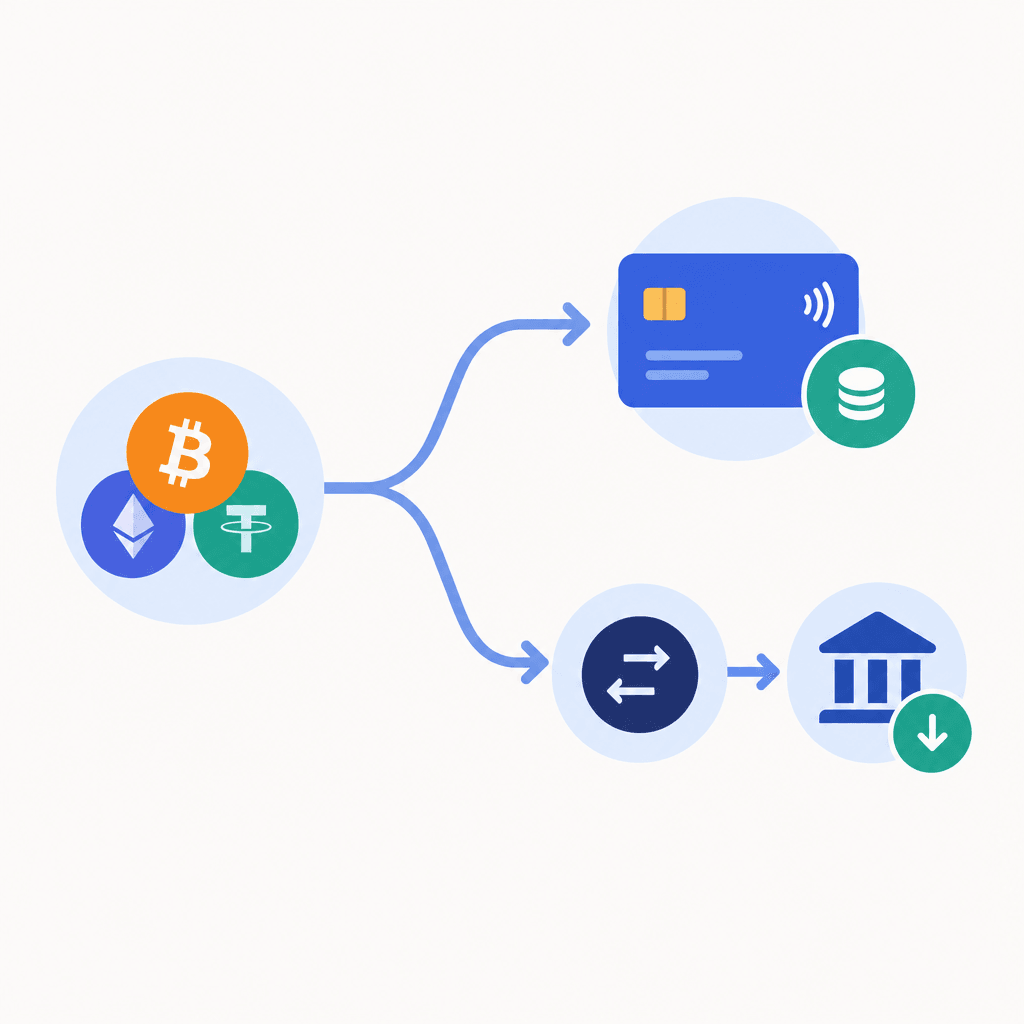
For example, WaldenPay's crypto virtual card converts cryptocurrency into card balance at loading time. The resulting prepaid balance supports card purchases, rather than becoming a deposit in the holder's bank account. An exchange sale produces proceeds within the exchange account first; a separate, supported withdrawal is needed to move those funds to a bank.
So the distinction isn't selling versus keeping every coin untouched. Both paths can involve converting crypto. Their destinations, dependencies, and subsequent uses differ.
| Decision point | WaldenPay prepaid card | Exchange sale and bank withdrawal |
|---|---|---|
| Balance destination | Prepaid card balance for purchases | Exchange proceeds, then bank funds after withdrawal |
| Conversion timing | Crypto converts when loaded | Crypto converts when the sale executes; withdrawal follows separately |
| Published costs | $10 issuance; 5%-3% top-up fees; $0 monthly | Trading and withdrawal charges depend on the provider and selected method |
| Dependencies and limitations | Eligibility, funding completion, merchant prepaid-card rules, and authorization | Account verification, supported withdrawal route, processing, and receiving-bank requirements |
How crypto card vs selling on exchange changes access to funds
A bank-transfer-only bill calls for bank-accessible money. Loading a prepaid card doesn't satisfy that requirement. Conversely, an eligible card purchase may not require proceeds to pass through a personal bank account first.
The prepaid crypto card guide expands on that spending model. WaldenPay isn't a bank account, and its card balance shouldn't be treated as freely interchangeable with money held at a bank. A cardholder should establish the intended use before committing funds.
Which Costs Matter for the Decision?
The useful crypto card vs selling on exchange comparison separates initial setup from repeat transactions. A first purchase carries different economics from funding an existing card, especially when the intended spending amount is small.
Comparing crypto card vs selling on exchange costs fairly
WaldenPay publishes a one-time $10 card issue fee, a $25 minimum top-up, and no monthly maintenance fee. The top-up fee starts at 5% and falls automatically to as low as 3%, based on rolling 30-day card spend.
That qualification metric matters: a larger current top-up doesn't itself establish a lower fee tier. Funding and spending are different events.
- First card: Account for the $10 issue fee separately from the top-up fee.
- Repeat funding: Use the current dashboard fee, rather than counting issuance again.
- Discount eligibility: Check rolling 30-day card spend, not deposits or lifetime spending.
- Exchange withdrawal: Check the actual sale quote and withdrawal method before comparing the resulting usable amount.
The confirmed tiers are 5% below $2,000 in rolling spend, 4.75% from $2,000, 4.5% from $5,000, 4.25% from $10,000, 4% from $25,000, 3.5% from $50,000, and 3% from $100,000. Individual pricing is available at $250,000 or more per month. Discounts apply automatically, and the dashboard shows progress toward the next tier.
For a hypothetical $1,000 amount subject to the top-up fee, 5% represents $50, while 3% represents $30. That calculation compares fee amounts only. It doesn't establish the final spendable balance or mean a new cardholder qualifies for the lowest tier.
Exchange cash out costs require a separate check. The relevant trading charge can depend on the order method, while withdrawal charges, minimums, and availability depend on the selected provider and route. A sale confirmation also isn't proof that the bank has received the proceeds. Timing should be checked separately from price.
Which Route Fits the Next Purchase?
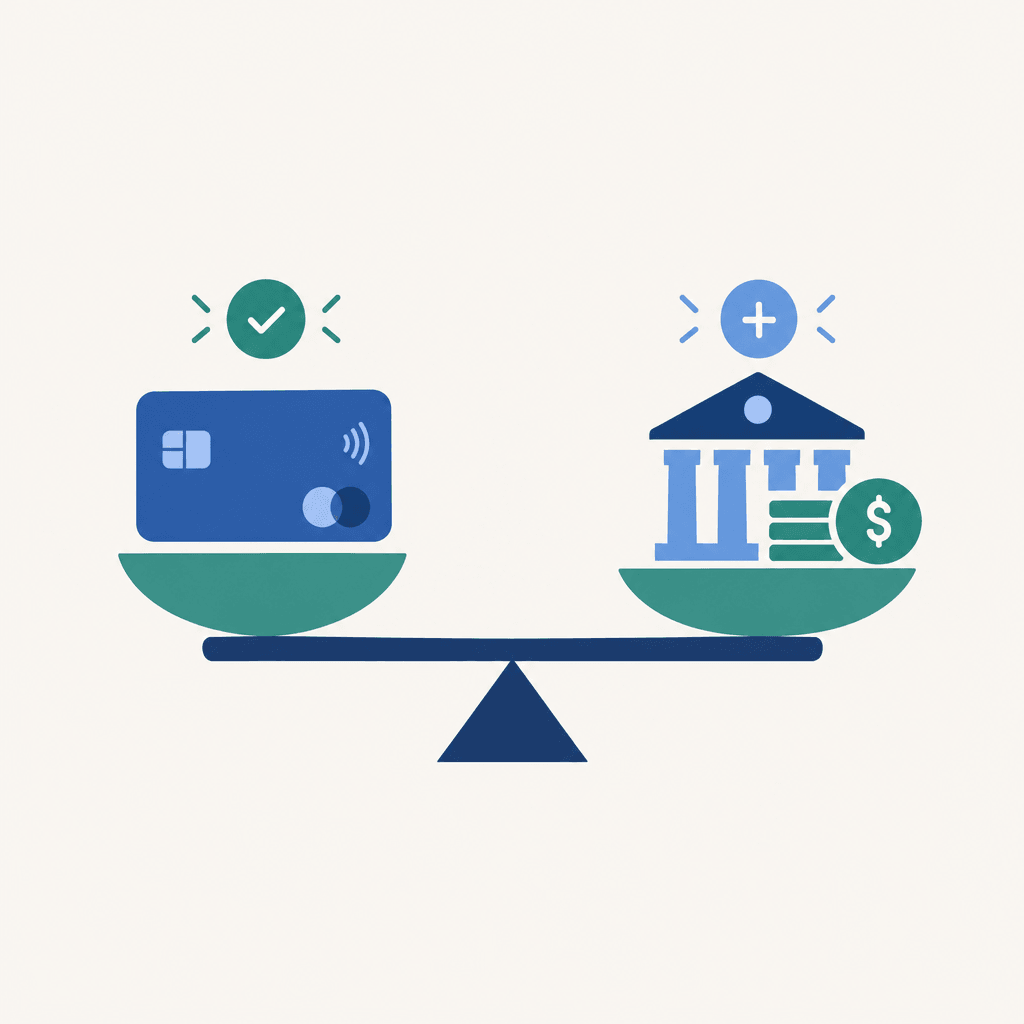
For crypto card vs selling on exchange, the practical decision starts with the payment deadline and accepted payment method, then works backward to the funding route.
- Ordinary card checkout: A prepaid balance may fit if the merchant accepts that card type and the holder is eligible.
- Bank-transfer expense: An exchange withdrawal is the relevant route if it supports the receiving account and required payment timing.
- Recurring purchases: Prepaid acceptance and sufficient available balance need checking before relying on repeat charges.
- Mixed expenses: Separating planned card spending from money needed in a bank can avoid funding the wrong destination.
Business spending needs the same discipline. The crypto-funded ad spend guide covers budgeting considerations for media buyers; funding a card doesn't override an advertising platform's payment rules.
And US residence alone doesn't establish eligibility. Availability should be confirmed with the provider before funding. WaldenPay is privacy-focused, not anonymous or untraceable, and AML and regulatory requirements apply. Its card security information provides a separate reference for assessing account protection.
FAQ
Does crypto card vs selling on exchange change tax obligations?
The route alone doesn't establish the tax result. Conversion and disposal records may matter under applicable US rules, including when crypto funds a card. The USDT card tax guide offers context, but a qualified tax professional should assess individual circumstances. Neither route should be selected on an assumed tax advantage.
Does a crypto-funded card keep the loaded cryptocurrency invested?
Not in WaldenPay's loading model. Cryptocurrency converts to card balance when loaded, so that funded balance isn't continued ownership of the deposited coin. Anyone seeking ongoing crypto exposure should distinguish assets still held from amounts already converted for spending.
Is a prepaid balance equivalent to a completed bank withdrawal?
No. Prepaid balance supports permitted card transactions; a completed bank withdrawal delivers funds to the receiving account. A cardholder shouldn't assume unused card balance can be sent to a bank. Any available transfer or redemption capability requires separate confirmation.
Which route is faster for an urgent purchase?
Neither deserves a blanket speed claim. WaldenPay issues the card instantly after funding, but eligibility, funding completion, and purchase authorization remain separate dependencies. An exchange route also requires the sale and withdrawal to complete. The relevant measure is readiness for the actual payment, not merely account creation.
Choose the destination before committing funds
The crypto card vs selling on exchange decision favors a prepaid card for eligible card purchases and a supported bank withdrawal for expenses requiring bank funds. WaldenPay may fit the former, but loading a card doesn't guarantee merchant acceptance.
Get started with WaldenPay