KripiCard vs WaldenPay: Which Fits Recurring Card Spending?
By James Whitfield, Payments Specialist · Updated September 30, 2026

KripiCard vs WaldenPay: Which Fits Recurring Card Spending?
A subscription renewal is approaching, and the card needs another load. For kripicard vs waldenpay, the practical answer depends on completed card spending, repeat loading costs, and whether the merchant accepts recurring prepaid payments. WaldenPay has published spending-based discounts; a cheaper-card verdict requires dated KripiCard terms covering the same costs. A starting percentage alone can't settle the decision.
For broader eligibility and verification considerations, the no-KYC crypto card guide provides the wider context.
WaldenPay's crypto virtual card separates funding from spending: cryptocurrency converts to card balance when loaded, while qualifying card purchases determine the available top-up discount.
kripicard vs waldenpay fees: separate initial and ongoing costs
A recurring-spend budget has two cost periods. The first includes creating the card and funding it. Later periods exclude a genuinely one-time creation charge but still include loading charges. Mixing those periods can make an introductory comparison misleading.
WaldenPay's published terms are a $10 one-time issue fee, a $25 minimum top-up, and no monthly maintenance fee. Registration, balance checks, and support are free. Its top-up percentage changes with rolling 30-day card spend, rather than the size of a single deposit.
KripiCard's budget verdict should remain open until a dated schedule confirms issuance, ongoing charges, loading fees, minimum funding, and any conditions attached to the advertised rate. A July 2026 comparison specifically needs evidence valid as of July 2026; a year-only review doesn't establish that timing.
For the separate assessment of signup, delivery, and user reports, the KripiCard standalone review keeps those questions outside this recurring-cost calculation.

Deposit size doesn't determine WaldenPay's discount
The central distinction in kripicard vs waldenpay is between money loaded and purchases already completed. A holder depositing $5,000 with no prior qualifying card spend starts at 5%, not 4.5%.
WaldenPay rolling 30-day spend determines the applicable tier:
| Qualifying card spend | Top-up fee |
|---|---|
| Below $2,000 | 5% |
| From $2,000 | 4.75% |
| From $5,000 | 4.5% |
| From $10,000 | 4.25% |
| From $25,000 | 4% |
| From $50,000 | 3.5% |
| From $100,000 | 3% |
| $250,000+/month | Individual pricing |
These WaldenPay volume discount thresholds apply automatically, without an application. The dashboard displays the current fee, rolling spend, and progress toward the next tier. Earlier loads don't become cheaper retroactively when spending crosses a threshold.
And a rolling window isn't a calendar-month allowance. Older purchases move outside the window as time passes, so the rate should be checked before each load rather than assumed from last month's activity.
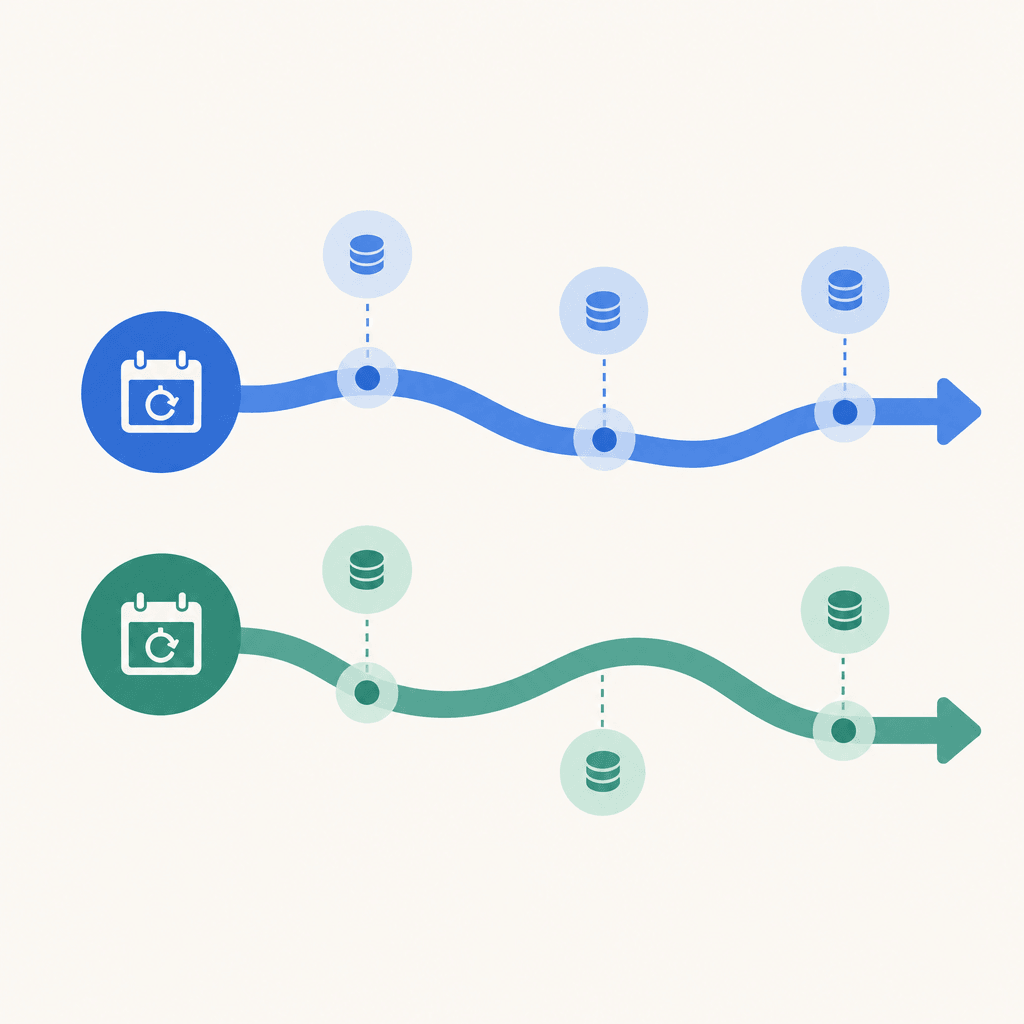
kripicard vs waldenpay at three recurring-spend levels
These hypothetical examples calculate WaldenPay's loading charge on the stated fee-bearing amount. They don't promise a particular net balance or assume how the funding screen presents deductions. They also aren't comparative totals: matching KripiCard calculations require dated terms for the same amounts and usage.
A new card with modest regular purchases
With $0 in prior qualifying spend, a $1,000 fee-bearing load carries a $50 top-up fee at 5%. Adding the $10 issuance charge produces $60 in those two costs. A later identical load at the same tier carries the $50 loading charge without another issuance fee.
For this holder, the advertised 3% floor isn't relevant to the immediate budget.
An existing card just above the first threshold
Assume $2,000 of qualifying purchases already sit within the rolling window before the next load. The applicable rate is 4.75%, making the charge on a $1,000 fee-bearing amount $47.50. That's $2.50 less than at 5%.
The saving is real, but deliberately increasing purchases merely to cross a threshold can cost more than it saves.
An established higher-spend card
With $5,000 in prior qualifying purchases still inside the window, a subsequent $5,000 fee-bearing load attracts a $225 charge at 4.5%. At the starting 5% rate, that charge would be $250.
This $25 difference depends on purchases completed before loading. Funding first and spending afterward doesn't justify applying the lower rate to that earlier load. Matched ongoing-cost comparisons should preserve that sequence for both products.
Recurring acceptance matters before marginal savings
The kripicard vs waldenpay decision also needs a distinction between regular purchases made manually and subscriptions charged automatically by a merchant. An initial approved purchase doesn't guarantee a later renewal.
WaldenPay is a virtual prepaid card on Visa/Mastercard rails, not a bank account or credit facility. It supports Apple Pay and Google Pay, but wallet compatibility doesn't guarantee that a particular subscription accepts prepaid cards or merchant-initiated charges.
A holder should confirm the merchant's prepaid-card policy, maintain sufficient spendable balance, and monitor the first renewal. A decline calls for checking the merchant's requirements, not repeated attempts to bypass its controls. The recurring payment troubleshooting guide covers a subscription-specific investigation.
Conditional choices without an unsupported price winner
A useful kripicard vs waldenpay recommendation follows actual spending behavior:
- If qualifying spend stays below $2,000, then WaldenPay's budget should use 5%, not its lowest advertised rate.
- If completed purchases already qualify for a discount, then the next-load estimate should use the dashboard's current tier.
- If KripiCard provides dated terms covering the same funding pattern, then first-use costs and later costs can be compared separately.
- If a merchant rejects prepaid renewals, then neither a lower loading fee nor a larger balance resolves that policy.
- If US eligibility remains unclear, then the holder should confirm availability before funding either product.
Funding convenience can still matter. WaldenPay supports 135+ cryptocurrencies across 35+ networks; the card features overview helps assess whether its funding and management tools fit the holder's routine.
FAQ
Can kripicard vs waldenpay be decided from one advertised percentage?
No. The comparison needs dated loading terms, initial charges, ongoing charges, and the holder's qualifying spending history. Missing KripiCard confirmation blocks a budget verdict; it doesn't establish a WaldenPay win.
Does WaldenPay keep the same discount after spending slows?
The discount depends on rolling 30-day card spend, not a permanently earned status. A holder should check the current dashboard rate when older purchases leave that window.
Does email-only signup mean future checks are impossible?
No. WaldenPay requires an email and no identity documents for standard use, but remains subject to AML and regulatory requirements. Its verification and privacy explanation distinguishes minimal signup data from anonymity or guaranteed approval.
Can a new card immediately use the lowest top-up fee?
Issuance doesn't establish spending eligibility. The published 3% tier starts at $100,000 in qualifying rolling 30-day card spend. A large initial deposit alone doesn't qualify.
Check the next load against completed spending
For a concrete kripicard vs waldenpay decision, the next action is to record qualifying purchases from the previous 30 days and obtain dated KripiCard terms before committing the recurring-payment budget.
Get your WaldenPay card