WaldenPay vs BingCard: Which Fits Regular Crypto Spending?
By James Whitfield, Payments Specialist · Updated September 30, 2026
WaldenPay vs BingCard: Which Fits Regular Crypto Spending?
At the second top-up, the waldenpay vs bingcard decision becomes less about signup speed and more about repeat costs. WaldenPay's crypto virtual card offers documented spending-based discounts and mobile wallet support, making it a practical candidate for regular spending. BingCard's current terms need verification before either platform can be called cheaper or better. Neither acceptance nor US availability is guaranteed.
For the wider category, the no-document crypto card comparison explains what minimal-document signup does and doesn't mean.
The waldenpay vs bingcard comparison starts with confirmed costs
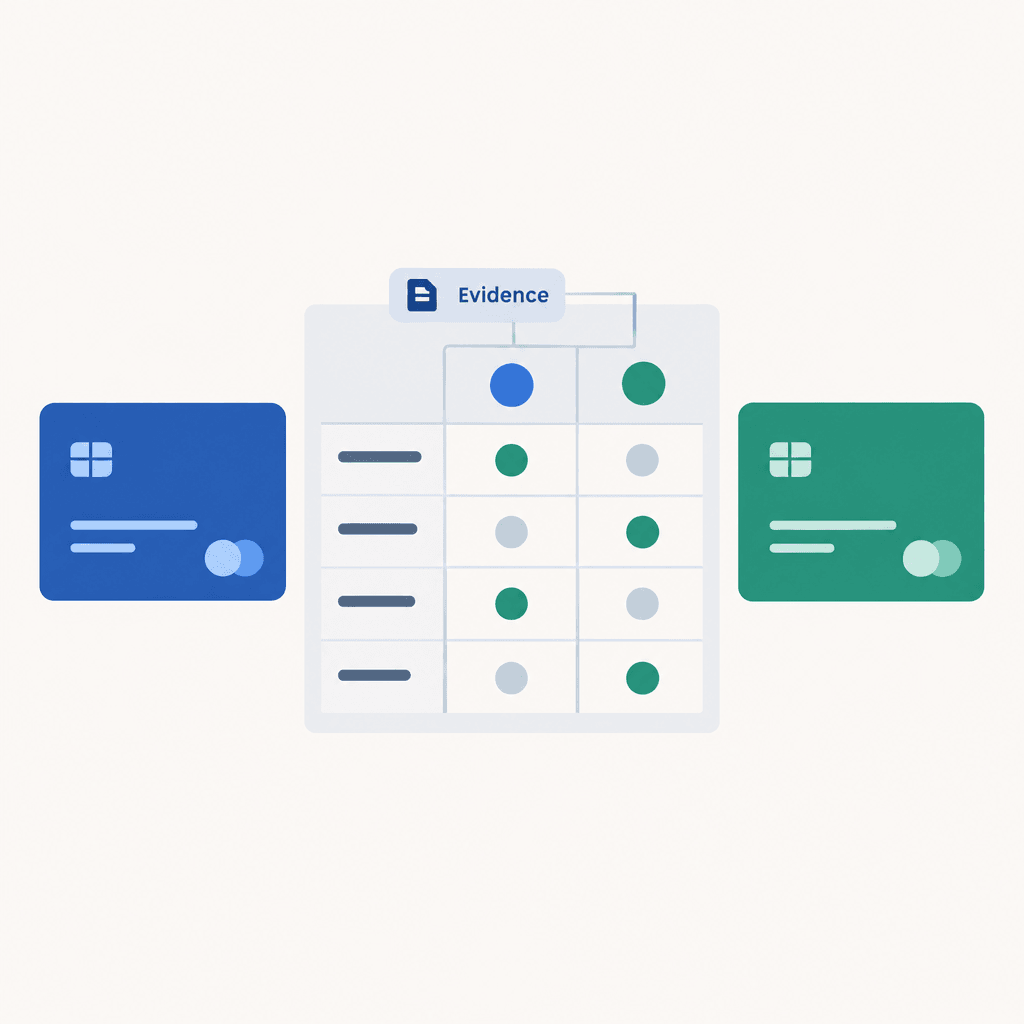
A useful waldenpay bingcard comparison separates confirmed charges from items that still require checking. An unverified entry isn't a zero, and it isn't evidence that a provider is expensive.
| Cost or requirement | WaldenPay | BingCard |
|---|---|---|
| Card creation | $10 one-time | Unverified; confirm current terms |
| Minimum top-up | $25 | Unverified; confirm current terms |
| Monthly maintenance | $0 | Unverified; confirm current terms |
| Top-up fee | 5% down to 3%, based on spending | Unverified; confirm current terms |
The first funding decision should separate the card creation charge, the amount being loaded, and the top-up charge. The $25 minimum isn't a promise that $25 covers card issuance and leaves that amount available for purchases.
For waldenpay vs bingcard, a fair first-funding comparison uses the same intended spending balance and each platform's final funding preview. Comparing only advertised deposit amounts can hide differences in how charges are presented.
A prospective holder should verify the amount payable and the resulting card balance before sending crypto. The issue fee is paid once; the top-up fee matters again whenever the card is recharged.
How waldenpay vs bingcard changes with repeat spending
WaldenPay's discount is tied to rolling 30-day card spend, not the size of a deposit or the account's lifetime activity. Loading a large balance doesn't, by itself, qualify that balance for a lower rate.
The published tiers are:
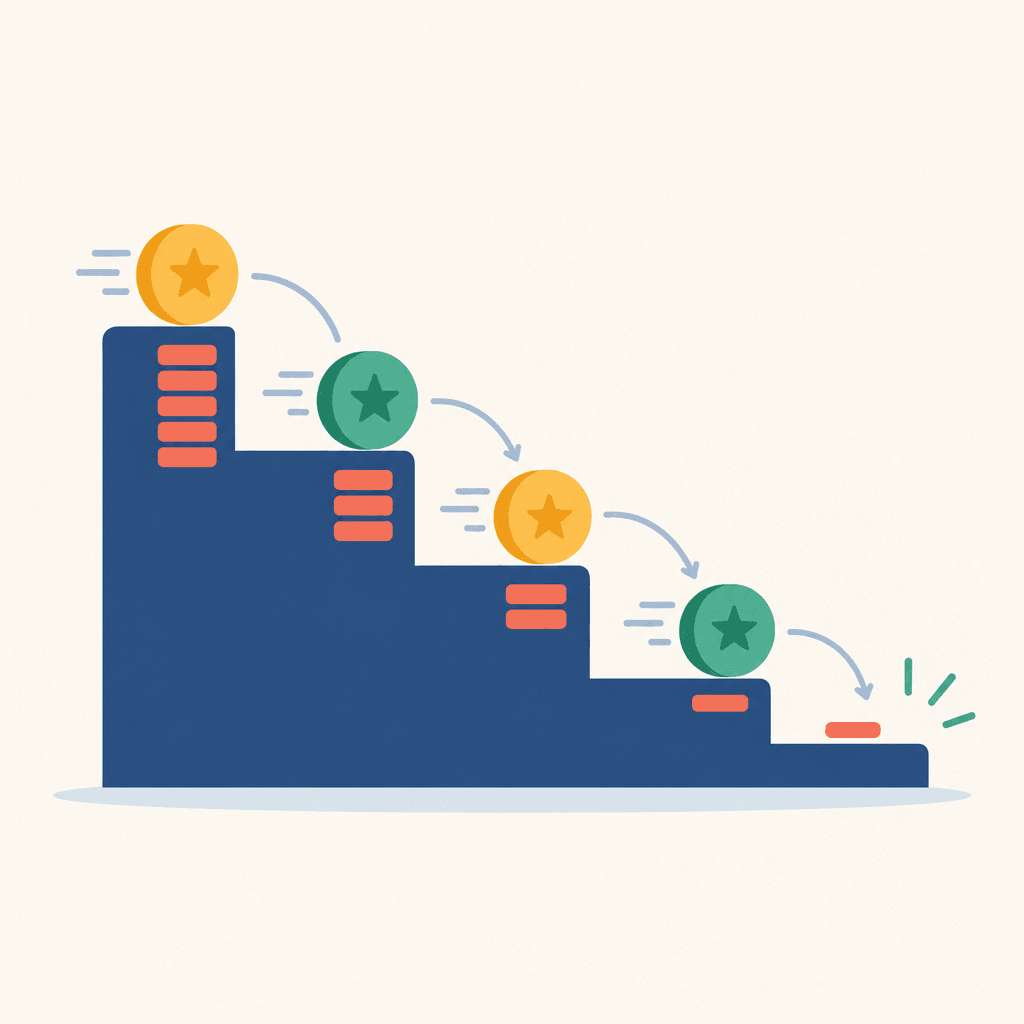
- 5% below $2,000 in rolling 30-day card spending.
- 4.75% from $2,000; 4.5% from $5,000.
- 4.25% from $10,000; 4% from $25,000.
- 3.5% from $50,000; 3% from $100,000.
- Individual pricing at $250,000 or more per month.
Discounts apply automatically and instantly when the qualifying spending level is reached, with no application. The dashboard shows the current rate, rolling spending, and progress toward the next tier.
And the distinction matters for budgeting. Applied to a hypothetical $1,000 top-up amount, a 5% charge is $50, while a 4.75% charge is $47.50. That's a $2.50 difference, not a reason to make unnecessary purchases to reach a threshold.
A bingcard vs waldenpay fees comparison needs BingCard's verified repeat-funding charges and any qualification rules before estimating savings. Until those terms are confirmed, WaldenPay's published schedule supports a budget, but not a claim that it wins on price.
Which fits routine purchases and mobile payments?
WaldenPay fits a routine built around supported crypto funding, a virtual prepaid balance, and Apple Pay or Google Pay, provided the holder and intended merchants are eligible.
It supports funding with 135+ cryptocurrencies across 35+ networks, including USDT, USDC, BTC, ETH, SOL, TRX, and LTC. Crypto converts to card balance when loaded. The card doesn't keep a purchase balance invested in those assets or sell crypto afresh for each checkout.
For waldenpay vs bingcard, the practical funding test is whether the exact asset and network already used by the holder are supported. BingCard's current funding and mobile wallet capabilities should be confirmed directly rather than inferred from another card's features.
WaldenPay's account wallet provides unique deposit addresses per supported network. Its Telegram bot can order and recharge cards, check balances, and deliver transaction alerts. These features can reduce the number of separate actions involved in maintaining a spending balance.
Card details support online purchases, while Apple Pay and Google Pay enable compatible in-store payments. WaldenPay uses Visa/Mastercard rails with a stated reach of 150M+ merchants, but that doesn't guarantee any particular transaction. It's a prepaid card and doesn't bypass merchant restrictions.
US readers should check eligibility before funding; the US crypto card comparison provides broader context for that decision.
Signup, account controls, and the decision before funding
WaldenPay registration requires an email only, with no identity documents for standard use. The card is issued instantly after funding, but eligibility and approval aren't guaranteed. Use remains subject to AML and regulatory requirements.
That makes waldenpay vs bingcard a comparison of practical account requirements, not a contest over anonymity. BingCard's current registration and verification requirements remain unverified here. A privacy-conscious holder should confirm both platforms' applicable terms before depositing.
WaldenPay is operated by BlueHouse Software B.V. in Rotterdam, Netherlands, through a licensed partner model; the operator and partner model page explains that structure. WaldenPay isn't a bank, and email-only registration doesn't make spending anonymous or untraceable.
A waldenpay bingcard signup comparison should therefore check eligibility, standard verification requirements, and any additional checks that may apply later. Low-friction registration alone doesn't establish suitability for an ongoing spending routine.
For deposit or card troubleshooting, the BingCard review and troubleshooting guide is the focused hand-off.
Before committing a recurring spending budget, the holder should confirm the intended merchant accepts prepaid cards, verify the supported funding network, and review the final funding preview. But a successful initial purchase still doesn't guarantee future approvals.
FAQ
Does waldenpay vs bingcard have a verified lowest-cost winner?
No. WaldenPay's published costs are specific enough for planning, but BingCard's corresponding current charges need verification. A defensible comparison requires the same intended spending amount, frequency of top-ups, and applicable fee conditions.
Does a larger WaldenPay deposit immediately reduce the top-up rate?
No. The discount depends on rolling 30-day card spending. A deposit isn't card spending. The dashboard's current rate should guide the funding decision rather than the amount held in the wallet.
Can a freelancer collect crypto payments before funding a card?
WaldenPay's Collect Payments creates a link or QR code for a fixed USD request from $1 to $10,000. The payer needs no WaldenPay account and covers a 0.2% conversion fee; the creator receives the exact requested USD amount in their wallet. Card top-up charges remain separate.
Can balances move between WaldenPay users without a blockchain transfer?
Yes. Send to Friend uses the recipient's email for an instant, zero-fee internal ledger transfer. Limits are $1 minimum, $10,000 per transfer, and $20,000 per rolling 24 hours. Recipient-name preview and password confirmation help check the transfer before sending.
A card for a verified spending plan
At the next recharge, the waldenpay vs bingcard decision should be checked against the current top-up rate, recent spending, eligibility, and the intended merchant's prepaid-card rules.
Get started with WaldenPay