No-KYC Virtual Crypto Card Comparison 2026: Complete Guide
By James Whitfield, Payments Specialist · Updated September 19, 2026

Which no-KYC virtual card actually works in 2026 without asking for a passport three weeks after you fund it?
A no-KYC virtual card comparison 2026 means evaluating providers that issue crypto-funded virtual cards with minimal or no identity verification at signup, then mapping their fee structures, legitimacy signals, and verification thresholds against your monthly spend pattern. In 2026, tighter rules mean truly anonymous options are rare, but several platforms still offer email-only signup for virtual tiers with conservative limits before any document request appears.
This guide walks through the legitimacy checks every card must pass, breaks down how WaldenPay, Solcard, Kast, RedotPay, Crypto.com, BingCard, and KripiCard structure their fees and verification tiers, and gives you a decision framework based on your actual spending volume.
What No-KYC Virtual Cards Actually Mean in 2026
The term "no-KYC" describes a spectrum, not a binary state.
Some platforms offer virtual cards with simplified or no identity verification, requiring only an email address without passport uploads, selfies, or proof of address. Virtual cards are typically the only tier that keeps lighter verification setup, while physical cards almost always require full KYC before issuance. That means email-only access exists, but it comes with spending caps and the issuer reserves the right to request documents if transaction patterns trigger compliance flags.
A genuinely minimal-verification card in 2026 means you can fund and spend within conservative daily limits - typically around $5,000 per month for virtual tier no-KYC cards - without uploading anything beyond an email confirmation. Cross that threshold or request a higher tier, and the platform will ask for a government ID, proof of address, or both.
Fully anonymous crypto cards at bank-grade spending limits are essentially gone, as every regulated card network (Visa, Mastercard) now requires issuer-side identity checks. A no-KYC virtual card today is better understood as delayed verification: you get in fast, spend within limits, and documents appear only when you push the boundary or opt into a premium tier.
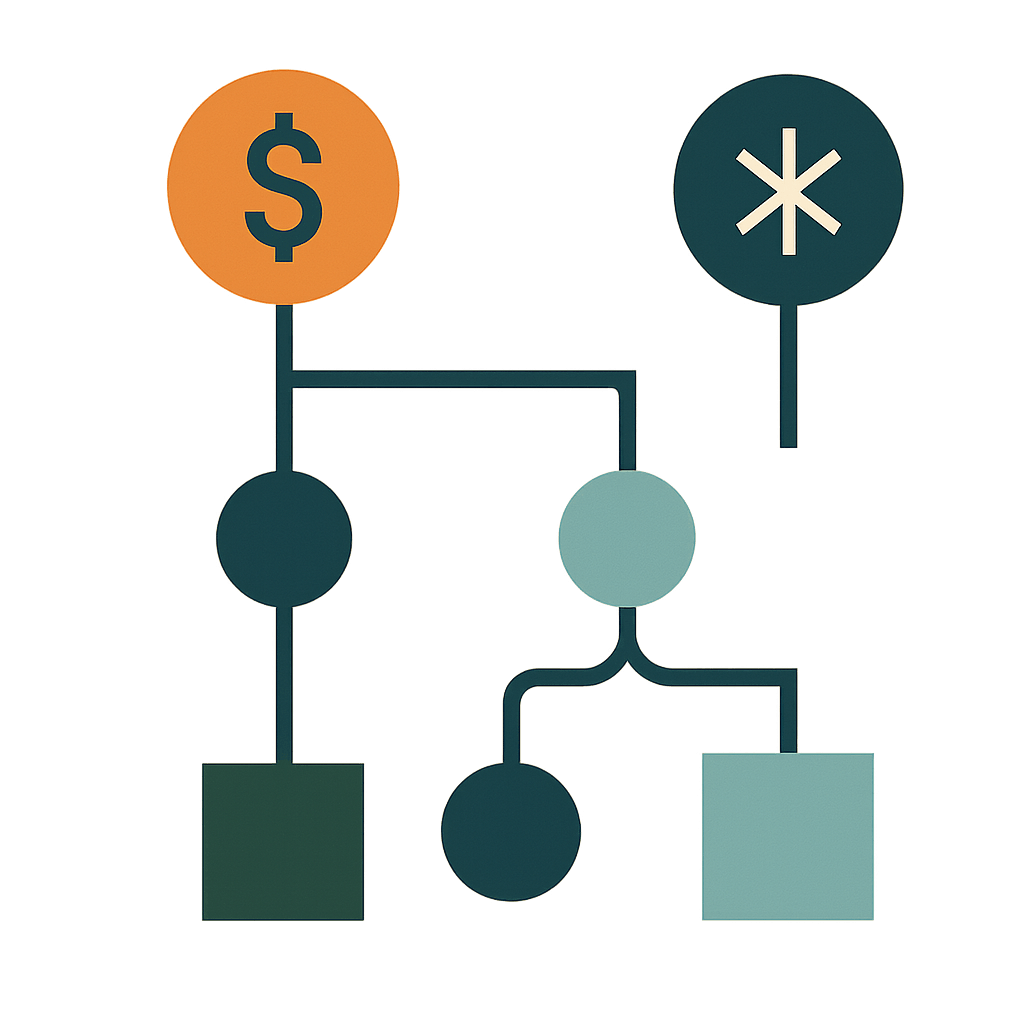
The Four Legitimacy Signals Every No-KYC Card Must Pass
Before you fund any card, run it through this four-point checklist.
- Legal entity and operating jurisdiction. A registered company name, address, and regulatory framework (EU EMI license, US state money transmitter, partner-bank model) should be public. If the provider hides behind a Telegram handle with no legal footer, walk away.
- Issuer disclosure. Every prepaid card runs on a licensed issuer's BIN. The card details page or terms should name that issuer. Missing issuer = the provider has no formal arrangement and your balance sits in limbo.
- Support track record. Search Reddit, Telegram groups, and Trustpilot for complaints about frozen funds, unresponsive support, or surprise document requests. A pattern of users unable to withdraw signals a problem, not an edge case.
- Fee transparency. The pricing page must list the card issue fee, top-up percentage, monthly or annual charges, and any FX markup before you create an account. Providers that reveal fees only after deposit are optimizing for confusion, not trust.
If a card fails any of these four, treat it as high-risk regardless of how fast it issues or how low the advertised fee looks. For a deeper dive into applying this checklist to one provider, see the Kast legitimacy guide, which walks through custody models, KYC thresholds, and support verification step by step.

How Fee Structures Differ: Flat vs. Volume-Based Pricing
Providers split into two camps: flat-rate simplicity and volume-based optimization.
Flat-rate cards charge the same percentage on every top-up regardless of how much you've spent. Solcard's 5% top-up fee applies whether you load $100 once or $50,000 across a year. The upside is predictability; the downside is that heavy users subsidize the platform's customer-acquisition cost on every transaction.
Volume-based pricing drops the fee as your rolling 30-day card spend crosses thresholds. WaldenPay starts at 5% and falls to 3% at $100,000 in monthly spend, with tiers at $2,000, $5,000, $10,000, $25,000, and $50,000. The discount applies instantly and automatically - no applications, no negotiation - so a user who ramps from $1,000 to $15,000 per month sees their effective cost drop by a quarter without changing anything.
Annual-fee models add a third variable. Kast charges transaction fees plus a yearly subscription that unlocks cashback tiers. That structure makes sense if you spend enough to recover the annual cost through rewards, but it punishes intermittent users who load a card twice and let it sit.
The right structure depends on predictability of spend. If you load $200 every few months for online subscriptions, flat-rate simplicity wins. If you're funding ad accounts or paying contractors weekly, volume tiers save real money.
WaldenPay: Volume Discounts and Telegram-First Design
WaldenPay issues a virtual prepaid card from just an email address, funded with 135+ cryptocurrencies across 35+ networks, ready in about five minutes.
The fee structure is volume-based: 5% up to $2,000 in rolling 30-day card spend, dropping to 4.75% at $2,000, 4.5% at $5,000, 4.25% at $10,000, 4% at $25,000, 3.5% at $50,000, and 3% at $100,000. Users spending $250,000 or more per month get individual pricing. The discount applies automatically the moment you cross a threshold, and the dashboard shows current tier, 30-day spend, and progress to the next level.
A one-time $10 card issue fee covers creation; there's no monthly maintenance. Minimum top-up is $50. The card works with Apple Pay and Google Pay, online and in-store, at 150 million merchants worldwide.
Two features extend beyond the card itself. Send to Friend moves balance between WaldenPay users by email - no wallet addresses, no blockchain transaction, instant ledger transfer with a $1 minimum, $10,000 per transfer, and $20,000 per rolling 24 hours. Collect Payments turns a USD amount into a shareable link or QR code; anyone can pay it in 135+ cryptocurrencies with no WaldenPay account, the creator receives the exact USD amount, and the payer covers a 0.2% conversion fee.
A Telegram bot handles card orders, balance checks, and transaction alerts without opening a browser. For the full feature breakdown, see the WaldenPay virtual card guide.
Solcard: Speed vs. Cost Trade-Offs
Solcard's pitch is speed: cards issue in 18 seconds, funded exclusively with Solana (SOL).
The virtual tier charges a 5% top-up fee with no volume discounts, plus 1-2% on international purchases, and caps monthly spending at $5,000. That flat-rate structure makes sense for users who value instant issuance and don't plan to scale spend, but it becomes expensive past a few thousand dollars per month. A user loading $10,000 pays $500 in top-up fees on Solcard; the same spend on WaldenPay drops to $425 at the $10,000 tier.
Solcard offers a Platinum tier with 0% top-up fees and no monthly limit, but that tier requires full KYC - passport, proof of address, and sometimes a video call. At that point you've left the no-KYC category entirely.
The single-blockchain focus is both a feature and a constraint. If you hold SOL and want a card in under a minute, Solcard delivers. If you hold USDT on Tron or USDC on Polygon, you'll need to swap before funding, adding time and exchange fees.
For a side-by-side cost comparison with worked examples, see Solcard vs WaldenPay.
Kast: Annual Fees and Cashback Tiers Explained
Kast structures pricing around annual subscriptions that unlock cashback rates, stacked on top of per-transaction fees.
The entry tier is free but offers minimal cashback. Mid-tier plans charge an annual fee - typically $50 to $100 - and raise cashback to 1-2% on select categories. The top tier runs $200+ per year and promises 3-5% cashback, but that rate applies only to specific merchant categories and caps at a monthly dollar amount.
On top of the annual fee, Kast charges a per-transaction cost that varies by card tier and includes an FX markup on foreign-currency purchases. That layered structure makes real cost hard to estimate without running your actual spending pattern through the math.
For a user spending $2,000 per month on a mid-tier Kast plan, the annual fee plus transaction costs can exceed what a flat 5% provider charges, even after cashback. The calculation flips if you spend heavily in bonus categories and recover the annual fee within a few months, but that requires discipline to route purchases through the right card.
Two detailed breakdowns clarify when Kast makes sense: Kast fees explained walks through the full cost formula with worked examples, and the Kast review compares real spend scenarios against WaldenPay and other options.
RedotPay: KYC Tiers and What They Unlock
RedotPay uses a three-tier verification ladder: email-only, light KYC, and full KYC, each unlocking higher spending limits and lower fees.
The email-only tier issues instantly but caps monthly spend around $1,000 and charges a 5% top-up fee. Light KYC - typically a government ID photo - raises the limit to $5,000 per month and drops the fee to 3-4%. Full KYC adds proof of address and a selfie video, removing the monthly cap and cutting the top-up fee to 1-2%.
That tiered approach gives flexibility: a user who wants to test the platform can start with email only, then submit documents when spend needs grow. The downside is unpredictability - you don't know your long-term cost until you decide which tier you're willing to verify into.
RedotPay supports a narrower coin list than WaldenPay or Kast, focused on USDT, USDC, BTC, and ETH across a handful of networks. If you hold an altcoin outside that set, you'll swap before funding.
For a full breakdown of RedotPay's tier structure, fee schedule, and how it compares to alternatives, see the RedotPay review.
Crypto.com Card: Staking Requirements and When They Make Sense
Crypto.com's card program ties benefits to CRO token staking: you lock up a dollar amount of CRO for six months, and that stake determines your cashback rate, Spotify or Netflix rebates, and airport lounge access.
The entry tier requires no stake but offers 1% cashback. Mid-tier cards ask for $400 to $4,000 in CRO and raise cashback to 2-3%. The top tier demands $40,000 staked and promises 5% cashback plus premium perks, but that rate caps at $50 per month - meaning you'd need to spend $1,000 monthly in bonus categories just to hit the ceiling.
Two risks sit underneath the staking model. First, CRO price volatility: if the token drops 30% during your six-month lock, your effective cost rises even if you recover the cashback. Second, the stake is illiquid - you can't access it for half a year, so it's capital you can't deploy elsewhere.
Crypto.com makes sense if you already hold CRO, believe in its long-term price appreciation, and spend enough in bonus categories to recover the opportunity cost of locking capital. For everyone else, a no-stake card with transparent fees is easier to model.
For a tier-by-tier breakdown of CRO staking amounts, cashback caps, and alternatives that skip staking entirely, see the Crypto.com card review.
BingCard and KripiCard: What We Know So Far
BingCard and KripiCard both entered the market in late 2025 or early 2026, and public information remains thin.
BingCard advertises email-only signup and support for USDT across multiple networks, with issuance in under five minutes. Pricing details are sparse - some users report a 5% top-up fee with no volume discounts, but the official site doesn't publish a full fee schedule. Support appears to run through Telegram only, and the legal entity behind the platform isn't disclosed on the homepage or terms page. That opacity is a red flag under the legitimacy checklist above.
KripiCard claims instant-issuance virtual cards with minimal KYC for basic tiers, allowing users to sign up with an email, load USDT, and spend within conservative daily limits. Again, the fee structure isn't published in detail, and user reviews are too few to establish a support track record. The platform lists a Turkish legal entity in its footer, which suggests EU or UK regulations may not apply.
Both cards might be legitimate, but neither has the public track record, transparent fee disclosure, or issuer clarity that would pass the four-point legitimacy test without reservation. If you're considering either, start with a small test load and verify that withdrawal works before committing larger amounts.
Choosing the Right Card for Your Spend Pattern
The right no-KYC virtual card comparison 2026 decision comes down to three variables: monthly spend volume, feature priorities, and verification tolerance.
If you spend under $2,000 per month and value speed, Solcard's 18-second issuance or WaldenPay's five-minute setup both work. At that volume, the difference between a flat 5% and WaldenPay's entry tier is $25 per month - real money, but not enough to override other factors like supported coins or customer-support responsiveness.
Between $2,000 and $10,000 per month, volume discounts start to matter. WaldenPay's tiered pricing drops your effective fee by 50 basis points at $2,000, another 25 at $5,000, and another 25 at $10,000, saving $50 to $150 per month compared to a flat 5% card. Kast's cashback might close that gap if you spend heavily in bonus categories, but you'll need to run the math with your actual purchase mix.
Above $10,000 per month, WaldenPay's volume tiers pull ahead unless you're willing to complete full KYC for RedotPay's 1-2% fee or Solcard's Platinum tier. At $25,000 per month, the difference between 5% and 4% is $250 - enough to justify optimizing for cost over issuance speed.
If you hold only Solana, Solcard is the path of least resistance. If you hold a mix of stablecoins across Ethereum, Tron, Polygon, and Arbitrum, WaldenPay's 135+ coin support saves swap fees and time.
If you need to invoice clients or collect payments, WaldenPay's Collect Payments feature lets you generate a payment link or QR code that anyone can pay in crypto without creating an account. RedotPay and Solcard don't offer an equivalent.
The best card is the one that fits your actual spending pattern and verification comfort level, not the one with the lowest advertised fee on the homepage.
For region-specific recommendations, see the best no-KYC crypto card for USA or the best crypto card for Europe no-KYC guides, which map providers to local merchant acceptance and regulatory context.
Red Flags That Should Stop You Funding a Card
Five signals mean walk away, regardless of how attractive the fee or issuance speed looks.
No disclosed legal entity or operating jurisdiction. If the provider hides behind a Telegram handle, a .to domain, or a terms page with no company name and registered address, your funds sit in an unregulated black box. When something goes wrong, you have no legal recourse.
Issuer bank not named. Every prepaid card runs on a licensed issuer's BIN. If the provider won't tell you which bank or EMI issues the card, they likely have no formal arrangement and your balance isn't held in a segregated account.
Fees revealed only after deposit. A legitimate provider publishes the card issue fee, top-up percentage, monthly or annual charges, and any transaction costs before you create an account. Hidden fees are a dark pattern designed to trap users after they've funded a wallet.
Pattern of frozen-fund complaints. Search Reddit, Telegram, and Trustpilot for "[provider name] frozen" or "[provider name] withdrawal." One or two complaints are noise; a dozen threads describing funds locked for weeks with no support response is a pattern.
Promises of full anonymity or guaranteed acceptance. No card in 2026 is fully anonymous - every regulated issuer runs transaction monitoring and reserves the right to request documents. Any provider claiming "zero KYC forever" or "accepted everywhere, no questions" is either lying or operating outside the regulated system, which means your balance has no protection.
If you spot any of these five, close the tab and move to a provider with transparent operations, published fees, and a support track record you can verify.
How to Compare a New Provider You Find on Reddit
When a new card platform appears in a Reddit thread or Telegram group, run it through this six-step verification before funding.
- Check the domain age and WHOIS. A domain registered three weeks ago with privacy protection enabled is higher-risk than one registered two years ago with a public registrant. Use a WHOIS lookup tool to see creation date and registrant details.
- Search "[provider name] scam" and "[provider name] review" on Reddit, Telegram, and Trustpilot. Read past the first page. Look for patterns in complaints - if five users describe the same problem (funds frozen at $X threshold, support unresponsive after Y days), treat it as a systemic issue, not bad luck.
- Find the legal entity and regulatory disclosure. Scroll to the footer of the homepage and the terms page. A legitimate provider lists a registered company name, address, and either a license number (EU EMI, UK FCA, US state money transmitter) or a partner-bank disclosure. Missing? Red flag.
- Test support before funding. Open a support ticket or send a Telegram message asking a simple question ("What's the top-up fee for USDT on Tron?"). Measure response time and quality. If support is unresponsive or evasive before you're a customer, it won't improve after you've deposited.
- Compare published fees against established providers. If the new card advertises 2% top-up and no monthly fee while every established provider charges 5%, ask why. Sometimes it's innovation; often it's unsustainable customer acquisition that ends in shutdown or a surprise fee increase.
- Start with a minimum test load. Even if the provider passes steps 1-5, fund only the minimum top-up ($50 to $100), make a small purchase, and verify that the transaction clears and the balance updates correctly. Then test withdrawal or card cancellation to confirm you can exit cleanly. Only after that test succeeds should you load larger amounts.
This process takes 20 minutes and catches most scams, fly-by-night operations, and platforms with broken infrastructure before you lose money.
Related reading
- BingCard Review 2026: What Works, What Breaks & Real Fixes - BingCard issues virtual cards in 5 minutes with crypto funding, but 2026 user reports center on frozen funds, missing deposits, unresponsive
- Crypto.com Card Review 2026: Fees, Tiers, Real Limits - A 2026 breakdown of Crypto.com's card tiers, CRO staking requirements, cashback caps, and FX fees, plus alternatives that skip staking entir
- Is Kast Legit? A 2026 Due-Diligence Guide to Crypto Cards - A five-point checklist to verify whether Kast is legit in 2026 - covering custody, KYC, fees, and support track record - plus how it compare
- Kast Fees Explained: What Kast Card Really Costs in 2026 - A full breakdown of kast fees - FX markups, ATM costs, and tiered annual fees - with real spending scenarios compared against WaldenPay's vo
- Kast Review 2026: Fees, Limits, and Is It Worth It? - A no-hype Kast review breaking down 2026 fees at a glance, cashback tiers, and limits with real spend math, plus a comparison against Walden
- KripiCard Review 2026: Real Fees, Signup & What Users Report - Complete KripiCard review: no-KYC signup, 4% top-up fee, instant virtual card issuance, 3DS support, and what users report about server erro
- RedotPay Review 2026: Fees, Limits & Real Alternatives - A no-fluff RedotPay review covering real fees, card limits, and KYC, with a practical framework for comparing it against alternatives like W
- Solcard vs WaldenPay: No-KYC Card Comparison 2026 - Solcard issues in 18 seconds, WaldenPay offers volume discounts to 3%. Compare real costs, legitimacy signals, and which no-KYC card fits yo
FAQ
What does no-KYC actually mean for a virtual card in 2026?
No-KYC means you can sign up and fund a card with just an email address, without uploading a passport, proof of address, or selfie video at the start. But it's not anonymous - the issuer reserves the right to request documents if your spending crosses a threshold (typically $5,000 per month) or if transaction patterns trigger compliance flags. Virtual cards keep lighter verification; physical cards almost always require full KYC before shipping.
Which no-KYC virtual card comparison 2026 option has the lowest fees for high-volume users?
WaldenPay offers the lowest fees at high volume, with automatic discounts from 5% down to 3% at $100,000 in rolling 30-day card spend. Solcard charges a flat 5% with no volume breaks, and Kast layers annual fees on top of transaction costs. RedotPay and Crypto.com can match or beat WaldenPay's rate if you complete full KYC or stake tokens, but then you've left the no-KYC category.
Can I use these cards at US gas stations and grocery stores?
Yes, if the card supports Apple Pay or Google Pay and the merchant accepts contactless payments. Most no-KYC virtual cards work online without friction, but in-store acceptance depends on whether you can add the card to a mobile wallet. WaldenPay, Solcard, and Kast all support Apple Pay and Google Pay; check the provider's feature list to confirm before funding.
Will a privacy-focused virtual card provider ask for documents later?
Probably, if you cross their spending threshold or trigger a compliance flag. Email-only signup is real, but it comes with conservative limits - typically $5,000 per month. Push past that, request a physical card, or make a transaction pattern that looks unusual (large single purchase, frequent cross-border transfers), and the platform will ask for ID and proof of address. That's not a bait-and-switch; it's how regulated card issuers stay compliant.
How do I know if a new no-KYC card provider is legitimate?
Check four things: published legal entity and jurisdiction, disclosed issuer bank, transparent fee schedule before signup, and a searchable support track record. If the provider hides behind a Telegram handle, won't name the issuer, reveals fees only after deposit, or has a pattern of frozen-fund complaints on Reddit, walk away. For a step-by-step legitimacy checklist, see the Kast due-diligence guide, which applies to any provider.
Where to Go Next
If you're choosing between WaldenPay and Solcard specifically, the Solcard vs WaldenPay comparison walks through real cost math at three spend levels and explains when speed beats volume pricing. For US users navigating merchant acceptance and regional quirks, the best no-KYC crypto card for USA guide maps providers to local use cases. And if you need a card to fund ad accounts or isolate business spend, the virtual card for media buying guide explains what actually matters for that workflow.
The right card depends on your monthly spend volume, the cryptocurrencies you already hold, and how much verification you're willing to complete for higher limits. But the wrong card - one that fails the legitimacy checklist or hides fees until after you deposit - costs more than money; it costs time and trust you won't recover.
Start spending crypto in minutes
WaldenPay issues a virtual card from just your email - funded with 135+ cryptocurrencies, accepted at 150M+ merchants, with volume discounts from 5% down to 3%. No monthly fees, no document uploads for standard use.
Get started with WaldenPayIn this section
- BingCard Review 2026: What Works, What Breaks & Real Fixes
- Crypto.com Card Review 2026: Fees, Tiers, Real Limits
- Is Kast Legit? A 2026 Due-Diligence Guide to Crypto Cards
- Kast Fees Explained: What Kast Card Really Costs in 2026
- Kast Review 2026: Fees, Limits, and Is It Worth It?
- KripiCard Review 2026: Real Fees, Signup & What Users Report
- RedotPay Review 2026: Fees, Limits & Real Alternatives
- Solcard vs WaldenPay: No-KYC Card Comparison 2026