Crypto Card Turkey: Direct Crypto Payments vs Card Spending
By James Whitfield, Payments Specialist · Updated October 26, 2026
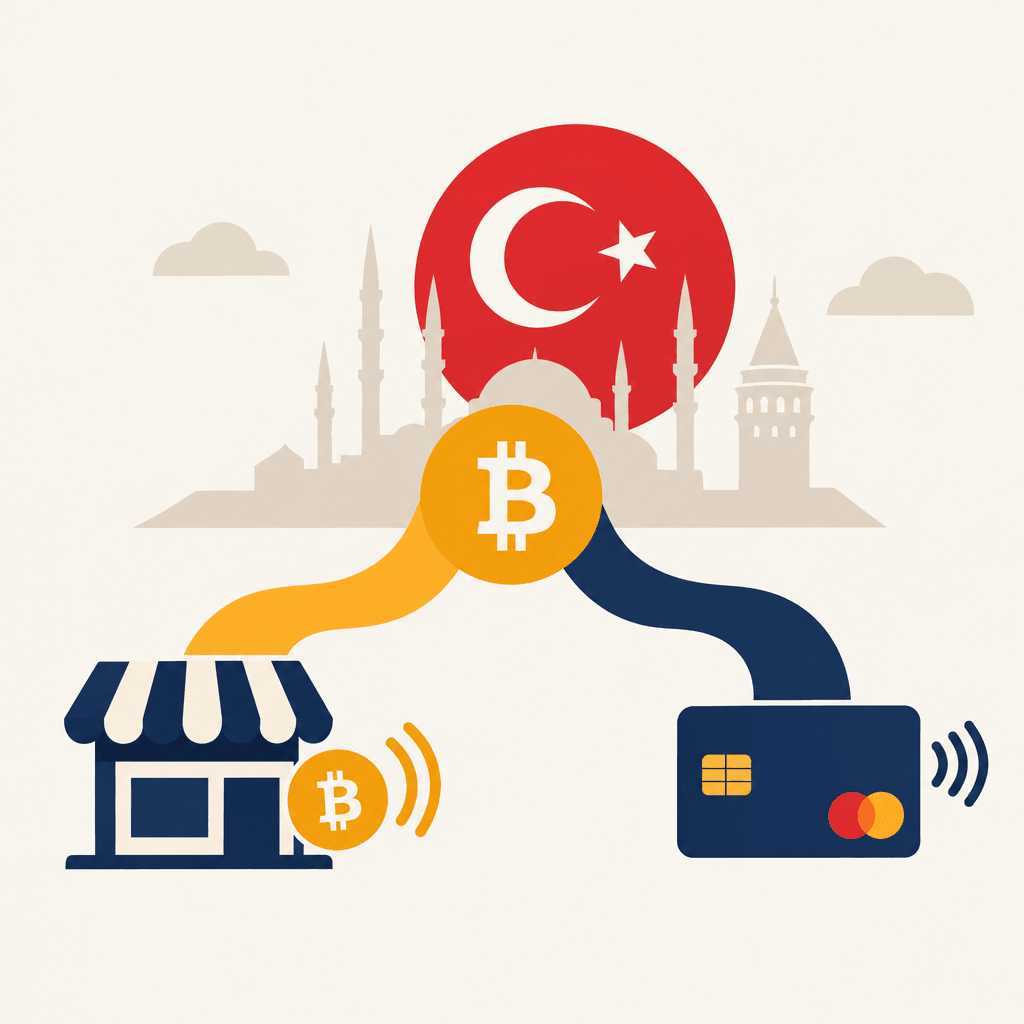
Crypto Card Turkey: Direct Crypto Payments vs Card Spending
A crypto card turkey search turns on a crucial distinction: funding a prepaid card with cryptocurrency isn't the same payment flow as sending cryptocurrency to a merchant.
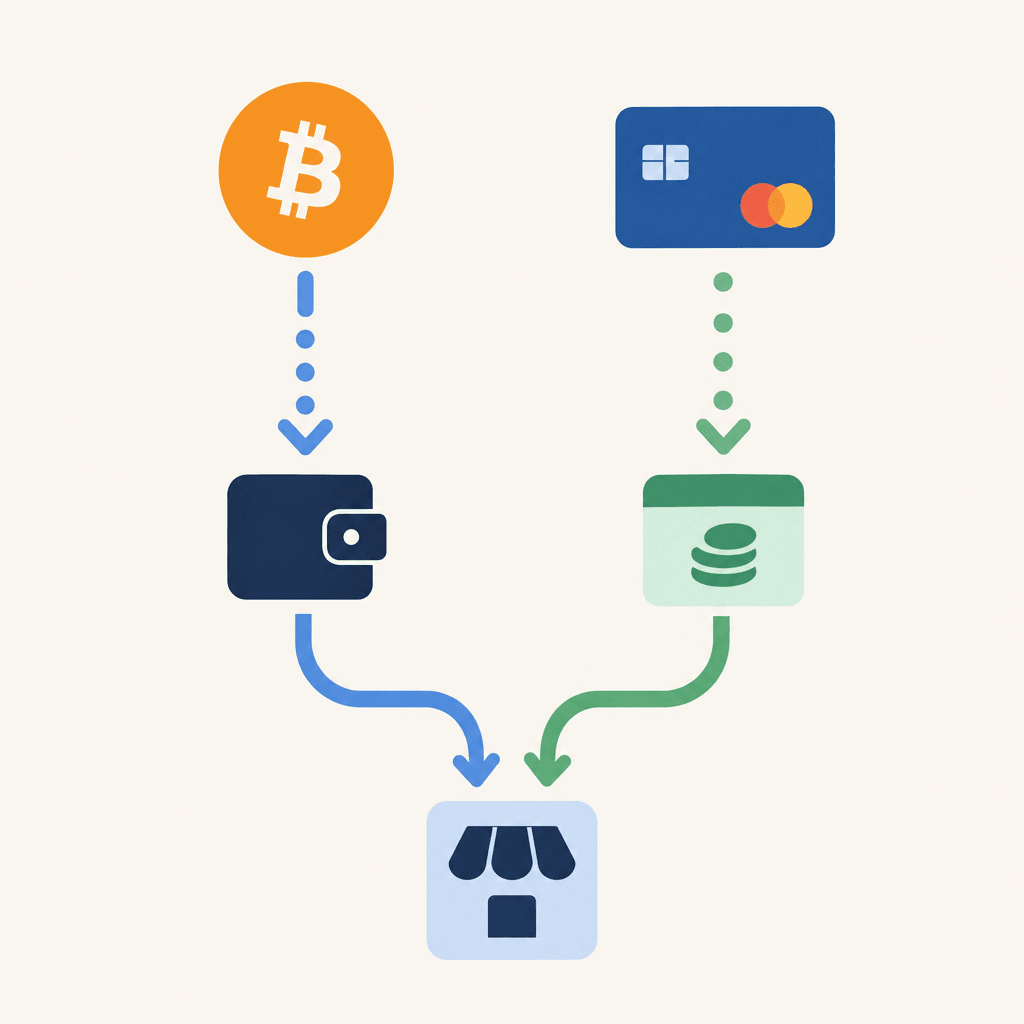
WaldenPay's crypto virtual card converts cryptocurrency to card balance at loading time, so purchases spend that prepaid balance. But this mechanism alone doesn't establish Turkish legality, resident eligibility, visitor availability, or merchant acceptance. Each requires a separate check before money moves.
For the broader comparison of signup requirements and card types, the no KYC crypto card guide provides context. Here, the practical issue is whether a particular funding-and-spending arrangement is permitted and supported for a US resident visiting Turkey or someone residing there.
Two payment flows behind a crypto card turkey search
Direct payment sends cryptocurrency toward the purchase
In a direct arrangement, the customer sends cryptocurrency to the merchant or a payment service handling the purchase. The checkout may present a wallet address or QR code. What happens afterward depends on that service: the merchant might receive cryptocurrency or another form of settlement.
A QR code alone doesn't identify the legal or technical arrangement.
When checking direct crypto payments Turkey rules, the relevant questions include who receives the cryptocurrency, who processes it, and how the merchant is paid. A processor's involvement doesn't automatically settle whether the arrangement is allowed.
A funded prepaid card spends an existing card balance
WaldenPay supports funding with 135+ cryptocurrencies across 35+ networks. Cryptocurrency converts to card balance when loaded, rather than remaining BTC, ETH, or USDT available for each purchase. The virtual prepaid card then operates on Visa/Mastercard rails.
Card purchases therefore aren't instructions to send cryptocurrency to a merchant's blockchain address. That describes the mechanics, not a legal exemption. The prepaid crypto card guide explains the product structure without turning it into a country-specific eligibility promise.
A different payment route isn't permission to use it. Product support, local requirements, and merchant acceptance need separate answers.
Which Turkey-specific facts still need verification?
A useful crypto card turkey assessment separates confirmed product features from questions that require current country-specific answers. A supported cryptocurrency, an accessible signup page, or successful account creation doesn't answer all of them.
| Question | Known product mechanics | What still needs confirmation |
|---|---|---|
| What funds the purchase? | WaldenPay converts crypto to card balance at loading. | How applicable Turkish requirements treat the complete arrangement. |
| Who can obtain the card? | Standard signup requires an email, without identity documents. | Eligibility for the applicant's actual residence and circumstances. |
| Can it be used during travel? | The product uses card-network rails. | Whether use in Turkey is currently supported for that cardholder. |
| Will a purchase succeed? | Virtual card details and mobile wallet support are available. | The merchant's prepaid-card policy and transaction approval. |
Cryptocurrency payment rules Turkey searches should lead to current official regulatory publications, not just provider marketing. Relevant sources include the Turkish central bank's official publications and applicable legislation. Publication dates, effective dates, and later amendments matter; a summary without those details isn't enough to decide whether funding is appropriate.
Provider confirmation answers operational support questions. It doesn't replace authoritative legal research.
For a US traveler, residence eligibility and destination support must both be checked. Someone moving to Turkey shouldn't assume an account opened elsewhere retains the same eligibility. The international card payments guide adds broader travel considerations, but it isn't confirmation of Turkish availability. Unclear legal questions belong with a qualified professional.

A before-funding checklist for crypto card turkey decisions
The safest decision point is before depositing cryptocurrency, not after a card purchase fails. A wallet deposit address only provides a destination for funds; it doesn't resolve whether the intended card use is supported.
- Identify the actual residence. The applicant should state the country where they reside, rather than treating citizenship or a vacation destination as interchangeable with residence.
- Request explicit destination confirmation. Support should confirm whether that applicant can obtain the product and use it in Turkey under current terms.
- Describe the intended purchases. Online shopping, in-person retail, subscriptions, and accommodation reservations can present different merchant requirements.
- Check applicable restrictions. Current official rules and provider terms should support the intended arrangement. Unresolved legal interpretation calls for professional advice.
- Confirm funding and access details. The selected cryptocurrency and network must match the deposit instructions. Any questions about unused balances, refunds, or account access should be resolved before loading.
- Review the cost separately. Card issuance and top-up charges shouldn't be confused with one another. A fee quote doesn't establish eligibility.
Written answers make later comparisons easier. A response that only says the card works internationally leaves the residency and destination questions unanswered. Likewise, a successful payment elsewhere doesn't establish that the same transaction is supported in Turkey.
Merchant acceptance is a separate decision
For crypto card turkey research, network reach is useful context rather than a promise about an individual purchase. WaldenPay lists acceptance at 150M+ merchants worldwide, but that figure isn't a verified count of Turkish merchants and doesn't guarantee approval.
It's still a prepaid card.
A merchant can have requirements involving card type, billing details, recurring charges, or reservation deposits. The customer should confirm those requirements directly before relying on the card for an essential purchase. Neither a successful top-up nor mobile wallet enrollment overrides merchant rules.
WaldenPay supports Apple Pay and Google Pay, as well as card details for online purchases. Product-level wallet support doesn't establish that a particular Turkish checkout will accept the transaction. The online card payments guide provides additional checkout checks without making approval guarantees.
For subscriptions, the initial charge and later renewals deserve separate attention. The recurring card spending comparison expands on renewal considerations. Travelers should retain another supported payment method for important expenses.
Published costs matter only after eligibility is clear
A crypto card turkey cost comparison should start with documented charges, not an assumption that a low advertised cost makes the product usable at the destination. WaldenPay charges a one-time $10 card issue fee, has no monthly maintenance fee, and requires a minimum $25 top-up.
The top-up fee starts at 5%. Automatic discounts depend on rolling 30-day card spend, not simply the size of a deposit:
- Below $2,000 in rolling spend: 5%.
- From $2,000: 4.75%; from $5,000: 4.5%.
- From $10,000: 4.25%; from $25,000: 4%.
- From $50,000: 3.5%; from $100,000: 3%.
- At $250,000 or more per month: individual pricing.
Discounts apply automatically, and the dashboard shows the current fee, rolling spend, and progress toward the next level. A large first load doesn't itself establish qualification for a lower tier.
For anyone comparing another product, the crypto funding cost comparison demonstrates why documented mechanics and unresolved provider details should stay separate. Neither pricing nor issuance speed answers crypto card eligibility Turkey questions.
Minimal signup doesn't remove regulatory obligations
Privacy belongs in a crypto card turkey assessment, but it shouldn't be confused with exemption from checks. WaldenPay's standard signup requires an email only, with no identity documents for standard use. Use remains subject to AML and regulatory requirements.
The service is privacy-focused, not anonymous or untraceable. It is operated by BlueHouse Software B.V., Rotterdam, Netherlands, through a licensed partner model. That operating structure doesn't establish authorization for every customer or destination, and a quick signup shouldn't be interpreted as guaranteed approval for later activity.
FAQ
Does a crypto card turkey result prove the card is permitted there?
No. Search visibility doesn't establish legal permission, residence eligibility, or destination support. Current authoritative rules and product terms need checking before funding. A provider's explanation of the payment flow is useful, but it isn't a substitute for those checks.
Is loading cryptocurrency the same transaction as paying a Turkish merchant?
No. With WaldenPay, cryptocurrency converts to card balance when loaded. A later purchase spends that balance through card rails. The distinction explains the mechanics without establishing how applicable rules treat the overall arrangement.
Can a US visitor rely on email-only signup?
Email-only standard signup describes the initial data requirement, not permission to use the card in Turkey. The visitor must confirm actual residence eligibility, destination support, and applicable requirements. Approval and availability aren't guaranteed.
Does adding the card to a mobile wallet remove prepaid restrictions?
No. Wallet enrollment doesn't change the underlying prepaid product or override a merchant's policies. The intended merchant and transaction type still matter, even after successful enrollment.
What should happen when support gives an unclear country answer?
Funding should wait. The applicant should request clarification covering residence, travel destination, and intended purchases. If the uncertainty concerns Turkish law rather than product support, a qualified professional should assess the current official requirements.
Confirm support before choosing WaldenPay
Sound crypto card turkey decisions start with verification.
Get started with WaldenPayRelated
- Solvo Card vs WaldenPay: Which Fits Crypto-Funded Spending?
- ECB Pontes: Tokenized Asset Settlement vs Card Spending
- KripiCard vs WaldenPay: Which Fits Recurring Card Spending?
- WaldenPay vs BingCard: Which Fits Regular Crypto Spending?
- ChatGPT Plus Payment Declined? Fix Recurring Fails
- Prepaid Crypto Card