Crypto Card Nigeria: What to Verify Before Funding
By James Whitfield, Payments Specialist · Updated October 20, 2026
Crypto Card Nigeria: What Residents Must Verify Before Funding
A crypto card nigeria search should lead to three checks before funding: eligibility for Nigerian residents, permitted use, and the intended merchant's acceptance of prepaid cards.
Worldwide spending reach doesn't establish permission to obtain a card from Nigeria. Neither does successful email registration. For the broader comparison of document requirements and privacy claims, the no-KYC crypto card guide provides context; the immediate decision here is whether funding a particular product is justified.
What counts as crypto card nigeria eligibility evidence?
The strongest starting point is a current country policy that explicitly covers card issuance to Nigerian residents, rather than a general statement about international payments.
Eligibility can depend on the particular service being requested. An account, a crypto deposit address, and a prepaid card aren't interchangeable products. A provider might describe account access separately from card access, so applicants should identify which service a country statement actually covers. Citizenship and residence also need separate treatment: an answer about Nigerian passport holders doesn't necessarily answer a question about people living in Nigeria.
Useful crypto card nigeria eligibility evidence should resolve these points before any deposit:
- Residence: Does the current card policy explicitly permit applications from residents of Nigeria?
- Product: Does that permission cover the actual virtual prepaid card, not just an account or wallet?
- Permitted use: Are the planned personal or business purchases allowed under the card terms?
- Conditions: Are additional checks required before issuance, funding, or spending?
- Conflicting wording: If a country page and support answer disagree, which current terms govern the application?
An applicant should retain the relevant terms and dated support response. Silence about Nigeria isn't confirmation of eligibility, and an accessible signup screen isn't enough.
The crypto card verification requirements guide explains why registration requirements and later checks should be evaluated separately.
Two terms that prevent expensive confusion
Issuance eligibility: The conditions under which a provider permits a resident to obtain its particular card product.
Merchant acceptance: Whether a seller accepts that card for a particular payment, which remains separate from permission to obtain it.
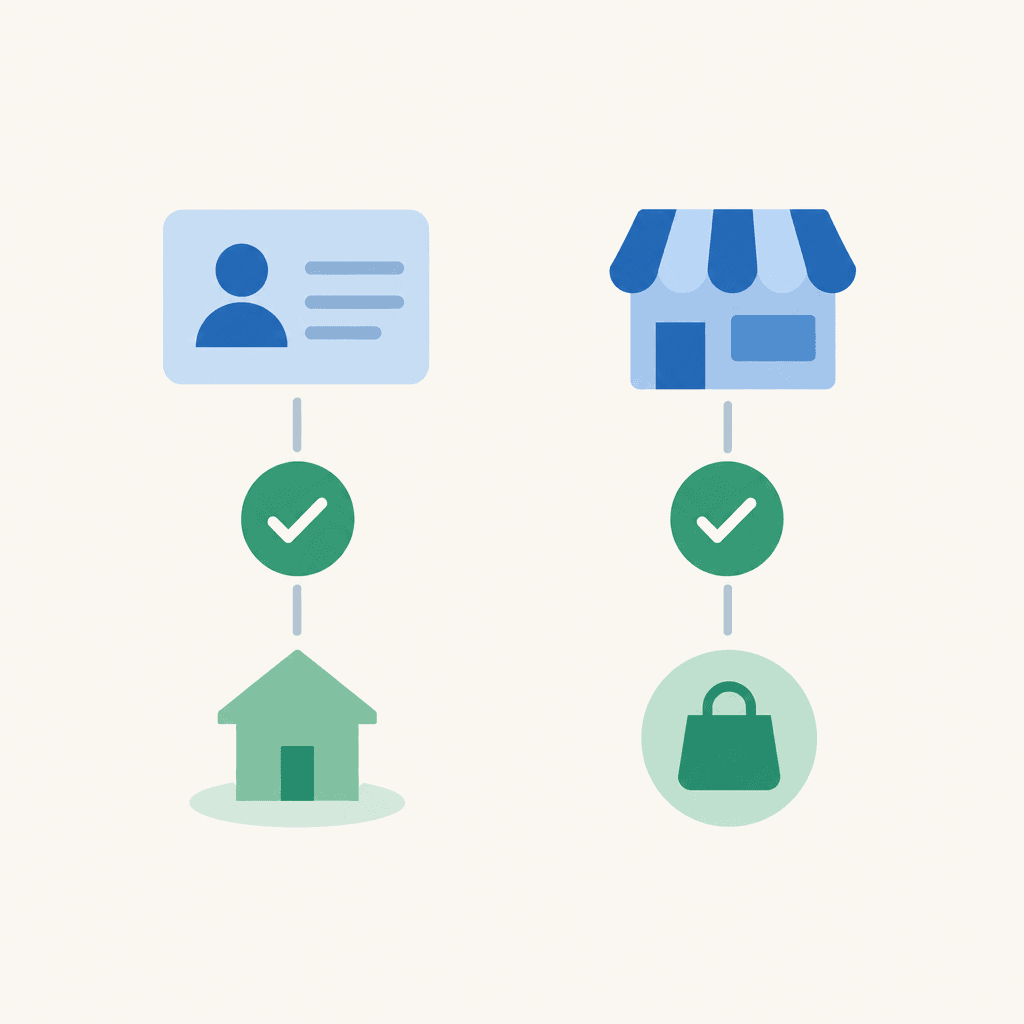
Email-only signup doesn't settle Nigerian residency eligibility
As a conditional example, WaldenPay's crypto virtual card is a virtual prepaid card on Visa/Mastercard rails with email-only signup and no identity documents for standard use.
Those are product characteristics, not a Nigeria-specific availability confirmation. A Nigerian resident should establish eligibility before sending cryptocurrency, even if registration succeeds. WaldenPay is operated by BlueHouse Software B.V. in Rotterdam, Netherlands, through a licensed partner model. That operating structure doesn't, by itself, answer whether a particular resident qualifies for a card.
And privacy-focused doesn't mean anonymous.
Use remains subject to AML and regulatory requirements. No-document standard use shouldn't be interpreted as a promise that further checks can never occur. An applicant who cannot satisfy an applicable requirement should pause rather than provide inaccurate residence information or attempt to bypass restrictions. The explanation of realistic crypto card privacy separates limited data collection from anonymity claims.
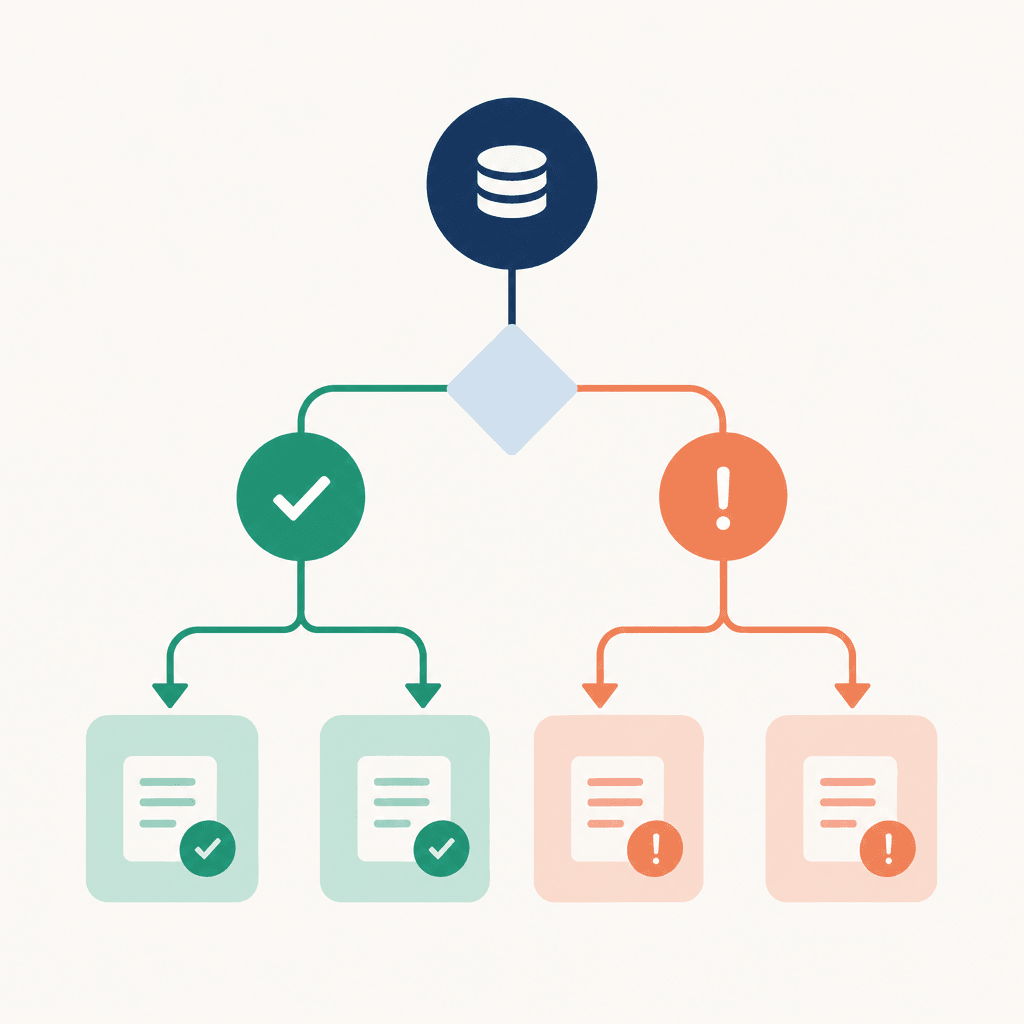
Check crypto card nigeria prepaid restrictions against the purchase
Residency approval answers only the first half of the decision. The intended merchant must also permit prepaid cards for the specific purchase, account, and payment arrangement.
WaldenPay describes acceptance at 150M+ merchants worldwide, but that network reach isn't a promise that every payment will succeed. The card remains prepaid. Adding it to Apple Pay or Google Pay doesn't change its underlying format or override a merchant's rules. Online purchases can use the card details, while eligible in-store payments can use a supported mobile wallet; neither route guarantees acceptance.
The practical check belongs at the purchase level, not just the merchant's logo.
- Does the seller's current payment policy allow virtual prepaid cards for the intended transaction?
- Does the purchase involve a subscription, deposit, authorization hold, or later charge requiring separate confirmation?
- Are the customer's residence, billing information, and account details consistent with the merchant's requirements?
- If the card is declined, is there an ordinary support or alternative-payment route that follows the merchant's rules?
Businesses should also distinguish personal card access from permission to fund commercial spending. The business card access checks guide expands on that distinction without treating payment infrastructure as proof of card availability.
Separate the published costs from the funding commitment
A crypto card nigeria funding decision should use the applicable fee schedule, not the lowest advertised percentage.
For WaldenPay, the starting top-up fee is 5%. It decreases automatically with rolling 30-day card spend, reaching 3% at $100,000. A larger deposit alone doesn't establish the discount: the published basis is card spend. There are no applications for these discounts, and the dashboard displays the current fee, recent spend, and progress toward the next level.
| Published item | WaldenPay amount | Pre-funding implication |
|---|---|---|
| Card creation | $10 one time | Separate from the minimum top-up |
| Minimum top-up | $25 | Not an all-inclusive setup price |
| Starting top-up fee | 5% | The lowest tier shouldn't be assumed |
| Automatic discounted top-up fee | As low as 3% | Depends on rolling 30-day card spend |
| Monthly maintenance | $0 | Doesn't remove creation or top-up costs |
The published card pricing provides the full spend thresholds. Before confirming a load, the applicant should check the displayed payment amount, applicable top-up fee, and resulting card balance rather than treating $25 as the entire funding commitment.
But a fee schedule cannot resolve an eligibility problem. Paying a creation fee or completing a deposit doesn't substitute for country permission, and spending more shouldn't be treated as a way to obtain approval.
Confirm the destination before cryptocurrency leaves the wallet
Even after country eligibility is clear, a crypto card nigeria funding plan needs a separate destination check.
WaldenPay supports funding with 135+ cryptocurrencies across 35+ networks. Its account wallet provides unique deposit addresses per supported network, and cryptocurrency converts to card balance at loading time. The applicant should distinguish an account wallet deposit from a card load and verify what action the interface is requesting. A loaded card balance isn't a continuing holding of the original cryptocurrency.
The selected asset, network, and destination should match the current funding instructions. An old address copied from a message or transaction history shouldn't replace checking those instructions. If the interface leaves the destination or next action unclear, support clarification belongs before the transfer.
Account protection matters before money arrives, too. The card security information is the appropriate place to review available protections and support procedures rather than assuming a cryptocurrency transfer can simply be reversed.
FAQ
What should a crypto card nigeria support request ask?
It should state that the applicant resides in Nigeria and ask whether that residence qualifies for the specific virtual prepaid card. It should also request applicable verification conditions and a reference to current terms. A response about worldwide spending alone leaves issuance eligibility unresolved.
Does an account wallet address mean a card application is approved?
No. A deposit destination isn't proof of permission to obtain a card. Nigerian residents should resolve card issuance eligibility separately before funding, even when an account dashboard already displays a wallet address.
Is WaldenPay confirmed as available to Nigerian residents?
Nigerian residents shouldn't treat general product descriptions or worldwide merchant reach as confirmation. Current country terms and any necessary written clarification should establish eligibility before a deposit. Email-only signup describes standard registration requirements, not country permission.
Does a successful purchase prove future payments will work?
No. A completed payment confirms that transaction only. Another seller, subscription renewal, or purchase type may involve different requirements. A prepaid card remains subject to merchant policies and payment checks, so approval is never guaranteed.
Fund only when the evidence supports the intended use
The practical crypto card nigeria decision is conditional: funding makes sense only after residency permission, permitted use, merchant rules, and the financial commitment align.
- Fund only if: Current terms clearly permit Nigerian residents to obtain the selected card.
- Confirm the purchase: The intended merchant permits the prepaid format and planned payment arrangement.
- Check the commitment: Creation cost, minimum top-up, applicable fee, and resulting balance are understood.
- Verify the transfer: Asset, network, destination, and loading instructions match.
- Wait if: Eligibility is vague, provider answers conflict, or the intended use remains unsupported.
Review eligibility before committing funds
Before the next crypto card nigeria top-up, the cardholder should recheck country terms, merchant prepaid-card rules, and the displayed funding costs rather than relying on an earlier successful payment.
Get started with WaldenPay