How to Invoice Clients in Crypto: Template & Checklist
By James Whitfield, Payments Specialist · Updated October 18, 2026
How to Invoice Clients in Crypto: Freelancer Template & Checklist
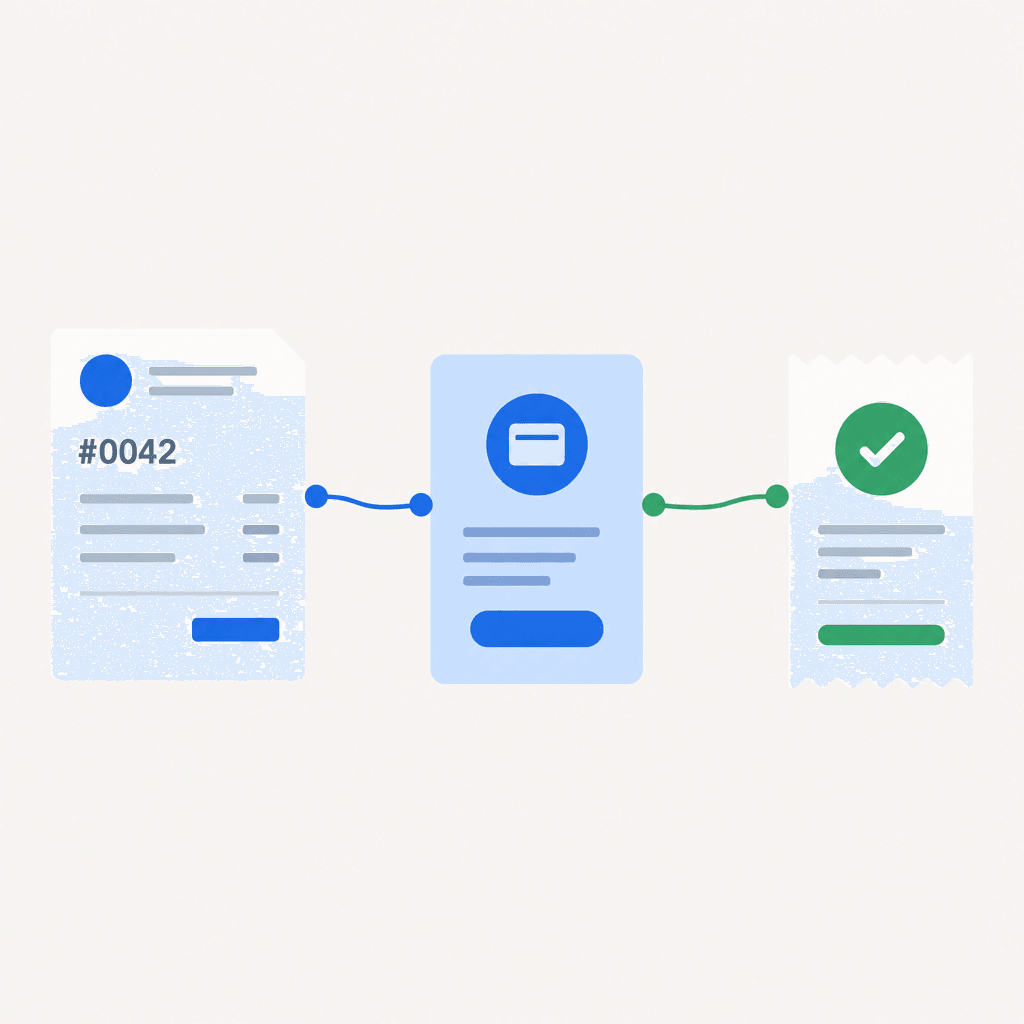
A payment request isn't an invoice. The practical answer to how to invoice clients in crypto is to issue a numbered invoice with agreed pricing and payment terms, attach separate payment instructions, and reconcile the resulting payment against that invoice.
Receiving payment and spending the proceeds are separate jobs. For the latter, the WaldenPay virtual card guide covers features and fees without changing the freelancer's invoicing responsibilities.
Decide how to invoice clients in crypto before billing
The freelancer and client should agree on the pricing basis before work begins. For a USD invoice paid in crypto, the commercial amount remains denominated in dollars, while the attached payment instructions explain the permitted payment method.
The agreement should establish:
- Scope: The deliverables, milestones, and services covered by the invoice.
- Amount: The agreed USD charge and any separately applicable items.
- Timing: The issue date, payment due date, and any agreed milestone conditions.
- Payment method: The approved request or destination, with asset and network details where relevant.
- Completion: The evidence required before the invoice is marked paid.
- Exceptions: The process for incomplete payments, disputes, and refunds.
Payment access doesn't establish permission to transact. Freelancers should confirm that the arrangement complies with applicable requirements and obtain professional advice about local invoicing, tax, or legal obligations.
Two terms that keep the paperwork clear
Payment request: A link, QR code, or instruction set that gives the client a method to pay an identified amount.
Payment receipt: A record acknowledging payment received, which supports reconciliation but doesn't replace the commercial invoice describing the work.
For repeat sales involving order systems, the distinction between checkout and payment links helps determine how payment references connect to commercial records.
Copy a template that keeps payment instructions separate
A useful crypto invoice template makes the commercial obligation readable without requiring the client to interpret a wallet transaction. These fictional names and amounts illustrate document structure only; they don't describe an actual customer or establish jurisdiction-specific requirements.
FREELANCE SERVICE INVOICE

Freelancer: Example Design Studio
Contact: [email protected]
Business address: Address recorded in the signed agreement

Client: Example Client Company
Billing contact: [email protected]
Billing address: Address recorded in the signed agreement

Invoice number: INV-2026-001
Issue date: October 18, 2026
Due date: October 28, 2026

Service:
Website copywriting package delivered under the signed
project agreement.

Service amount: $1,000.00
Agreed total due: $1,000.00
Invoice denomination: USD

Payment reference: INV-2026-001
Payment method: Crypto through the separately attached request

Payment instructions:
The attached payment request identifies this invoice.
The client should verify its amount and reference before paying.
Any separate payment-method charge should be reviewed before approval.

Payment terms:
The agreed amount is due by October 28, 2026.
A submitted payment is not automatically a settled payment.
Any unpaid amount remains outstanding unless otherwise agreed.
Refunds and adjustments require separate written records.

Payment status at issue: Unpaid
Amount received at issue: $0.00
Outstanding balance at issue: $1,000.00
Anyone documenting how to invoice clients in crypto should preserve the original issued invoice rather than continually replacing it with edited copies. Payment events belong in a linked ledger or invoice activity record.
The address shorthand above is illustrative: an issued invoice should contain the actual details required for the business and jurisdiction. Applicable registration details, tax information, and additional disclosures should be confirmed with a qualified professional.
For crypto invoice numbering, a consistent sequence makes searching and duplicate detection easier. A revised invoice should remain traceable to the original rather than silently reusing its reference for unrelated work.

Choose how to invoice clients in crypto with a payment request
Once the invoice is ready, the freelancer can attach a fixed-USD request rather than putting every collection detail into the invoice itself. WaldenPay's payment links provide one optional route through Collect Payments.
Collect Payments supports requests from $1 to $10,000, with a description and a shareable link or QR code. Payers need no WaldenPay account and can pay with 135+ cryptocurrencies across 35+ networks.
The creator receives the exact requested USD amount in their wallet when payment completes; the payer covers a 0.2% conversion fee. Including the invoice reference in the description helps connect the request to the billing record, but the request still isn't the invoice.
Setup and underpayment mechanics belong in the crypto payment acceptance guide; invoice administration should record the resulting status rather than reproduce the collection process.
Reconcile each receipt against the original invoice
The essential control in how to invoice clients in crypto is matching evidence to the amount owed. A client's message saying "sent" is useful context, but it doesn't establish that the requested amount has arrived.
A practical crypto invoice reconciliation checklist records the following fields together:
- Invoice reference: The exact number on the commercial invoice and its associated payment request.
- Amount due: The original agreed amount, plus any documented adjustments.
- Amount received: The amount actually credited, distinguished from anything still pending.
- Outstanding balance: The amount still owed after confirmed receipts, refunds, and agreed adjustments.
- Payment status: Unpaid, pending, partially paid, paid, or another clearly defined status.
- Receipt date: The recorded date of receipt, not merely the date the client initiated payment.
- Supporting evidence: Available payment-request records, account entries, receipt references, correspondence, and transaction identifiers when available.
And the evidence should identify what each record proves. A request confirms an amount was requested; an account credit supports receipt; a refund entry supports money returned.
Crypto payment receipt records don't always include a blockchain transaction identifier. The record should retain available identifiers without inventing a hash or treating its absence as proof that no payment occurred.
Access to billing records and payment accounts also needs protection; the WaldenPay security overview provides relevant product context without replacing the freelancer's own document-access controls.
Record partial payments and refunds without losing the balance
Partial payment invoice tracking becomes confusing when a refunded receipt disappears from the history. The original payment event should remain visible, with a separate refund entry and an explanation of what remains payable.
The following hypothetical ledger shows a $1,000 invoice, an incomplete $400 payment subsequently refunded, and a later completed payment. It illustrates recordkeeping, not collection instructions or a promised processing timeline.
| Recorded event | Received | Refunded | Outstanding | Invoice status |
|---|---|---|---|---|
| Invoice issued | $0 | $0 | $1,000 | Unpaid |
| Partial receipt confirmed | $400 | $0 | $600 | Partially paid |
| Incomplete payment refunded | $0 | $400 | $1,000 | Unpaid; refund recorded |
| Later full receipt confirmed | $1,000 | $0 | $0 | Paid |
Each row should carry its actual event date and supporting reference in the working ledger. Here, the refund doesn't cancel the underlying service charge; a cancellation or price reduction would require its own documented adjustment.
This is why how to invoice clients in crypto includes exception records, not just payment instructions. Collect Payments automatically refunds incomplete payments to the payer's wallet, so a tracked partial payment shouldn't be confused with final settlement.
FAQ
Does how to invoice clients in crypto change when a client pays through a link?
The core documents stay the same: invoice, payment request, and receipt evidence. A link supplies the payment route, while the numbered invoice continues to identify the services, due date, and amount owed.
Does email-only signup remove the need for invoice details?
No. WaldenPay's standard signup requirements don't determine what information a freelancer must include on an invoice. Standard signup requires an email without identity documents, but use remains subject to AML and regulatory requirements; it isn't anonymous.
Should receiving payment and loading a card share one accounting entry?
They should remain distinguishable: a client receipt settles an invoice, while loading a prepaid card is a separate action. The published card pricing helps freelancers review card costs without confusing them with the amount their client owes.
When should an invoice be marked paid?
Once reliable records confirm the agreed amount has been received and no balance remains outstanding. A pending transfer, payment screenshot, or generated request alone shouldn't trigger that status; unresolved differences should remain documented.
Keep invoicing and payment records connected
Clear records anchor how to invoice clients in crypto with confidence.
Get started with WaldenPay