Crypto Checkout vs Payment Links: Which Fits Your Workflow?
By James Whitfield, Payments Specialist · Updated October 8, 2026
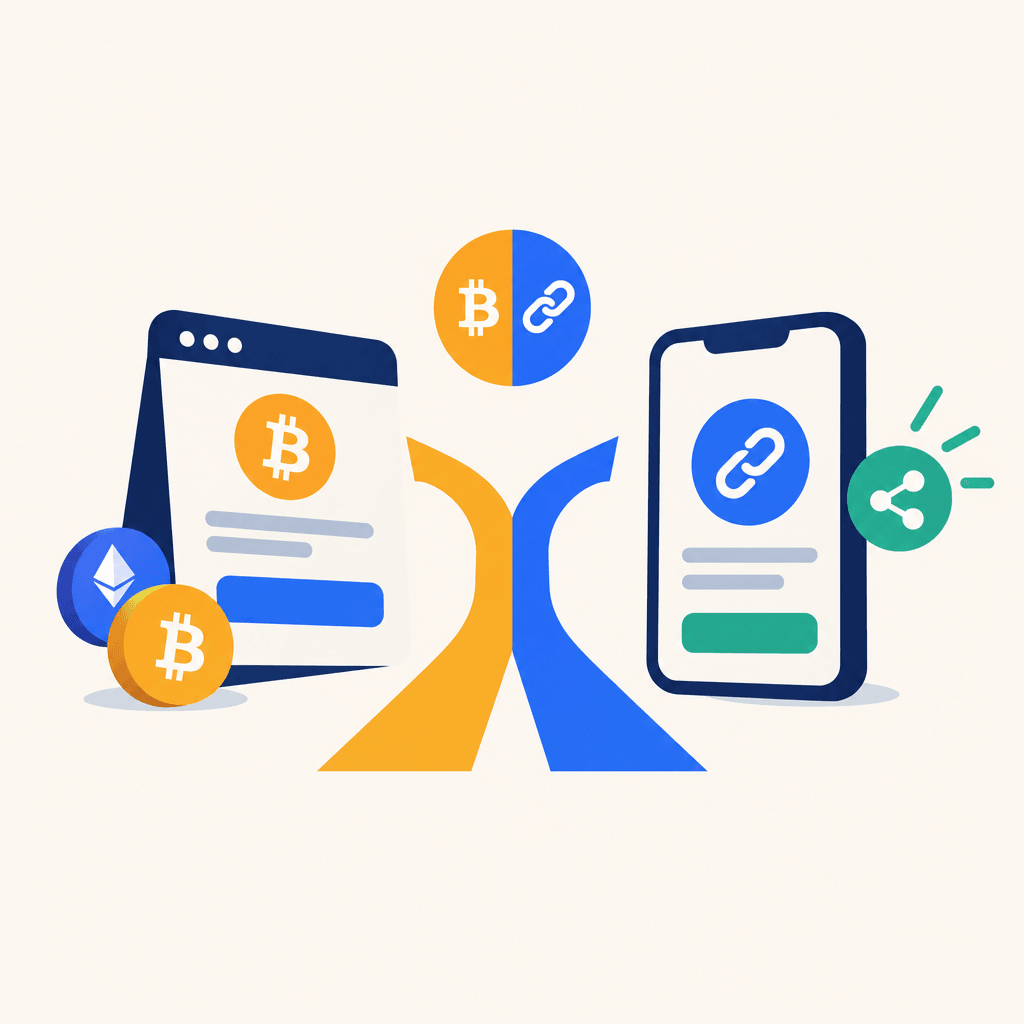
Crypto Checkout vs Payment Links: Which Fits the Order Workflow?
Matching a received payment to an order is where crypto checkout vs payment links becomes an operational decision: one-time collection often suits a link, while order-connected fulfillment calls for verified checkout integration. Analytics Insight's gateway comparison prompts that distinction, but its publication or update date requires verification before it can support a freshness claim. Its forward-year label doesn't establish future capabilities.
For the broader product context, the WaldenPay Virtual Card: Complete Guide to Features & Fees covers card features separately from payment collection.
Payment link or integrated checkout: which requirement decides?
The deciding requirement is whether payment completion must update an existing order without staff intervention.
A freelancer collecting an agreed invoice amount may need only a shareable request and a completion record. A store releasing goods needs a reliable relationship between the payment and the correct order. Radom's 2026 guidance identifies one-time collection as a strong use for links, with checkout or billing potentially better suited to structured payment models.
How should merchants assess crypto checkout vs payment links?
The merchant should identify what happens immediately after payment. If staff can review receipt before delivery, a link may fit. If inventory, delivery, or account access depends on payment status, the provider must demonstrate those connections.
And a hosted page isn't proof of limited functionality, just as an integrated checkout isn't proof of automation.
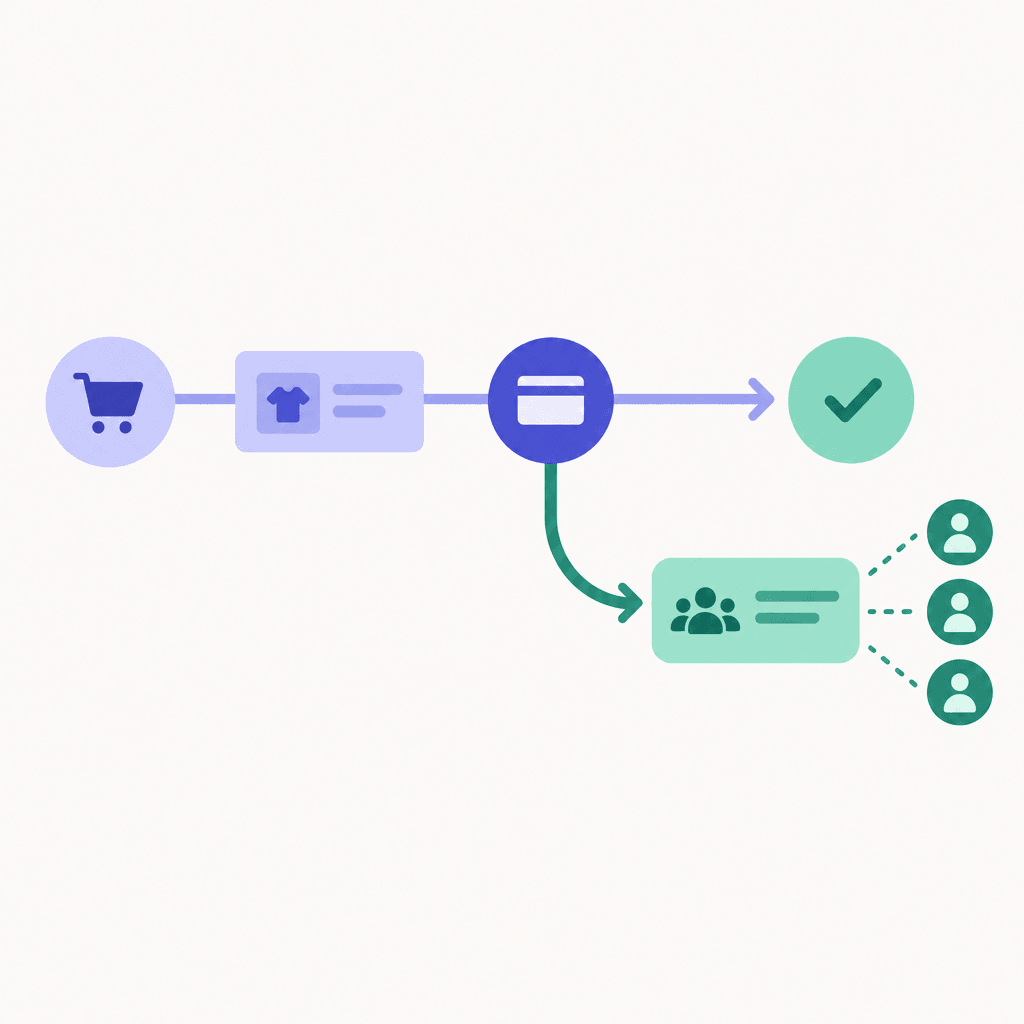
Decision matrix: integration, reconciliation, status updates, and refunds
A useful crypto checkout comparison tests observable behavior rather than interface labels.
| Requirement | Payment-link suitability | Integrated-checkout suitability | Evidence needed |
|---|---|---|---|
| Integration | Useful for sharing individual requests; deeper connections need verification. | Suitable when connected ordering is demonstrated. | Supported platform, API documentation, and a working test. |
| Reconciliation | May suit staff-reviewed invoices. | Fits order-linked collection if identifiers persist. | Payment-to-order reference and export or dashboard record. |
| Status updates | Suitable if visible status meets operational needs. | Useful when verified events update orders. | Status definitions, delivery logs, retries, and duplicate-event handling. |
| Fulfillment | May fit manual release after completion. | Fits automatic release only with a tested trigger. | Completion rule and failed-trigger recovery. |
| Refunds | Incomplete-payment returns and sale refunds need separate checks. | Order integration alone proves neither refund function. | Written responsibilities, authorization process, and refund tracking. |
For operations teams, crypto checkout vs payment links turns on whether these records stay connected. Finassets' 2026 guidance describes separate payment-request and store-order statuses, with the request linked to the corresponding order. Its standard request pattern specifies amount, network, and expiry.
That makes crypto order reconciliation a design requirement, not an assumed benefit.

Where WaldenPay Collect Payments fits
WaldenPay's payment links fit fixed amount crypto payment requests, without establishing an order-connected checkout.
Collect Payments creates a fixed USD request from $1 to $10,000 with a description, shared through a link or QR code. Payers can use 135+ cryptocurrencies across 35+ networks without a WaldenPay account. Upon completion, the creator receives the exact requested USD amount in their wallet; the payer covers a 0.2% conversion fee.
Underpayments are tracked, with a fresh address generated for the remainder. Incomplete payments are automatically refunded to the payer's wallet.
Where does Collect Payments sit in crypto checkout vs payment links?
It provides bounded payment collection. Merchants shouldn't infer cart integration, order synchronization, webhooks, fulfillment triggers, or general merchant-refund functionality from those features. An automatic incomplete-payment refund isn't the same as returning a completed sale after a cancellation.
For payment acceptance workflows, see How to Accept Crypto Payments in 2026: A Practical Guide (/blog/how-to-accept-crypto-payments-in-2026-a-practical-guide).
What gateway comparisons must verify
A provider shortlist needs current documentation and a tested payment lifecycle.
BlockBee's 2026 guidance highlights API and webhook quality, including payment creation, detection, status updates, and edge-case handling. Those are useful crypto gateway evaluation criteria, but they don't establish any particular provider's capabilities.
A credible evaluation of crypto checkout vs payment links should request evidence for late payments, incomplete payments, repeated notifications, and interrupted status delivery. Undocumented capabilities require verification before purchase.
But no omission or specific provider capability should be attributed to Analytics Insight's comparison without checking the source itself.
FAQ
Does crypto checkout vs payment links determine automation?
No. Automation depends on documented integrations and tested behavior, not the payment interface alone.
Can a payment link identify an order?
Merchants should verify whether an order reference persists through payment records and exports.
Does payment completion mean an order is fulfilled?
No. Fulfillment needs its own manual decision or verified trigger.
Does Collect Payments handle all merchant refunds?
Its documented automatic refunds cover incomplete payments, not general refunds of completed sales.
Document requirements before shortlisting providers
The merchant's requirements sheet should precede the provider ranking.
- Identify the order reference and where payment completion must appear.
- Assign responsibility for reconciliation, fulfillment, and exceptions.
- Separate incomplete-payment handling from completed-sale refunds.
- Require documentation and a test for every necessary connection.
Evaluate a fixed-request workflow
The next action in crypto checkout vs payment links is to document one real order's path from request to completion, then check whether Collect Payments' published boundaries fit.
Get started with WaldenPay