Send Crypto to a Friend Instantly (No Wallet Address) 2026
By Elena Petrova, Blockchain Researcher · Updated September 16, 2026
Sending crypto to a friend sounds simple until it's actually time to do it. Suddenly there's a 42-character wallet address to copy without a typo, a network that has to match exactly, and a small knot of anxiety about whether the funds will land where they're supposed to.
For big transfers or long-term holdings, that friction is fine - blockchain settlement exists for a reason. But for the kind of transfer most people actually make - repaying a friend for concert tickets, splitting a bill with crypto after dinner, sending a small gift - the traditional method is overkill. This article walks through both approaches and gives a framework for choosing between them.
The Traditional Way: Sending Crypto Wallet-to-Wallet
This is the method most exchanges describe. Coinbase, for example, states plainly that to send crypto, the recipient's wallet address is required. Bankrate says the same thing about gifting crypto through an exchange: both sender and recipient need accounts, and the recipient's wallet address has to be entered correctly.
It works like this: open a wallet or exchange app, paste in the recipient's address, pick the network the address lives on, confirm the amount, and send. Once it's broadcast, it's irreversible.
That last part is exactly why the process is designed to be so deliberate. There's no customer service line that can reverse a blockchain transaction.
Where it goes wrong
Three failure modes account for almost every horror story about sending crypto to a friend:
- Wrong network selected. USDT exists on Ethereum, Tron, Solana, BNB Chain and more. An address that's valid on one network can silently accept a deposit sent on the wrong one, or reject it, or - worst case - the funds just don't show up anywhere. The Crypto Cauldron's guide on the topic recommends always double-checking the address and confirming the correct network before sending, and that's advice worth repeating every single time, not just the first time.
- Sending to an exchange address that doesn't credit correctly. Some exchange deposit addresses require a memo or tag alongside the address. Skip it, and the deposit can get stuck or lost in a support queue for days.
- Gas fees eating a small transfer. Sending $15 worth of ETH on a congested network can mean paying $2-5 in gas. For splitting a bill with crypto, that's a real percentage lost to network fees alone.
Worldcoin's guide adds a simpler but easy-to-skip step: check the transaction amount and the currency multiple times before confirming. It sounds obvious. It's still the number one cause of "why didn't they get the right amount" messages.
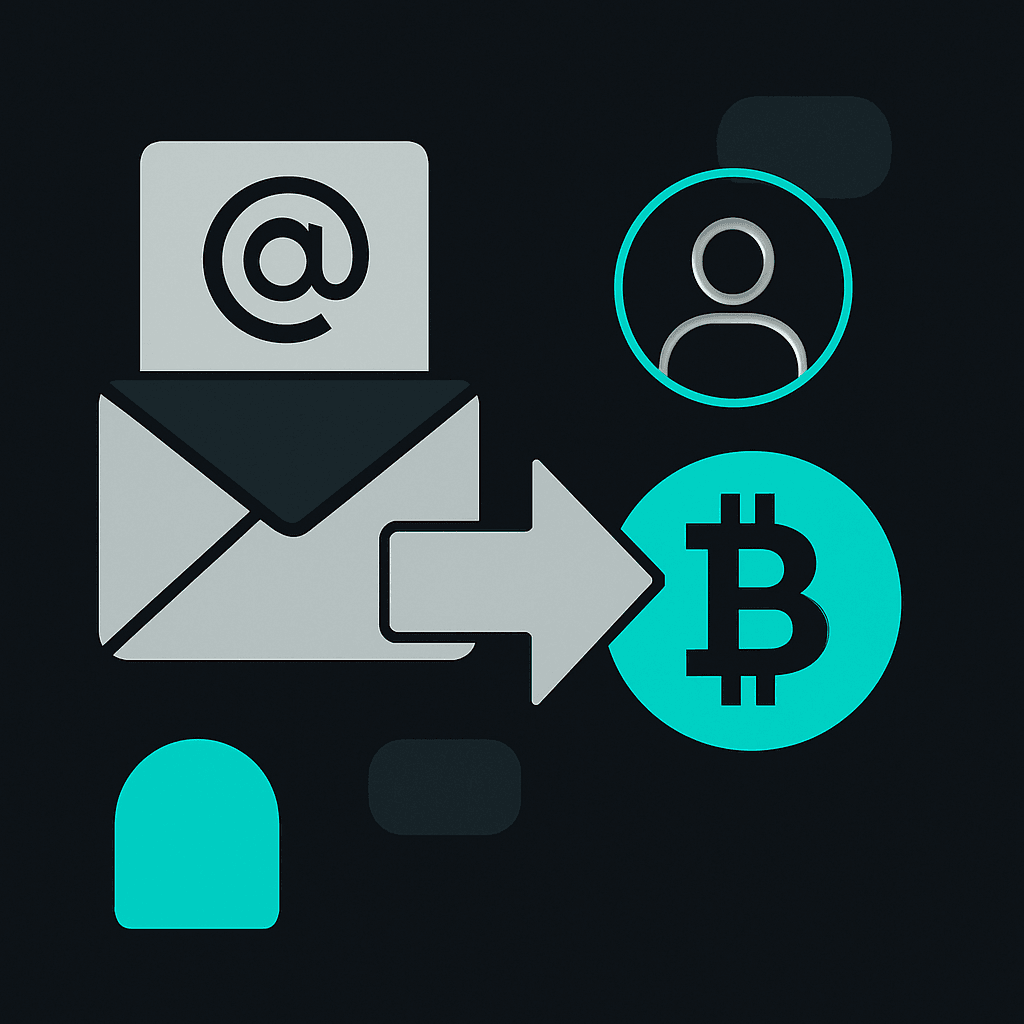
The Newer Way: Sending Crypto to a Friend by Email
Here's the reframe worth sitting with: a lot of "send crypto to a friend" situations aren't investment transfers at all. They're payments. And payments don't require a new blockchain transaction every time - they require speed, certainty, and a low chance of user error.
That's the gap that email-based, or "ledger," transfers fill. Instead of broadcasting a transaction on-chain, the platform simply moves the balance internally between two accounts on its own ledger. No wallet address, no network selection, no gas fee, no waiting for confirmations.
Some platforms already work this way. Crypto.com's Send feature lets users transfer funds to anyone instantly and for free, and even lets a non-app user join via a referral link shared by a friend to accept the transfer. Nexo offers something similar - sending crypto to friends instantly and free of charge within its own ecosystem. COCA.xyz notes that some apps let users send to a simple handle instead of a full address, depending on the platform.
WaldenPay's Send to Friend feature runs on the same underlying logic, built specifically around email as the identifier:
- The sender enters the recipient's email address - no wallet address involved.
- A preview shows the recipient's name before anything is sent, so there's a moment to confirm this is actually the right person.
- A password confirmation is required on every transfer, adding a checkpoint against mistakes or unauthorized use.
- The transfer is a ledger entry, not a blockchain transaction, so it typically arrives in seconds rather than waiting on network confirmations.
- There's no fee on the transfer itself.
This is what "send crypto instantly" actually looks like in practice - not a faster blockchain, but skipping the blockchain step entirely for a transfer between two accounts on the same platform.
For most person-to-person transfers, the goal was never blockchain settlement. It was getting money to a friend without the typo risk.
What If the Friend Has No Wallet - or No Account at All?
This is the actual title question, and it deserves a direct answer rather than a hand wave.
If the goal is to send USDT to a friend who's willing to create a free account but has never touched a wallet before, an email-based transfer like Send to Friend solves it cleanly. The recipient signs up, gets an email confirmation, and the balance is just there - no seed phrase to write down, no address to receive against. A Reddit thread on r/CryptoCurrency raised almost exactly this scenario: whether crypto could be sent to someone with no wallet, no app, and no crypto knowledge, using just a phone number or email. The honest answer in 2026 is: on platforms built for it, yes for the sending part, but the recipient still needs some kind of account to actually hold the balance. The same thread also pointed out that non-crypto users often just prefer a bank transfer - which is fair, and a reminder that email-based crypto transfer is solving for convenience, not replacing normal money movement for everyone.
If the friend genuinely won't create any account - not even a lightweight one - a payment request works better than a "send" flow. WaldenPay's Collect Payments feature, for instance, lets someone generate a payment link or QR code for a fixed USD amount with no account required on the payer's side. That's really a "request," not a "send," so it flips the direction: instead of pushing crypto to a friend, the friend pays into a request. It's covered in more detail in the guide to accepting crypto payments in 2026, and it's worth knowing about as the sibling feature to email transfers - collecting is free for the creator, and the payer covers a small conversion fee and needs no account or prior verification to pay.
Choosing a Method: A Simple Decision Framework
| Situation | Best method | Why |
|---|---|---|
| Repaying a friend, splitting a bill with crypto, small gift | Email-based transfer | Instant, no gas fee, no address to get wrong |
| Sending to a friend's existing personal wallet (self-custody) | Wallet-to-wallet transfer | Only option if they hold their own keys outside a shared platform |
| Friend has no wallet, no account, won't sign up | Payment request / QR code | Payer needs no account; creator gets exact USD amount |
| Large transfer, long-term holding | Wallet-to-wallet transfer | On-chain settlement is the appropriate tool for size and custody |
None of this makes wallet-to-wallet transfers obsolete. It just narrows down when they're actually necessary. If both people are on the same platform, or willing to be, email transfer is faster for sending crypto to a friend for anything under the per-transfer limit. If the recipient insists on total independence and self-custody, a wallet address is still the right call.
Step-by-Step: Sending Crypto to a Friend Without a Wallet Address
- Load the account balance first, using a supported network deposit address or by converting from an existing crypto holding.
- Open the Send to Friend flow and enter the recipient's email address.
- Check the name preview that appears - this is the checkpoint that catches a mistyped email before anything moves.
- Enter the amount, keeping in mind the $1 minimum and $10,000 per-transfer cap.
- Confirm with the account password.
- The recipient sees the balance land in their own account, typically within seconds.
No network dropdown. No gas estimate. No sixteen-digit confirmation hash to screenshot and send as proof.
A Note on Privacy and Compliance
It's worth being straightforward here: email-based transfers are private in the sense that they don't broadcast a public blockchain transaction, but they are not anonymous. Accounts are still subject to standard AML and regulatory checks, and transfer limits exist partly for that reason. Anyone looking for financial sovereignty and lower friction should understand that as the baseline, not as a workaround. For more on how WaldenPay handles this balance, the security page and the "No KYC" card: what's true in 2026 post go into the specifics.
Where This Fits With a Crypto Card
Email transfers and Collect Payments both feed the same account balance that funds a WaldenPay virtual card, so a friend's repayment can end up spendable at 150M+ merchants without a separate off-ramp step. For readers weighing whether a card is worth adding to the mix, the complete 2026 feature guide and the USDT card guide cover setup, the standard 5% top-up fee, and how balances move from wallet to card in practice.
FAQ
Is there really a way to send crypto to a friend without any wallet address?
Yes, on platforms that support ledger-based transfers between accounts, like WaldenPay's Send to Friend. The transfer moves internally rather than on-chain, so no wallet address is needed - but the recipient does need an account on the same platform to receive it.
Is it possible to send crypto to someone with absolutely no account and no wallet?
Not directly as a "send." What works instead is a payment request or QR code, where the friend pays without needing an account, and the funds land in the requester's wallet as an exact USD amount.
Does sending crypto to a friend by email cost anything?
With WaldenPay's Send to Friend, the transfer itself is zero-fee. Fees can still apply elsewhere in the flow, such as the standard 5% fee when loading crypto onto a virtual card.
What's the fastest way to send crypto to a friend for splitting a bill?
For amounts under $10,000 between two accounts on the same platform, an email transfer is generally the fastest option - it's a ledger update rather than a blockchain confirmation, so it typically lands in seconds.
What happens if the wrong network is picked on a traditional wallet transfer?
The transaction can go through but fail to credit correctly, or arrive at an address that doesn't recognize deposits from that network. Recovery isn't guaranteed, which is why matching the network exactly matters more than most people expect.
Send crypto to a friend without the wallet-address guesswork
WaldenPay's Send to Friend moves balances by email in seconds, with zero fees and a name preview before anything sends. Pair it with a virtual card to spend a friend's repayment anywhere the card network is accepted.
Get your WaldenPay card